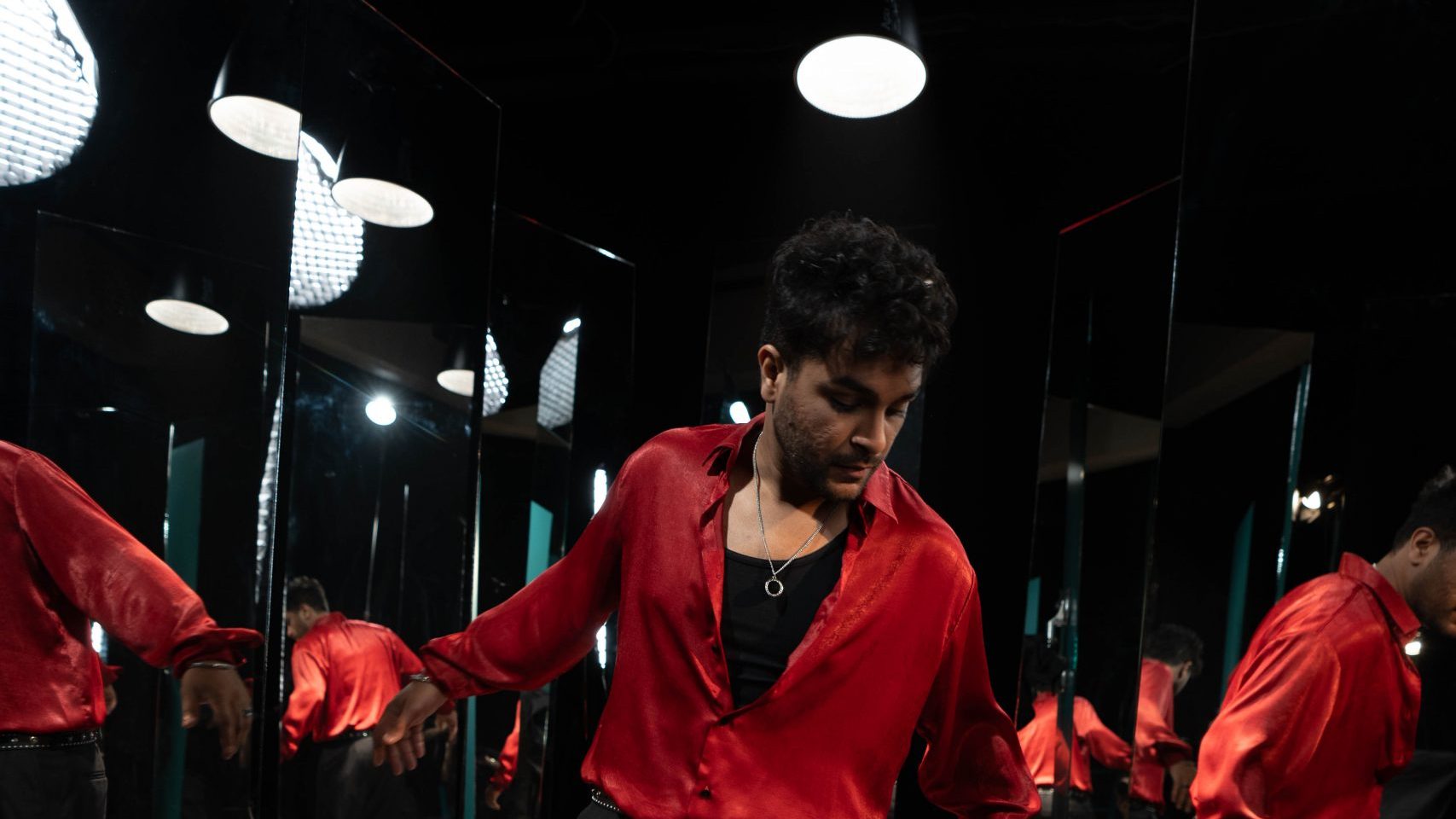
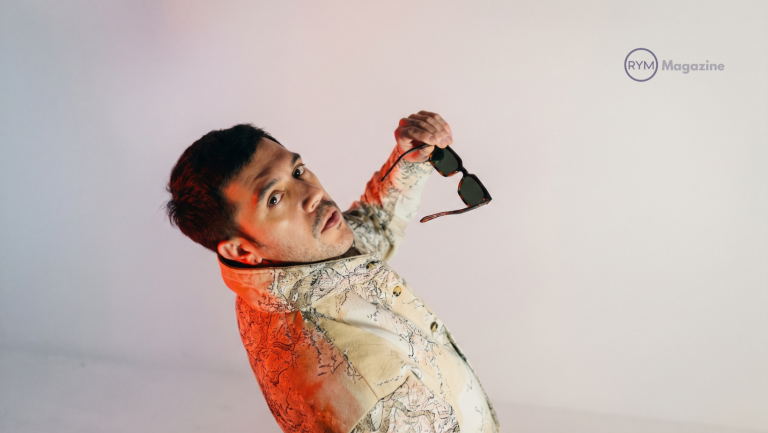
By Vanessa Torres - Editor-In-Chief | Elizabeth Weiss - Staff Writer | Photography Courtesy: Agent HAQ EXCLUSIVE - From his independent album, Asim Ali, to the founding of the Pakistan Music Awards, we’re diving into his boldest chapter yet. "I can lie, but Asim Ali cannot." This poignant observation, delivered by actress and mother Gul-e-Rana in the short film marking the release of his latest project, has become the defining manifesto for Pakistan’s premier pop export. After twelve years defining the commercial center of South Asian music, the artist known to millions as Asim Azhar is executing a strategic retreat into his own skin. At 29, he isn't looking for a bigger stage; he’s looking for a more honest one. Reclaiming his birth name for his first fully independent album, the "Asim Ali" era is a deliberate dismantling of the high-gloss pop machinery in favor of a vulnerable, narrative-driven identity that prioritizes creative autonomy over the relentless hunt for viral hooks. Azhar’s musicality was incubated in an environment of technical rigor and dramatic flair. His father, Azhar Hussain, is one of Pakistan’s most accomplished pianists and producers, while his mother, Gul-e-Rana, is a celebrated actress and political figure. This lineage provided a dual education in the precision of the recording studio and the charisma required for the screen. Incubated in this hub of creativity from infancy, Azhar’s trajectory is nothing short of heritage—a hybrid artistic persona that values both the precision of the keyboard and the magnetism of the stage. "Ab tak Asim Azhar ko jaante thay, ab Asim Ali se milne ki baari hai," Azhar tells his audience, introducing what he calls his "truest and realist form." The catalyst for this shift was a realization that fame and creative fulfillment are not always synonymous. "I really want to call this my first album even though, technically, it’s not," Azhar admits with striking candor. "But for some reason, it feels like my first because it is entirely my own creative expression. I can say with peace and pride that this is my album—just mine. You guys knew Asim Azhar, but you didn't know Asim Ali. Now is the right time to get to know him; I am in my most authentic state." This reclamation wasn't an overnight decision; it was a slow-burning evolution nurtured for nearly a decade. The Asim Ali project features tracks written as far back as seven years ago—compositions that Azhar originally withheld because they felt too raw for the "radio-ready" persona he was expected to maintain. "This album has songs that were written in mymostvulnerableand honest state," he explains."Some songs date back to even six or seven years. I never thoughtyou guyswould listen tothese songs because I was always made to think I had to doa certainkind of music tostay relevant. But with time, I realized that music is nothing if it's not honest. I’m done with the noise; I want you to hear it all from me through my art." While Azhar’s digital metrics are the stuff of industry legend—"Jo Tu Na Mila" has surpassed 199 million Spotify streams and 270 million YouTube views—his true weight is found on the elite awards circuit. In Pakistan, the Lux Style Awards (LSA) and the Hum Awards [regionally considered equivalents of the GRAMMY Awards and the Oscars]. They are the gatekeepers of cultural prestige, and Azhar has become their most consistent resident, winning back-to-back Best OST and Best Singer of the Year honors. The global viability of these ceremonies was underscored in October 2025, when the 10th Hum Awards took over the NRG Arena in Houston, Texas. Azhar opened the sold-out American show with a powerful performance of "Meem Se Mohabbat," proving that the demand for Pakistani pop has no borders. For Azhar, these trophies represent more than just style; they are a bridge between the Karachi streets where he began and the global cultural zeitgeist he now inhabits. "I would love to always be a representative of where I come from—of Pakistan and South Asia," he says. "Winning those awards gave me the platform to show that our sound has no borders." The tension between commercial expectation and artistic vision reached a peak in late 2025. Even as his OST for Meri Zindagi Hai Tu dominated the charts—remaining #1 on the national weekly charts for months and appearing on the BBC UK and Spotify Pakistan charts—Azhar was executing a tactical "reset". The track’s cultural footprint was massive, generating over 950,000 reels on Instagram alone. It was the ultimate legacy paradox: how does a seasoned artist reconcile being a national hitmaker with the desire to be an unfiltered creator? This internal struggle—the pressure to remain a "radio-ready" hitmaker versus the drive for creative control—became the catalyst for the "Asim Ali" era. Released on November 24, 2025, the 10-track project Asim Ali represents a creative liberation. The rollout featured a nostalgic short film of a young Azhar dancing to "Kaho Naa Pyaar Hai" and covering Bruno Mars in his living room. The project set a national record for the most pre-saves for a Pakistani album, proving his audience was ready to meet the man behind the pop star. "I sometimes allow myself to think too much about online image-building, and when that happens, your work and your art suffers," he reflects. "It's important to not get over-obsessed with that. You just have to be clever, be thick-skinned, stay true to your work and, above all, bring in something unique, something new." While Azhar’s digital metrics are the stuff of industry legend—"Jo Tu Na Mila" has surpassed 199 million Spotify streams and 270 million YouTube views—his true weight is found on the elite awards circuit. In Pakistan, the Lux Style Awards (LSA) and the Hum Awards [regionally considered equivalents of the GRAMMY Awards and the Oscars]. They are the gatekeepers of cultural prestige, and Azhar has become their most consistent resident, winning back-to-back Best OST and Best Singer of the Year honors. The global viability of these ceremonies was underscored in October 2025, when the 10th Hum Awards took over the NRG Arena in Houston, Texas. Azhar opened the sold-out American show with a powerful performance of "Meem Se Mohabbat," proving that the demand for Pakistani pop has no borders. For Azhar, these trophies represent more than just style; they are a bridge between the Karachi streets where he began and the global cultural zeitgeist he now inhabits. "I would love to always be a representative of where I come from—of Pakistan and South Asia," he says. "Winning those awards gave me the platform to show that our sound has no borders." The tension between commercial expectation and artistic vision reached a peak in late 2025. Even as his OST for Meri Zindagi Hai Tu dominated the charts—remaining #1 on the national weekly charts for months and appearing on the BBC UK and Spotify Pakistan charts—Azhar was executing a tactical "reset". The track’s cultural footprint was massive, generating over 950,000 reels on Instagram alone. It was the ultimate legacy paradox: how does a seasoned artist reconcile being a national hitmaker with the desire to be an unfiltered creator? This internal struggle—the pressure to remain a "radio-ready" hitmaker versus the drive for creative control—became the catalyst for the "Asim Ali" era. Released on November 24, 2025, the 10-track project Asim Ali represents a creative liberation. The rollout featured a nostalgic short film of a young Azhar dancing to "Kaho Naa Pyaar Hai" and covering Bruno Mars in his living room. The project set a national record for the most pre-saves for a Pakistani album, proving his audience was ready to meet the man behind the pop star. "I sometimes allow myself to think too much about online image-building, and when that happens, your work and your art suffers," he reflects. "It's important to not get over-obsessed with that. You just have to be clever, be thick-skinned, stay true to your work and, above all, bring in something unique, something new." This new chapter moves to the international stage with the "Asim Ali Tour 2026," a definitive solo world tour spanning 16 cities and 18 shows across North America. While previous years included high-profile collaborations like AUR (2025), the current run is Azhar's narrative alone. On April 9, 2026, Azhar expanded his mission of global representation by announcing the launch of the Pakistan Music Awards. Envisioned as a social enterprise, the initiative is dedicated to celebrating and elevating the country's music on a global scale. Azhar has instituted a strict "no playbacks" mandate for the tour, performing with a dedicated nine-member band. This technical architecture—where metronomes lock arrangements and real-time cue systems facilitate communication—is a calculated move to close the gap between Pakistani pop and its international counterparts. Reflecting his commitment to the next generation, opening acts for each city are being determined through a public voting process; a search that recently generated over 10,000 comments from fans and aspiring artists. This shared philosophy of global synergy mirrors the foundational goals of Azhar’s reinvention. Looking ahead, Azhar’s legacy is rooted in this transition to truthfulness. Having served as a Spotify Global Ambassador and being the first Pakistani artist to top the platform’s global charts with "Ghalat Fehmi," he has already bypassed traditional geopolitical barriers. At the 12-year mark, his focus has shifted from seeking fame to representing a culture. Whether he is performing at a sold-out theatre in Toronto or producing the next generation of talent a decade from now, his goal remains the same: a sound that is as technically precise as it is emotionally honest. Looking forward, his visualization of the future involves a potential shift from the spotlight to the studio. "Even if ten years down the line I am not a performer anymore and I am producing, if that still allows me to represent my culture, I’ll be the happiest man," he reflects. "In a perfect world, alhamdulillah, at this moment where I am is exactly what I wanted. If this could continue, I'd be the happiest man. There have been times where I have felt like, 'Okay, awesome, great run, this was it,' and even then, I felt very relieved and thankful. That feeling just makes everything so much easier. The moment you ask me about my next 10 years, if I would be doing this again in 10 years, I'd be really happy." At the 12-year mark, his focus has moved from seeking fame to perfecting his legacy. For his 13 million followers, the "Asim Ali" era isn't just an album release—it's an invitation to see the man who has finally stopped trying to stay relevant and started being real. As he concludes with a smile: "Hard work, trust in the process, and pure intentions can still yield surprises. 2026 has no idea what’s coming”. Want To See More From This Story? Click Here