blog.youtube/news-and-events
YouTube has announced two updates to their AI disclosure features: simplified AI labels and auto-detection.
The platform has labeled AI use in content since 2024, and has “learned in that time about what people find useful when it comes to AI disclosures,” stated a May 27 press release.
The rollout of these two features are in response to the community call for transparency, aiming to make AI disclosure “much simpler and more intuitive for creators and viewers on YouTube.”
“In a world where AI is changing what’s possible, our goal is simple: make it as easy as possible for creators and viewers to have the right information,” the statement read.
The introduction of these features follows a Mar. 16 letter Lyor Cohen, YouTube’s global head of music, shared with music industry partners. Cohen said that the platform is working “to build new guardrails for likeness detection, while also combating the spread of low-quality AI content on [the] platform.”
Simplified AI Labels
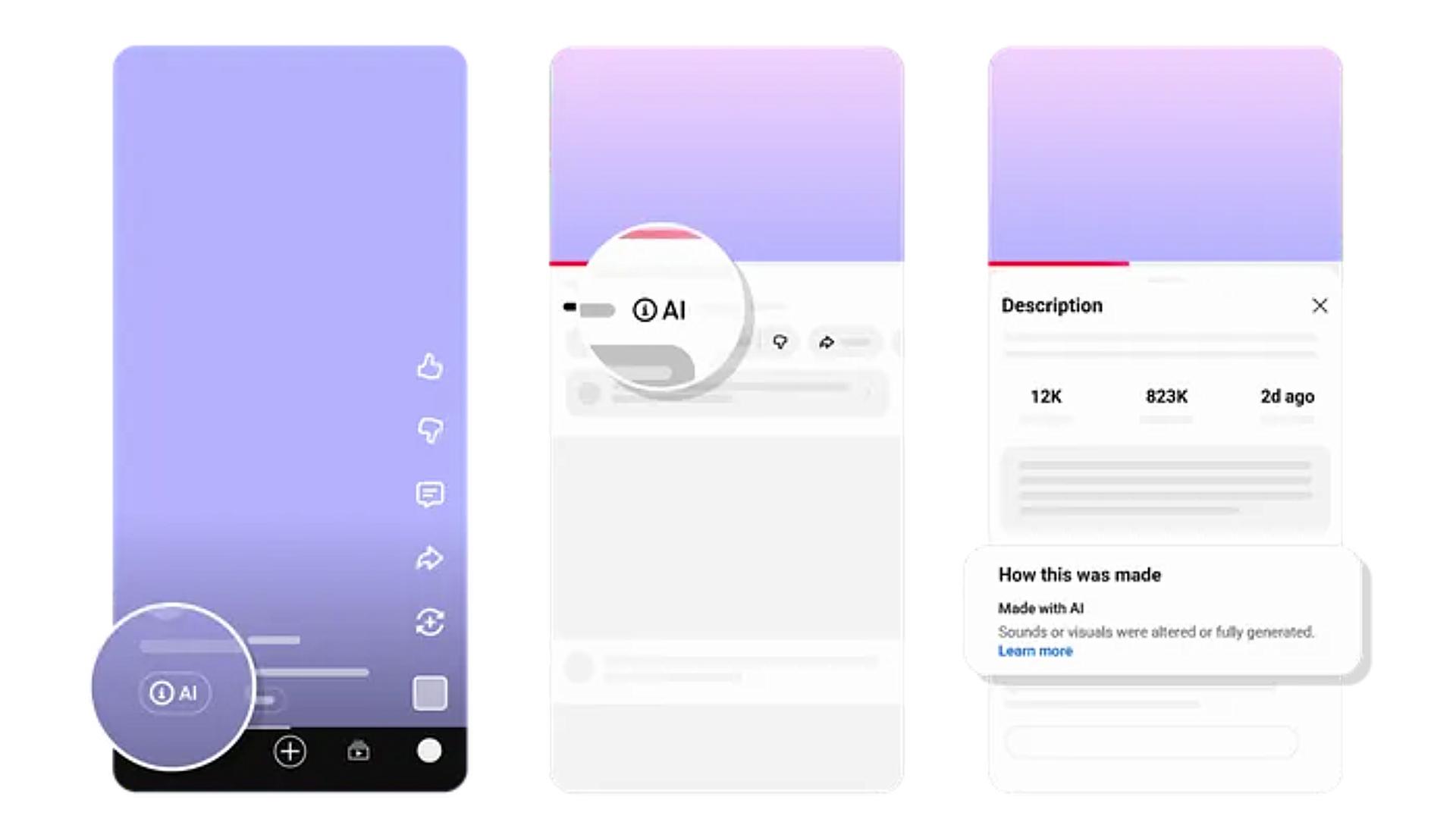
With the simplification of AI labels, Youtube has made the label “for photorealistic and meaningfully AI altered or generated content” more prominent.
Starting in May 2026, long-form Youtube videos will now feature the label directly below the video player and above the description. Labeling for Shorts will be similarly prominent, overlaid on the video itself in the bottom left corner.
With this change, “viewers get the context they need at a glance,” the company said.
Alternatively, the AI disclosure for content that is “unrealistic, animated, or slightly altered” can be found in the video’s expanded description.
It is unclear where YouTube draws the line between this and “photorealistic and meaningfully AI altered or generated content.”
Auto-Detection
The introduction of AI auto-detection features expands Youtube’s existing protections, which require creators to disclose the use of realistic AI. By rolling out new “internal signaling,” the platform aims to make the labelling process “more seamless and reliable.”
If Youtube’s internal systems detect that significant photorealistic AI use has gone unlabeled, it will automatically apply a label.
However, if a creator believes their content was falsely labeled, they can make changes in YouTube Studio.
For other discrepancies, such as content removal or demonetization, Youtube typically requires content creators to go through its internal appeals or dispute process.
In certain cases, labels are unable to be removed: if the content was created using YouTube’s own AI tools, like Veo or Dream Screen, or if it contains C2PA metadata indicating the use of generative AI.
YouTube noted content labeled as utilizing AI tools does not change how a video is recommended or whether it is eligible to earn money.
About the Author