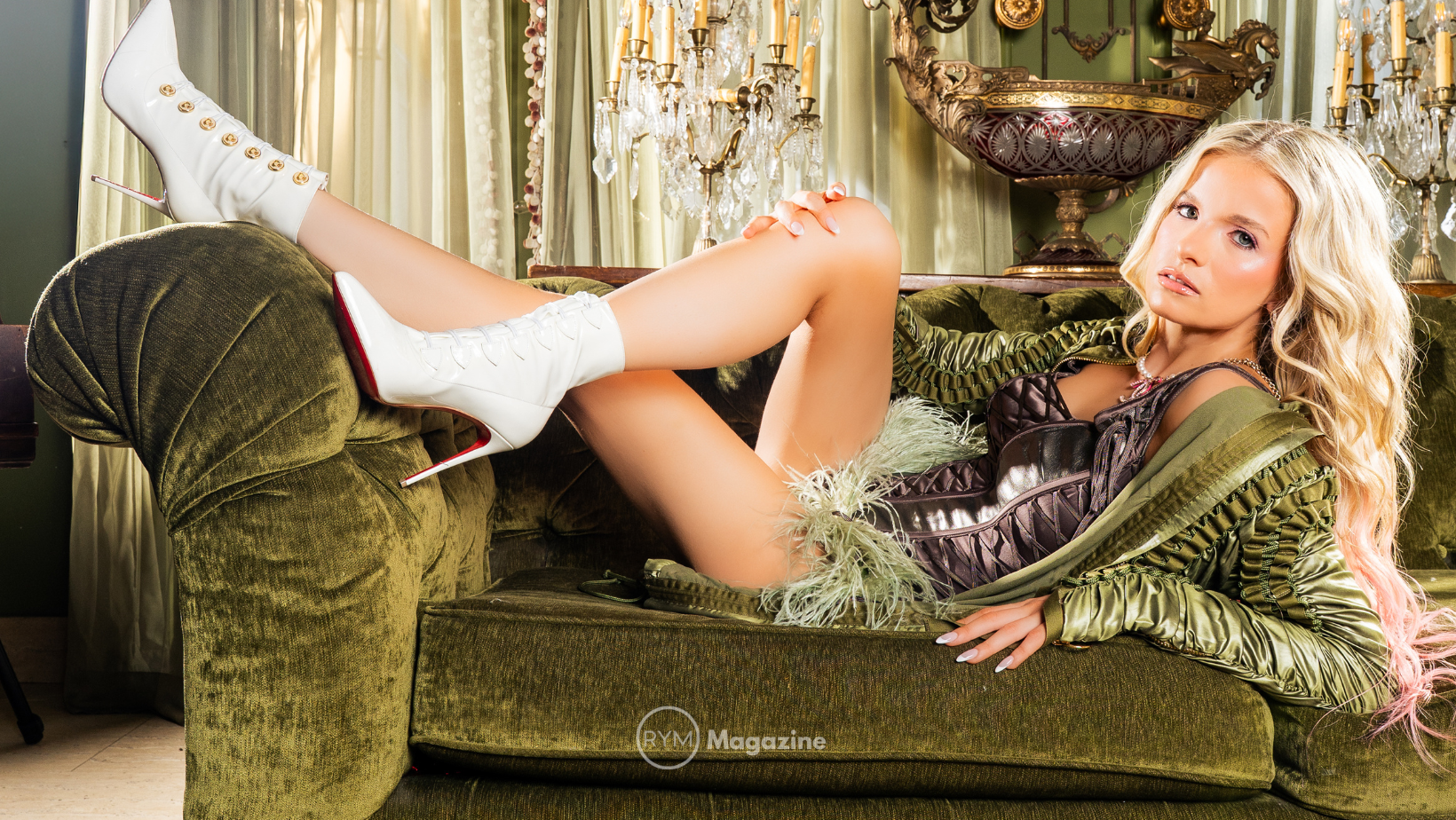
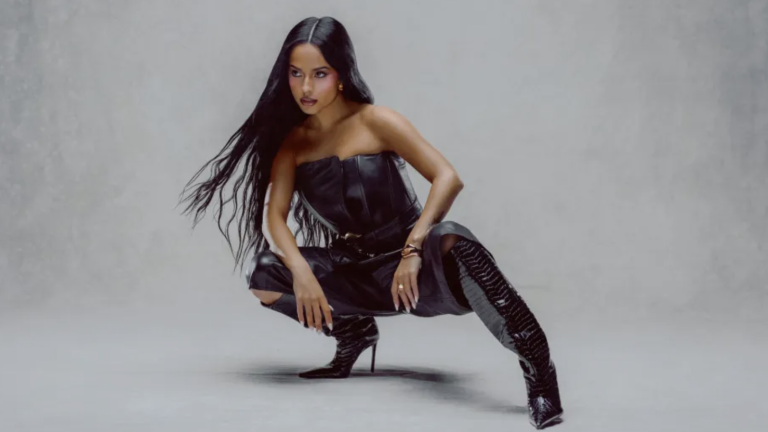
By Kelsey Werkheiser | EXCLUSIVE As the global music business increasingly leans into automated branding and borderless streaming, today's independent American artists are reclaiming their narrative by looking backward to move forward. In this special edition, dark pop artist Izza exemplifies this modern autonomy by subverting a classical European art form—ballet—into a fiercely personal, contemporary LA narrative. Her staunch rejection of AI-generated visuals in favor of hand-built, tactile craftsmanship honors a centuries-old tradition of raw American D.I.Y. spirit at a critical technological crossroads. For anyone tracking the next wave of independent pop music online, chances are you’ve already crossed paths with the vibrant world of Izza. Driven by a signature, self-assured social media introduction—"Hi, I’m Izza and I want to be your favorite pop star!"—the Los Angeles-based artist has rapidly built her footprint through platforms like TikTok and Instagram. Yet, despite her undeniable digital visibility, her music is anything but engineered for an anonymous algorithm. Izza describes her sonic identity as "dark pop," a deliberate fusion of moody, introspective lyrics and atmospheric production designed specifically to contrast the bright, highly polished sheen of mainstream commercial pop. It is a sound born from patience and creative intuition rather than corporate boardrooms. With her upcoming two-part EP, A Night at the Ballet: Act I—with Act 1 arriving July 17th and Act 2 scheduled for later this year—and her latest single "LOUDER," she feels closer than ever to a definitive, authentic sound. The track "LOUDER" hit platforms alongside a cinematic music video featuring dynamic choreography, signaling a new era of high-concept performance. "I think my sound is especially strong with this project," Izza notes, reflecting on her rapid artistic evolution and her shifting mindset. "I'm getting a little edgier and unapologetic, just not afraid to speak my mind... I'm always trying to encourage people to be themselves." This intentional growth marks a turning point for an artist who has been actively releasing music since 2020 while exploring her exact place in the modern pop landscape. "I've been developing as an artist and finding what makes me light up the most, and this is that." "I'm getting a little edgier and unapologetic, just not afraid to speak my mind... I'm always trying to encourage people to be themselves." — Izza Having used songwriting as a therapeutic outlet since childhood, Izza’s creative habits have shifted from solitary laptop typing toward dynamic collaboration with a co-producer. While she has actively expanded her technical toolbox as a writer, artist, and producer, her therapeutic relationship with the music remains intact. "Songwriting was something I did to get out how I was feeling, and it was very therapeutic," she reflects on her roots. "It was always something I did alone, but now I have a co-producer I work with, and he's great." To preserve this emotional outlet, she avoids spending grueling hours at her computer trying to force lyrics out. "Usually I'll write a verse, and then a day could go by, then I'll write a chorus," she explains. "I like to have time in between. Sometimes it just flows out, but I think writing in 20 to 30 minute intervals is what has worked best for me. It gives me time to digest and to think." A critical breakthrough in her songwriting method came from a surprising place: creating holiday music. "I actually learned that through the holiday music I was making, because when you're making holiday music, that's a strict topic. I found that a lot of my best writing was actually in those songs," she says. "I felt really concentrated on those specific themes, so that's what I've been doing ever since." Grounding her concepts in a central theme or a specific song title helps guide the entire creative journey. Her past project, Confessions of a Valley Girl, explored her upbringing in Los Angeles by revisiting past versions of herself. For her latest project, she is drawing directly from her childhood background in ballet. "The song 'Swan Lake' was one of the first songs I wrote for the project, and I felt like that was a great metaphor for what I was going through [at the time]." By leaning into a classical ballet rooted in tragedy, deception, and doomed love, Izza offers listeners raw insight into her personal life while subverting an elite, traditional European art form into a contemporary pop vehicle. For over two centuries, the American musical landscape has systematically democratized "high art" forms exported from Europe. From early 19th-century theatrical parodies to the mid-century pop-ballet fusions of Hollywood's Golden Age, American musicians have long stripped the rigid, elite barriers from classical disciplines to make them raw, emotional, and accessible to the masses. Izza’s transformation of classical ballet aesthetics into moody "dark pop" anthems continues this long-standing tradition of American artistic subversion. This meticulous attention to detail extends heavily into her visual identity, which she values just as much as the music itself. For this rollout, Izza went all-in on the ballet motif, even designing a custom dress featuring a band of real pointe shoes circling the waist, brought to life alongside costume designer Eddie. "I was really happy with how it turned out," she remarks. "Now I want one in every color!" Her most viral aesthetic moment, however, was born from a stroke of logistical chaos. Originally intending to feature a massive pile of ballet flats in her "Prima Ballerina" music video, the shipment of 500 shoes arrived a day after the cameras stopped rolling. Rather than scrapping the concept, she repurposed the physical shoes for cover art and social media content—a pivot that quickly captured the internet's attention, with one Instagram Reel alone generating over 4 million views. "I'm kind of happy that they didn't show up on time, because I don't think what we executed would have happened the way it did," Izza shared. "Sometimes things happen for a reason... It was one of those happy accidents." Crucially, Izza makes it a point to remind her audience that these striking, high-production visuals are entirely real, explicitly rejecting CGI or artificial intelligence in her creative process. "I've always been someone who loves to create... and the act of making things is what makes me love what I do," she says. "So to [not do] that just seems kind of unimaginable. I can't imagine having a computer do that [for me]. I think the real thing always looks better, and it feels real and that's what makes it fun for me." "I can't imagine having a computer do that [for me]. I think the real thing always looks better, and it feels real and that's what makes it fun for me." — Izza The American music business was built on tangible, industrialized craftsmanship—from the physical pressing plants of Tin Pan Alley to the hand-sewn stage costumes of rock and pop icons. As the global industry faces an existential pivot toward AI-generated branding and digital shortcuts, an artist insisting on hand-designed wardrobe and physical props isn't just making an aesthetic choice; she is preserving the tactile, human-driven labor that has defined the core of the creative arts for centuries. Rather than viewing the demands of digital content creation as an exhausting secondary job, Izza treats it as a direct channel for global connection. "Any way to showcase what I'm doing and share it with the world is great...and that you can reach so many different people with the touch of a button is crazy," she says. "I enjoy showing my process and connecting with fans. I'm always DMing fans, talking to them and replying to comments... I think that's such an important thing because it builds that relationship." She maintains an active relationship with her community, ensuring the human element of her brand is never lost to automation. Following the release of A Night at the Ballet: Act I, Izza’s next major hurdle is transitioning this deeply specific visual universe onto the live stage. "I definitely want to have ballerinas, for sure," she notes as she excitedly maps out future live performances and show aesthetics. "I think that'd be so cool to have dancers on stage and just incorporate more of the world I've been creating. I've been thinking about it, 'How do I take this live?' I think it will be very exciting." For an artist dedicated to true artistic autonomy, bringing this complete, unfiltered world to her audience is the ultimate finish line.