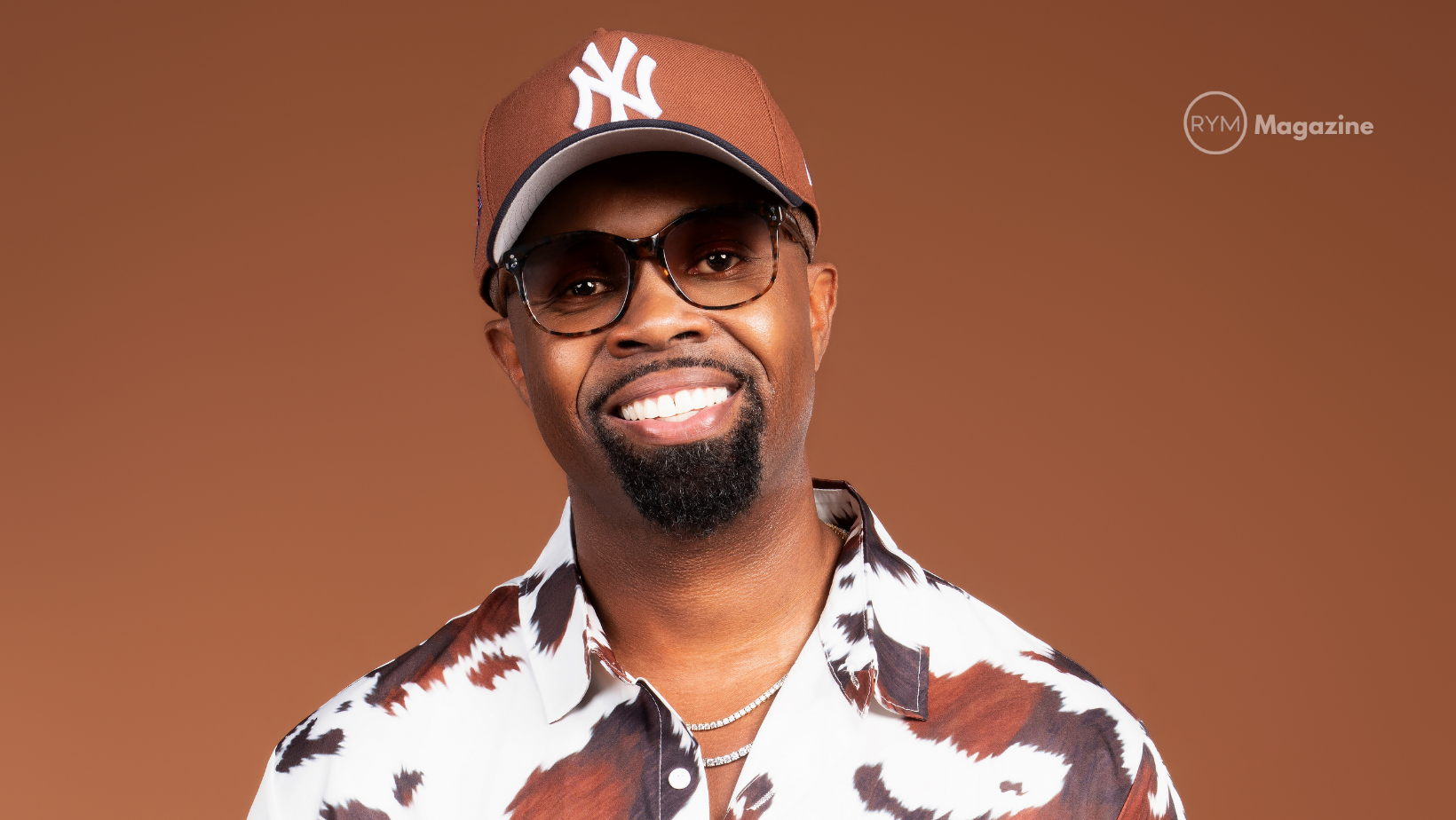
EXCLUSIVE | By Gustavo Martir M.A & Victorio Gomez The history of rhythm and blues is usually defined by its geographic capitals—the jazz of New Orleans, the soul of Detroit, or the blues of Chicago. Yet, the true heartbeat of the soundscape is found in the physical rituals that bring people together. Cupid is the architect of one of the most enduring collective rituals in modern history. But his legacy goes far deeper than a single viral dance. From his early days pioneering "Swingout music" in southwestern Louisiana, to surviving a devastating stroke that temporarily threatened his voice, and finally to launching his own independent record label in 2025, Cupid’s story is the ultimate blueprint for artistic sovereignty. He stands as a living testament to how an artist can bypass the traditional major label machine, turn community wellness and corporate alignment into a direct distribution network, and make the entire world dance on his own terms. Louisiana has always possessed a rich musical history, from Cosimo Matassa’s legendary J&M Studios—where Fats Domino bridged boogie-woogie into rock 'n' roll—to the evolution of Swamp Pop, Zydeco, and New Orleans Bounce. Growing up in Lafayette, Cupid was immersed in this highly syncopated landscape. It fundamentally shaped his understanding of rhythm, crowd control, and vocal delivery. "My style is very different," Cupid explains. "I don't think anybody's ever seen anything like the type of music I make, industry-wise. And it's because all of those elements... I'm surrounded by Zydeco, I'm surrounded by jazz, I'm surrounded by second line, I'm surrounded by bounce. So it's a collection of all of those things together which makes my sound. And then I incorporate the dancing part, which you know, we dance a lot here in Louisiana, too." "I just want people to understand that the type of music I make is probably some of the most important music ever made... I got the type of music that can bring the Republicans and the Democrats, the white, Black, Mexican, Latino, Asian together." Long before achieving global commercial stardom, Cupid independently pioneered what he coined as "Swingout music," designing a subgenre to get partner dancers back on physical dance floors. Then came 2006, and the creation of a modern cultural ritual: the "Cupid Shuffle." Freestyling those lyrics in the studio, he didn't immediately recognize he was designing a piece of foundational musical architecture. "I was 10 years in the game before I made 'Cupid Shuffle,'" he reflects. "I knew 'Cupid Shuffle' would be something special, but the thing about [it] that was different was it was the first line dance that had really taken a storm since 'Cha Cha Slide.' I didn't think at the time the industry was going to understand what it was. But the culture, the community... it took off, man." Today, the song is a permanent social fixture, but Cupid is quick to point out the deep, competitive, and culturally pure underground scene that keeps this movement alive. "Before the trail ride movement and all of that, man, that was the urban line dances. And I mean, they've been doing that for almost 20 years. We looking at almost 15 to 20 years of people doing it underground and enjoying it, and that's why it's so pure and so authentic because it hasn't been tainted by trying to be manufactured." Cupid | Photography By: Demetrious Williams After the explosion of the "Cupid Shuffle," Cupid signed with Atlantic Records. However, major labels have historically struggled with region-specific, community-driven genres, often failing to grasp the slow-burn business of Southern Soul and dance culture. By 2009, he had returned to the independent path. "In 2007, like line dance music, nobody was trying to hear that, bro," Cupid admits. "People thought I was crazy! But I never wavered and tried to change. So when it became popular, I was already 20 songs in the can... rather than chasing what was hot, I just did me until what I do became the standard." He learned a crucial lesson about the major label machine: "The one thing about a label is it'll make you lazy. You get to these companies and they got people in different departments doing all of these things for you... I feel like a successful artist is an artist who never stops working. The labels are moving to where's the next hot artist. Like they don't got time to wait three years for a song to blow up. And because they don't have the patience, it allows the independent who has patience to be able to excel." "Sometimes, man, when your back against the wall, and you ain't got no plan B, it gotta work."Cupid That independent grit was put to the ultimate test in 2016 when Cupid suffered a stroke that threatened his ability to speak and perform. Facing a profound crisis, he was forced to pivot. Instead of relying solely on traditional radio, he turned to wellness and corporate partnerships. "After I got dropped from the label, I didn't have a plan B," he shares. "I started trying to create my own avenues... I figured I can approach it from a fitness aspect. So I started CuRobics, line dance aerobics." His alternative distribution strategy didn't stop there. He launched massive, participatory campaigns with global brands, including the "McCafe Shuffle" for McDonald's and the Sony Award-nominated "Walmart Shuffle." As he puts it: "There's gotta be a way for me to put my music in different places where it's gonna fit and benefit me, until I either get my next hit or until the world catches up." Today, the world hasn't just caught up; it is following his tempo. Cupid’s international reach has taken historic turns, from performing for active-duty military service members across Kuwait, Qatar, and Djibouti with Armed Forces Entertainment, to pushing boundaries with his SOUL EP, featuring smooth R&B ballads performed in Vietnamese. "It's a blessing, man," he says of his global footprint. "I always wanted to be a worldwide star, you know. And to know that I have a song that's never—there's nowhere on the planet that they haven't heard it, is humbling." In 2025, he codified his independent blueprint by launching TOC (The Official Cupid) Music Group, distributed through Sparta. As a CEO, he is actively mentoring a new wave of musical talent, ensuring independent Southern artists don’t suffer the predatory pitfalls he navigated. "I'm the worst, best label owner ever," Cupid laughs. "I'm the best as far as [the] artist. Like I just want to see my artists be successful. I'm the worst because I don't operate like a traditional label... I don't be wanting they money. I be wanting them to be successful. Ultimately, I only sign artists who appreciate the journey. If I tell you in a meeting, 'Hey, what's your goal?' and you tell me to sell 10 million records, then I'm probably not gonna want to deal with you because I know that if we meet 10 million, you're not going to be satisfied. The journey is not over." Cupid's philosophy as a music executive flips the traditional industry model on its head. "I don't want to live with the karma of knowing that I signed an artist to mess over 'em," he states. By operating with financial independence and an organic timeline, TOC Music Group prioritizes the marathon over the sprint. "The independent grind is different," he notes, emphasizing that longevity comes from passion rather than forced virality. "You gotta have some money. You can can't be independent and not have no money... But when you start wanting to get into the upper ranks man, independence takes a little funding as well." An astonishing creative endurance fuels this executive era. His latest studio album, The Linedance King, features a staggering fifteen tracks, each accompanied by a unique, personally choreographed dance step. He’s also stepping into heavy-hitting collaborations, like joining forces with Keith Sweat, King George, Calvin Richardson, and Roi "Chip" Anthony for the harmony-rich Southern Soul groove, "Still Got That Good Love." For Cupid, the relentless output is tied to his survival. "A friend of mine... an MMA fighter... said, 'A non-busy Dustin Poirier is a dangerous person to himself.' And when he said that man, that really like hit... If I'm not busy, I'm harmful to myself. I would mentally beat myself up because I would feel like I'm not doing what I'm supposed to do." As the industry looks back at the legacy of music that shaped it, Cupid stands as a 5× Platinum phenomenon who built an empire on unity. Soon, fans will get to see the unfiltered story in his upcoming documentary, Mr. Cupid Shuffle. "I got the biggest dance song in the world, and nobody knows where it came from, they don't know the true stories, the deep down, nitty gritty stories," he says. But looking back at the journey—the highs, the health scares, the label battles, and the independent triumphs—he has zero regrets. "I can wake up in the morning and not be mad at none of my decisions. The normalcy I get to have, the joy I get to have to watch my kids be successful, man, and be in my family day to day is what I appreciate the most. I just fought in that lane and I stayed consistent in that lane, trying to promote unity."