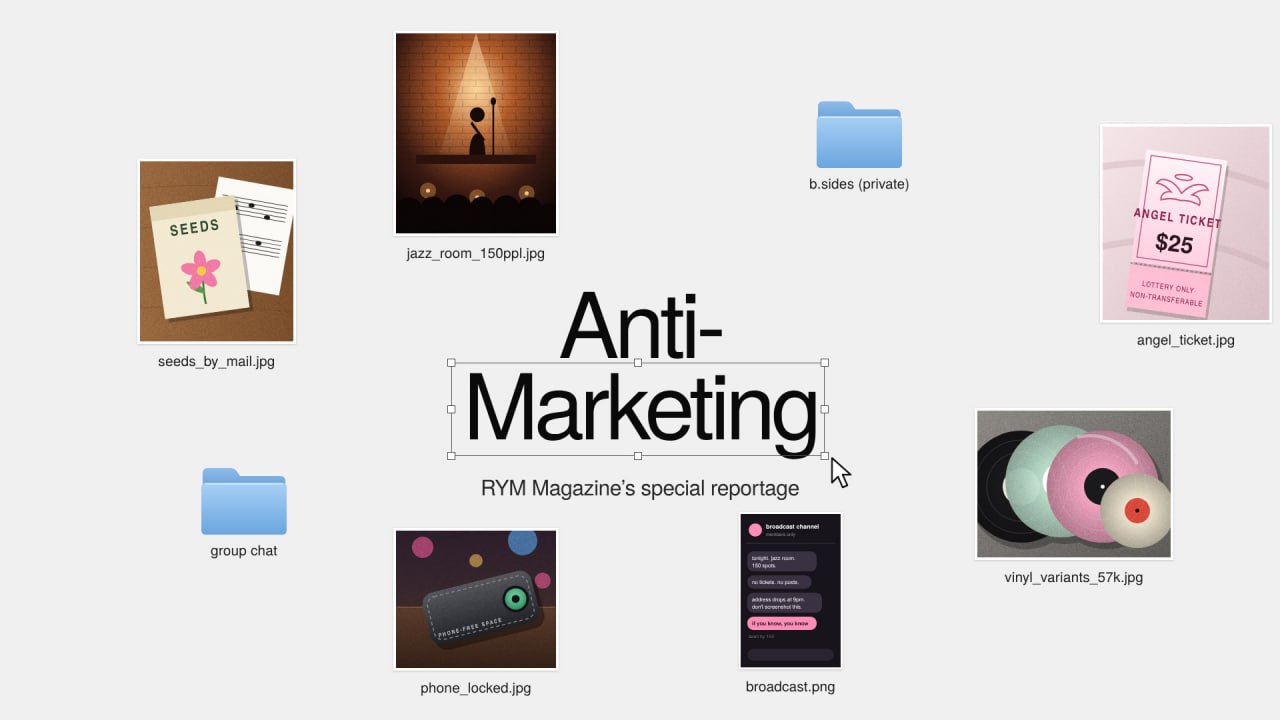
From Charli XCX’s secret Instagram to Jack Harlow’s 150-person jazz room, the biggest artists are deliberately going small. This is RYM’s special reportage of what anti-marketing actually is, which campaigns made it work, and how the industry can use it without becoming a cliché.
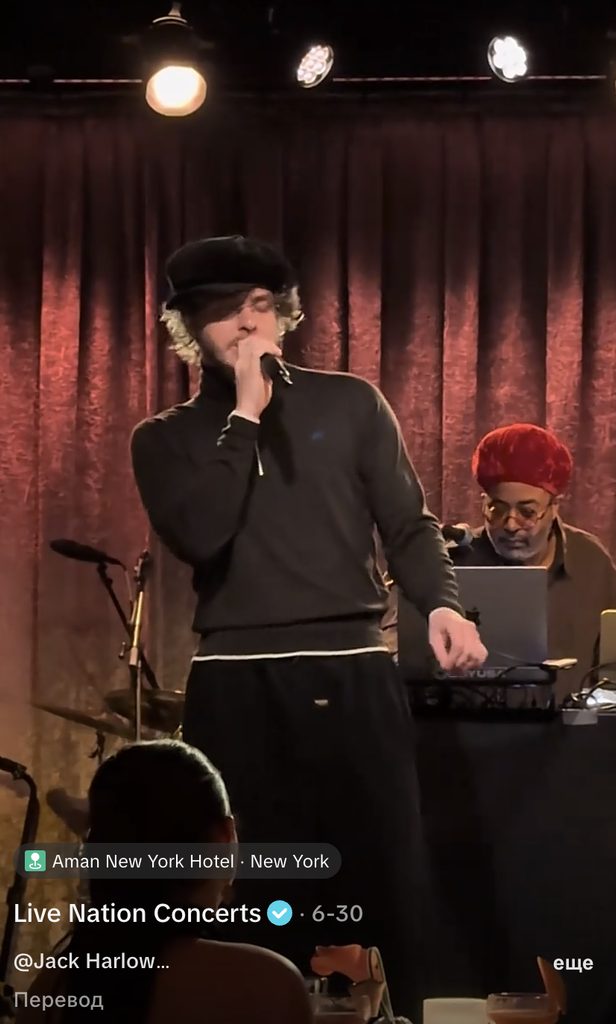
On June 29, about 150 people stood in an underground jazz venue at the Aman Hotel in New York and watched Jack Harlow perform. There was no ticket link, no Instagram post and no press push. The show was announced only on his broadcast channel, to fans who had opted in. If you weren’t on that list, no algorithm was going to tell you about it.
Writing in Music Business Worldwide, columnist Diana Umana, who was in that room, called it one of the most effective pieces of music marketing she saw all year. It was also built to reach almost no one. Welcome to anti-marketing.
So what is anti-marketing?
Two weeks after Harlow’s show, Charli XCX gave the instinct a name. On July 13, just before releasing Music, Fashion, Film, she posted that “anti marketing” was about to become a thing. She was clear that it’s still marketing, just more intimate, more personal, one-on-one and, in her words, “less about the projection of scale.” The post passed five million views. Half the internet called her a visionary, so what exactly is new?
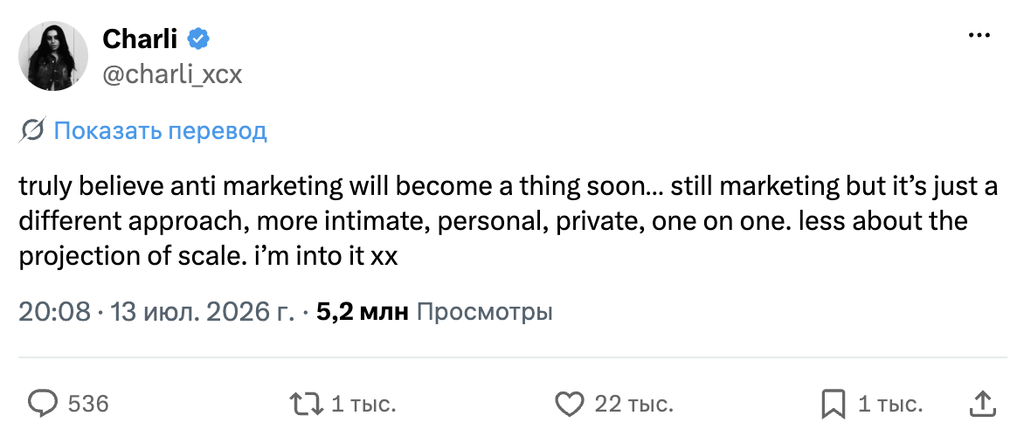
Both halves have a point. Anti-marketing is not the absence of marketing, and it isn’t marketing done badly on purpose. Ainoa, an agency that specializes in this approach, describes it as strategic restraint, honesty and provocation, used to stand out in a landscape that is oversaturated and increasingly shaped by AI. Instead of shouting louder than everyone else, you lower your voice and let people lean in.
There’s also a reason it works now. In a piece published by The Drum, Snapchat argues that the real influence in culture has moved somewhere marketers can’t buy a billboard – the group chat. That’s where people actually decide what to watch, wear and listen to. The most important conversations in marketing, the piece suggests, rarely look like marketing at all.
From the Bookshelf: This Is Marketing
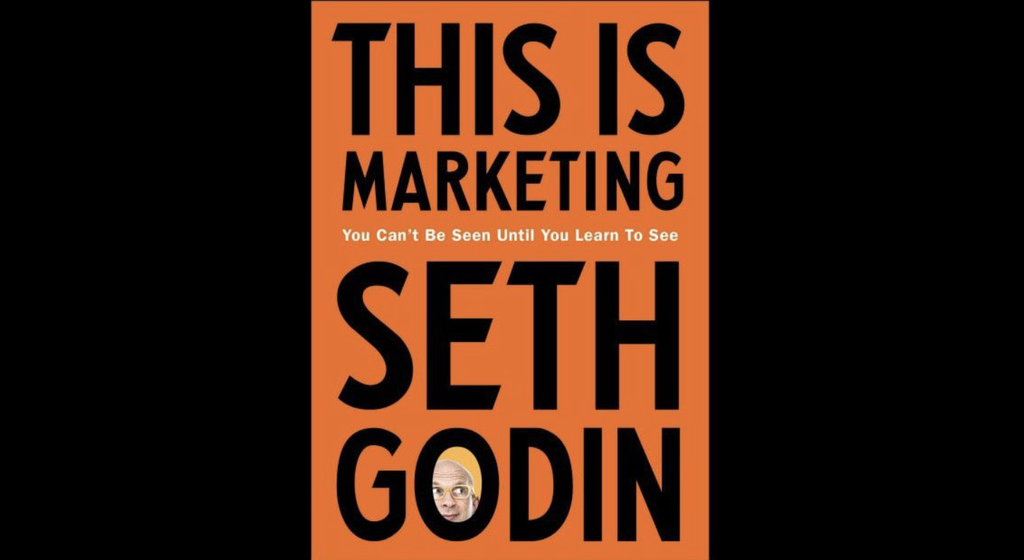
Long before Charli’s post, Seth Godin made the same argument in This Is Marketing (2018). Two of his ideas explain most of what you’ll read below.
The first is the smallest viable market: instead of trying to reach everyone, find the smallest group of people you can genuinely change, and serve them so well that they spread the word. The second is a line that sums up how culture travels: “People like us do things like this.” Fans don’t share music because an ad told them to. They share it because it says something about who they are and which group they belong to.
Put those two ideas next to Kevin Kelly’s famous 2008 essay “1,000 True Fans,” which argued that a creator can make a living from a thousand devoted supporters, and you have the theory behind anti-marketing. Charli, Harlow and the others are simply running it at superstar scale.
The old school: anti-marketing before it had a name
To be fair to the skeptics, music has been doing this for a while.
Let’s get back to 2007 and revise legendary “In Rainbows” by Radiohead. The promotion of the album implied no label, no long campaign, and a download that cost whatever you wanted to pay. The price became the story, and the story became the promotion. Magnificent Beyoncé on the album of the same name in 2013 discovered the art of the anti-marketing before the experts gave a definition of it. No single, no announcement, no warning. On Dec. 13, 14 songs and 17 videos simply appeared. Her confidence was the marketing.
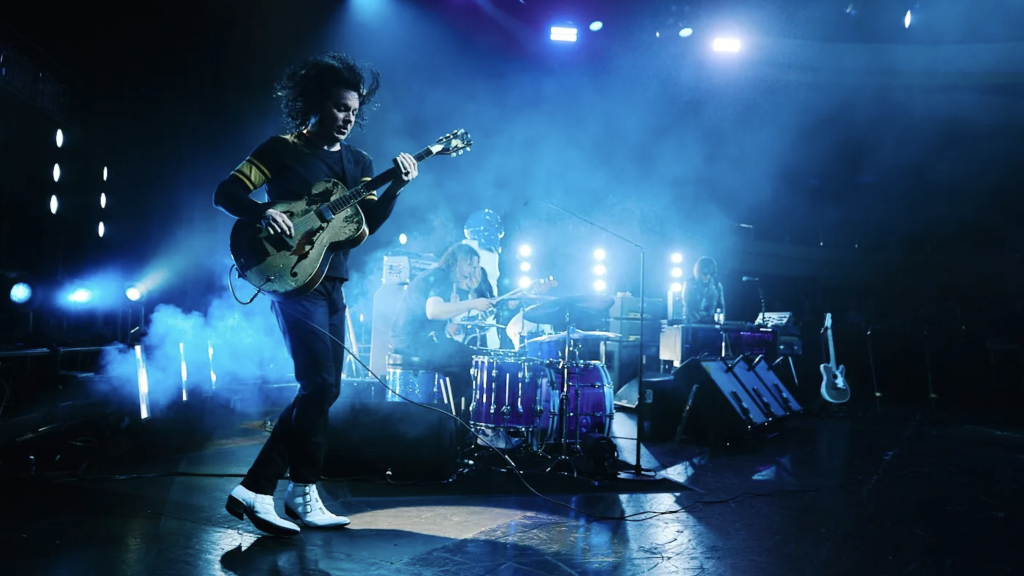
After years of silence, Frank Ocean released the visual album Endless and then Blonde days apart, with a print magazine, Boys Don’t Cry, handed out at a few pop-up shops. If you weren’t there, you were looking for it on eBay. Jack White was one of the first who provided the idea of the phone-free tours in 2018. Fans locked their phones in Yondr pouches at the door. Fewer shaky clips online, more people saying “you had to be there.”
What’s different in 2026 is that anti-marketing has moved from a stunt by a few rule-breakers to a deliberate strategy, and the industry now has numbers to judge it by.
The new wave: 2025–2026 case studies
Charli XCX, Music, Fashion, Film
The irony is the argument. The artist behind Brat, the most aggressively visible campaign of the decade (that green, that Brooklyn wall, that election), decided the next record would be quieter.
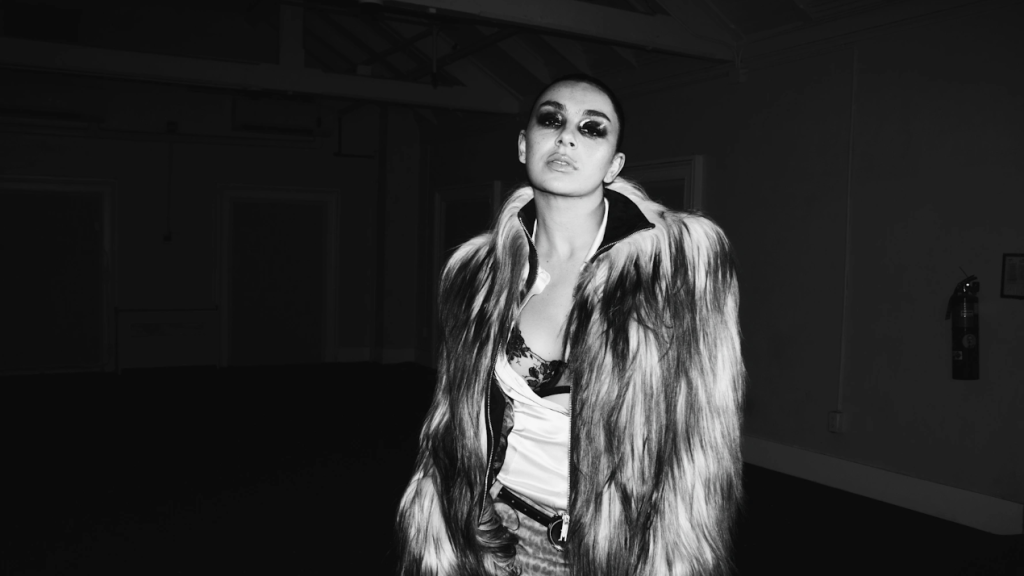
According to Curiosity, the rollout opened with an album cover featuring John Cale, Marc Jacobs and Martin Scorsese together in one shot, a news story in itself, followed by a Vogue line designed to start fights: “The dance floor is dead.” After that, the campaign moved to her second private Instagram account @b.sides. It has roughly 415,000 followers, compared with 9.2 million on her main account. The album was previewed at one-night listening events in independent cinemas, such as Metrograph in New York and The Castle Cinema in London. A second wave of screenings, the night before release, was announced only through @b.sides. On July 10, she played the 650-capacity Music Hall of Williamsburg with Clairo, underscores and Kim Petras. On her arena tour, $25 “Angel Tickets” were sold by lottery and couldn’t be resold.
And the result? Music, Fashion, Film debuted at No. 3 on the Billboard 200 with 78,000 equivalent units, edging out Brat’s 77,000 for the biggest opening week of her career. It also topped the UK chart. The telling number is the split: about 57,000 units were pure sales (vinyl variants, CDs, signed copies), and streaming accounted for only about 21,000. As MBW put it, anti-marketing didn’t beat scale at its own game. It converted a different customer: the devoted fan who buys the record, sometimes more than once.
To be honest, the campaign was never as small as it looked. There was a Rolling Stone cover, a Lollapalooza headline slot, an arena tour and about two dozen format variants. New York Magazine called out the contradiction, and the critique is fair. Anti-marketing doesn’t switch the machine off. It points the machine somewhere else.
Doja Cat and Phoebe Bridgers: the phone-free room
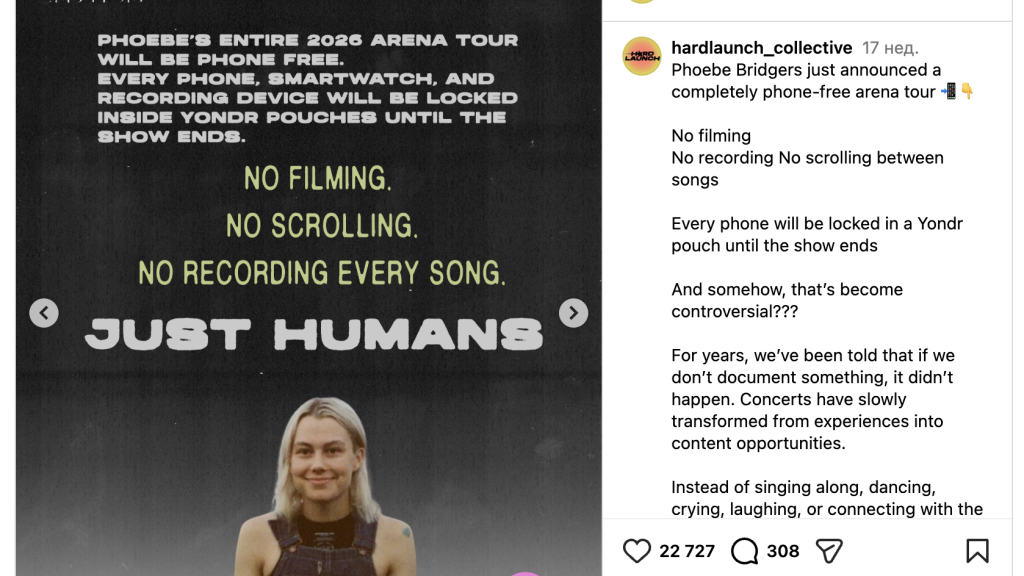
Doja Cat hosted 15 fans at an undisclosed West Hollywood address, with phones banned, in partnership with Airbnb. Phoebe Bridgers played a surprise, device-free show at Madison Square Garden. As Curiosity’s marketing director pointed out, the real win wasn’t the fan videos, because there weren’t any. It was the headlines, the debate and the FOMO (read more about this phenomenon in this article) afterwards. If you were there, you’re a fan for life. If you weren’t, you have to read about it.
Dua Lipa, Demi Lovato, SZA: the owned channel
Service95 – is Dua Lipa’s newsletter that contains media and a book club all in one. According to Billboard, the service was inspired by Dua’s longtime habit of personally curating recommendations and lists and pointing out lesser-known “people, pieces of pop culture, travel destinations, hidden gems and global issues to her closest friends.” Now, she’s widening her circle and preparing to spread her knowledge to anyone who signs up. It is a clear image of the anti-marketing promotion through the spheres that are not quite obvious for the musician’s marketing team.
Hosting podcasts from home with the unique architectural details in the background and recommending something that feels so whole-heartedly private for the audience (not just a lipstick or a perfume but a piece of art by a niche author) builds a peculiar aura around the celebrity that attracts people who are more into the topic of a certain discussion that is not well-spoken in the mass culture.
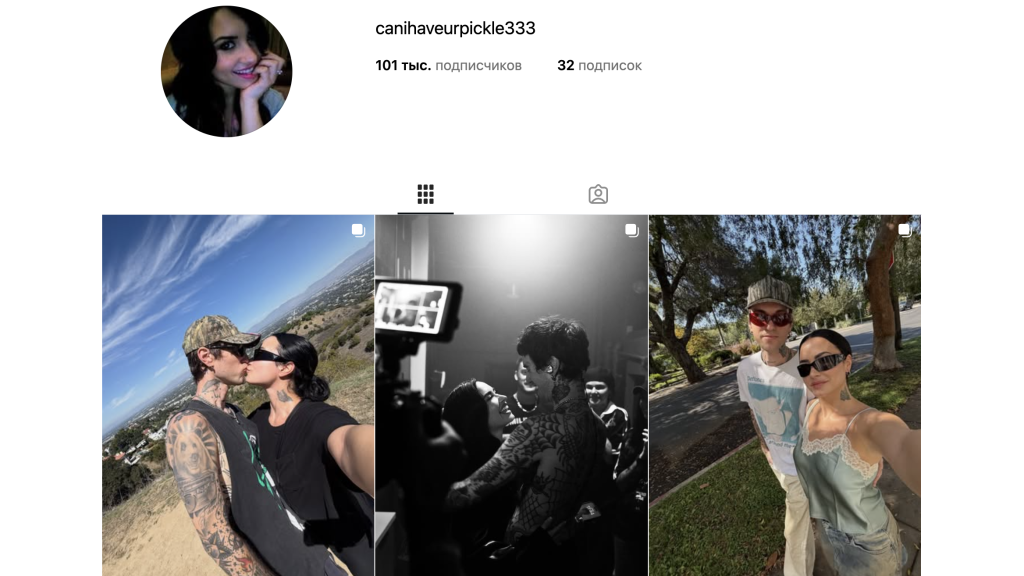
Popsugar Australia ironically adds “Being a celebrity on social media can be tough, so we can understand why some choose to opt for the ‘finsta’ or burner account route. Some make those accounts public, posting photos that feel noticeably less curated than what makes it onto their main feed. Others keep them private, leaving fans to request a follow and hope that they make the cut“. The most famous finstas of the celebrities include Demi Lovato’s @canihaveurpickle333, SZA’s @notmusicatalliswear and Rachel Sennott’s @treaclyproductions. Celebrities don’t promote them, you can discover their second accounts with the exclusive photos only if you are a real fan or someone told you about them. The mystery attracts, so you decide to follow, the awkward morning photos make you laugh and comment and then you don’t even have time to notice how you are saving money to buy a ticket to their concert.
The counterargument: when going small goes wrong
Anti-marketing has real risks, and pretending otherwise would be, well, marketing.
The first is that it can feel fake. Ainoa’s own guide warns that without real substance behind it, anti-marketing quickly looks gimmicky, manipulative or cynical. Fans can smell manufactured scarcity from a mile away.
The second is that silence isn’t a strategy. In a Forbes piece this May, Casey Childers, VP of digital strategy at ONErpm, called going dark before a release overplayed. The counterexample is Sabrina Carpenter’s Short n’ Sweet: her team stayed visible from the moment “Espresso” debuted at Coachella until release, and won a Grammy for Best Pop Vocal Album without a single moment of staged silence.
The third that the small musician’s team should know is that intimacy only reads as a statement when you have scale to reject. When Charli plays a 650-capacity room, the smallness is the story. When a developing artist plays the same room, it’s just a Tuesday. As MBW’s Umana put it, anti-marketing is a strategy “for surviving being big.” It isn’t a strategy for getting there.
Though here’s the twist. If devotion is what converts, the developing artist who never had scale to begin with may have been running the right strategy all along.
Conclusion
Anti-marketing should not be mistaken for a passing aesthetic choice. It’s a calculated reaction to an age defined by fatigue with repetitive patterns, growing consumer doubt, and the way AI now shapes what people discover. When you practice deliberate restraint, disrupt expectations, and use genuine scarcity that mirrors your core principles, you offer audiences something uncommon in today’s marketing: the feeling of being respected rather than manipulated.
For years, the music industry measured success by how many people saw something. Anti-marketing asks a more uncomfortable question: how many of them actually cared? If you know, you know. And if you don’t, maybe that’s the point.
Sources: Music Business Worldwide, “The Intimacy Economy” · Curiosity, “Anti-marketing: how brands can do it without being gross” · The Drum / Snapchat, “Group chat summer?” · Ainoa, “What Is Anti-Marketing?” · Forbes, “Music Marketing Needs To Leave Behind These Ineffective Rollout Moves” · Seth Godin, This Is Marketing (Portfolio, 2018)
About the Author