By Victorio Gomez, Gustavo Martir
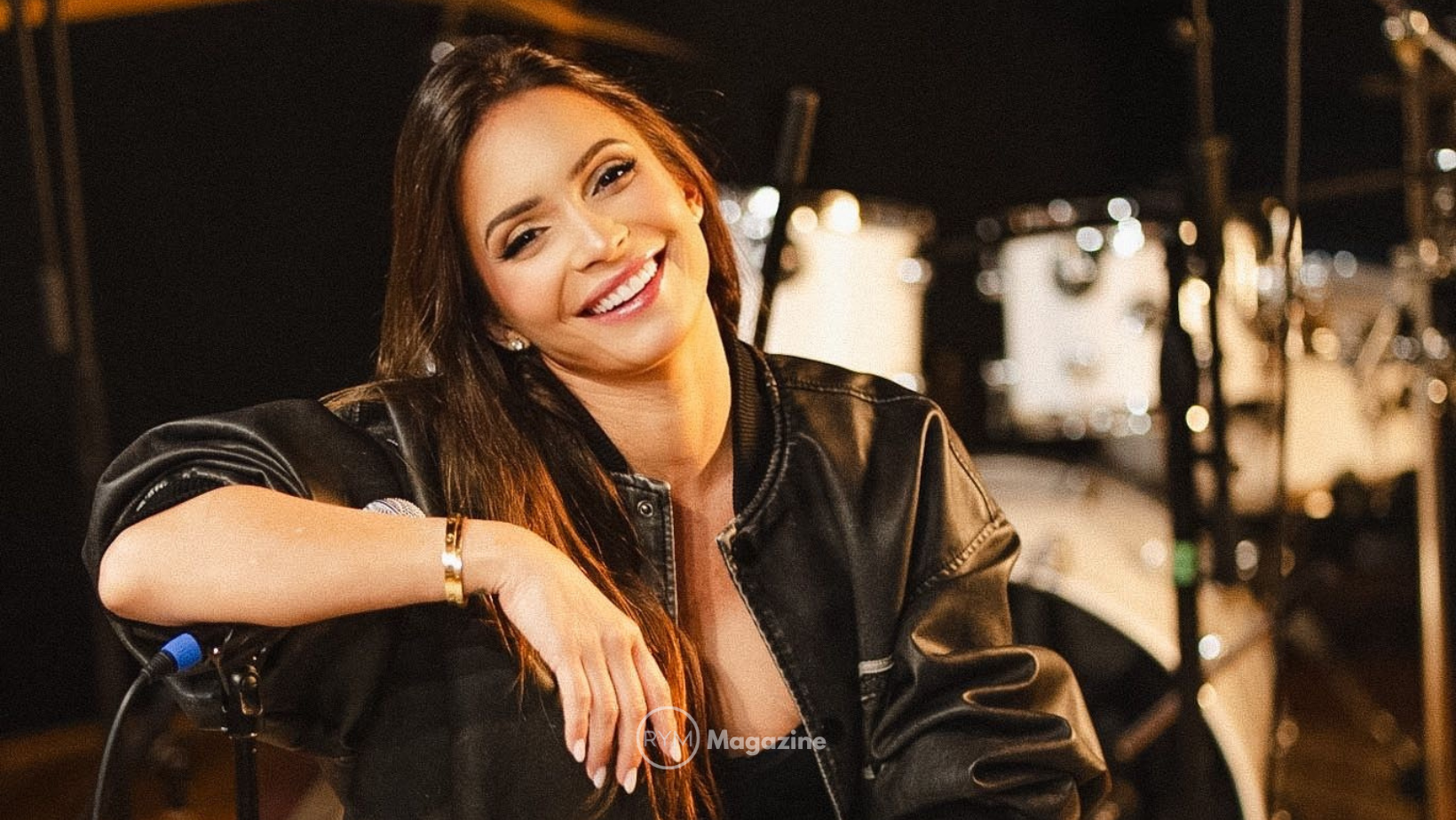
With a career defined by unwavering authenticity, the Cuban-born singer-songwriter has spent the last decade building a body of work that feels less like a product and more like an intimate diary written for the brave.
Her latest album, Flores y Fuego (Flowers and Fire), arrives not as a simple collection of pop songs, but as a deeply transformative emotional itinerary. Spanning the vast topography of human connection—from the tender innocence of passion to the scorch of heartbreak and the quiet dignity of healing—Fuentes delivers a masterclass in self-discovery, resilience, and unyielding love.
We sat down with Fuentes to discuss the duality behind her title, navigating relational survival, the art of genuine collaboration, and why staying grounded as a mother keeps her honest in a viral-obsessed world.
“Significa la delicadeza y la pasión. Todo lo que te empuje a seguir amando.”
Diana Fuentes
The title alone, Flores y Fuego, suggests a striking contrast—a delicate balance between softness and heat. For Fuentes, this juxtaposition isn’t accidental; it serves as the foundational metaphor for her current chapter in life.
“Significa la delicadeza y la pasión,” Fuentes explains gently, reflecting on the dual forces that drive her creative engine. “Todo lo que te empuje a seguir amando el fuego.”
Listeners stepping into the universe of Flores y Fuego are invited on a sweeping emotional journey—a retrospective carved out of an entire decade of living, giving, and receiving love.
“Un viaje emocional de crecimiento, un viaje de mucha experimentación, de muchas memorias, de mucha introspección, de mucho amor propio y también de mucho amor que he dado y he recibido en esta última década de mi vida,” she says.
Among the album’s most poignant moments is “Cosas de Valientes” (“Things for the Brave”), a staggering highlight that speaks directly to those finding the strength to walk away from relationships marked by domestic violence. In a culture that often demands silent endurance, Fuentes uses her platform to spark necessary conversations.

I don’t like to talk about equality with men because I don’t want to be the same as a man, but I do want rights to be equitable in some way. I think there is still a long way to go.””When you have true self-love, when you have your foundations and your limits, your boundaries well-set, and you prioritize yourself first, you have enough love to give. – Diana, On Equanimity vs. Equality
Fuentes acknowledges that while modern society celebrates female emancipation, structural and emotional hurdles remain intact.
“Siento que las mujeres por mucho tiempo han sido o nos hemos sometido a sacrificar muchísimas cosas personales en pos de estereotipos sociales,” she reflects candidly. “Esta canción es para crear ese awareness de que las mujeres no estamos solas. Hay que buscar ayuda y está bien pedirla. Está bien decir ‘no me siento al cien’, está bien decir ‘necesito un tiempo’, está bien decir ‘esto no es lo que yo quiero’.”
In a digital landscape flooded with self-care mantras and disposable advice, Fuentes wants her music to offer something far deeper than temporary social media solace.
“Como mismo hace uno cuando estás haciendo scrolling, que de pronto te llegan frases motivacionales, y sigues haciendo scrolling y saltas para un reel de una receta de cocina y ya se te olvidó la frase motivacional,” she notes. “De alguna manera, que una canción quede y que sea perpetua. Que cada vez que la pongas te recuerde.”
However, Fuentes cautions against the trendy, self-centered trend of modern detachment.
“Yo tampoco estoy de acuerdo con esas frases de ‘lo suelto a todos, mi paz no es negociable’,” she clarifies. “Cuando tú tienes tus boundaries bien puestos y te priorizas, tienes suficiente amor para dar. ¿Qué tipo de amor es el que tú quieres recibir?”
For Fuentes, songwriting is both an act of confession and a vehicle for communal healing. “Casi todas las canciones son reflejos de situaciones que yo he vivido o me han inspirado de otras personas,” she reveals. “Con el paso de los años, mi manera de entender el amor ha cambiado para bien, de una manera más consciente y no negociable.”
Beyond its thematic weight, Flores y Fuego shines through its rich musical collaborations with friends and colleagues like Vicente García. Rather than relying on label-engineered pairings, Fuentes curated every guest appearance out of genuine personal relationships.
“Todos son amigos, a todos les escribí personalmente,” Fuentes shares warmly. “Y gracias a Dios todos accedieron a formar parte del disco. Cada uno puso la pincelada del corazón, cada uno aportó su esencia y su arte, que es lo más importante.”
As Fuentes prepares to bring Flores y Fuego to live audiences across the globe, her goal for the stage show remains strikingly pure. She doesn’t just want fans to hear a concert; she wants them to experience a sanctuary of radical empathy.
“El mensaje del amor: que no nos cansemos nunca de dar amor,” Fuentes concludes, her voice filled with quiet conviction. “No nos cansemos nunca de ser empáticos, no nos cansemos nunca de ser amables, no nos cansemos nunca de ser honestos, no nos cansemos nunca de cuidar la vida que tenemos. Que sea un mensaje de puro amor en todos los sentidos.”
In a world that often burns out quickly, Diana Fuentes reminds us that the brightest flames are those fueled by truth, self-respect, and everlasting grace.
To Read The Full Feature, Order a Copy of RYM Magazine, August 2026, Available Now.
About the Author