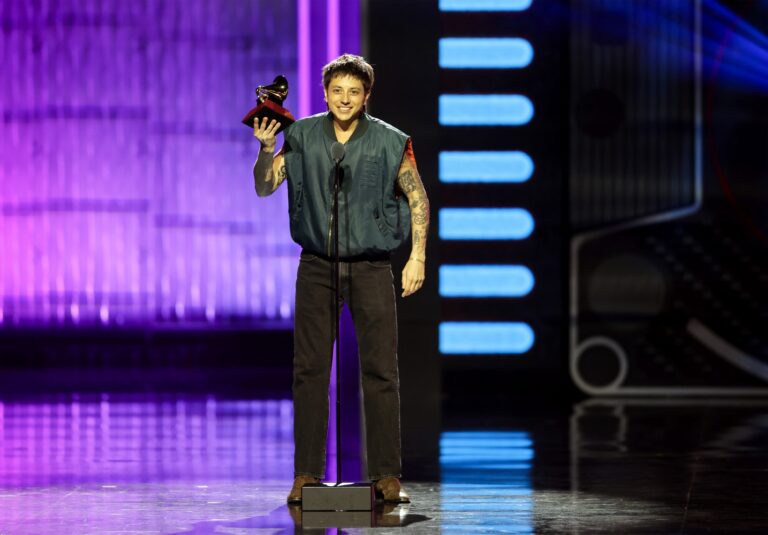
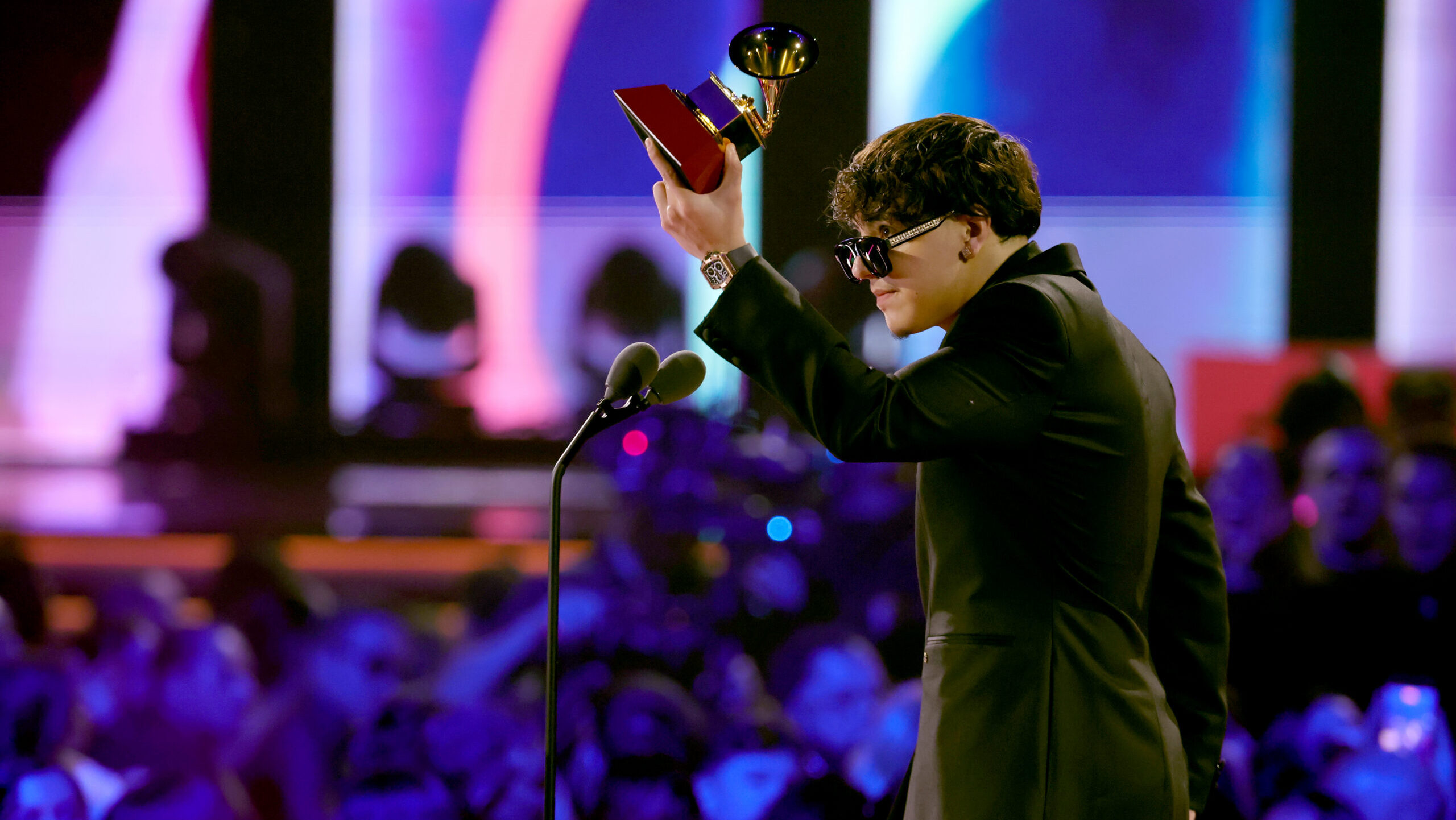
LAS VEGAS, NEVADA - NOVEMBER 12: Xavi accepts Best Contemporary Mexican Music Album for "Dosis" onstage during the 27th Annual Latin GRAMMY Awards at MGM Grand Garden Arena on November 12, 2026 in Las Vegas, Nevada. (Photo by Kevin Winter/Getty Images for the The Latin Recording Academy)
The 22-year-old star takes home his first Latin GRAMMY for his sophomore LP, ‘Dosis,’ dedicating the historic victory to Mexico and young dreamers everywhere.
At the 27th Annual Latin Grammy Awards in Las Vegas on Thursday night, Phoenix-born singer-songwriter Xavi claimed his first-ever golden gramophone, winning Best Contemporary Mexican Music Album for his sophomore LP, Dosis. The victory marks a major milestone: not only is it the 22-year-old artist’s inaugural Latin Grammy win, it also represents the first time a pure representative of the corridos tumbados / sad sierreño wave has captured the young category—which was introduced by the Latin Recording Academy in 2024 and previously won back-to-back by Carín León.
Stepping onstage at the MGM Grand Garden Arena visibly moved, Xavi delivered a heartfelt acceptance speech in Spanish, thanking God, the Academy, his family, his management team at WK, and his fellow nominees—a stacked field that included Peso Pluma and Tito Double P (Dinastía (Deluxe)), Yahritza y Su Esencia (Metamorfosis), Kakalo (De Parte Mía), and Rivs (Contra Todo).
“Significa el mundo para mí; estoy sin palabras, pero escribí algo por si llega otro momento. Primero que nada, gracias a Dios, gracias a la Academia por este reconocimiento, a mi familia y a mi equipo de WK, a mis compañeros nominados—es un honor compartir esta categoría aquí con ustedes. Este premio se lo dedico a mi querido México y a todos los jóvenes que quieran mi sueño.”
Backstage following the ceremony, Xavi reflected on the personal toll behind his rapid ascent and offered candid advice to aspiring artists chasing similar breakthroughs.
“The hardest part is being away from family—having to make sacrifices in order to hustle and pursue it. For example, I left my city to chase this, I was gone for two years, and I didn’t see my family for a while. I think that was the hardest part for me,” he remarked. “I think it’s a lot of hard work, discipline, and tough moments which have made us who we are today, and we just keep pushing forward. I think success isn’t easy, we aren’t alone either, and we’re all in the same boat, doing it for our families.”
The singer also addressed the ongoing debate and scrutiny surrounding corridos in Mexico, dismissing the notion that the genre promotes negative behavior and defending artistic expression.
“I believe music is music and it doesn’t do any harm. Everyone has their own experiences, but I think music isn’t bad, and just because a song says this, it doesn’t mean it influences that. It depends on how people take it, but as for me, it’s all good.”
Before wrapping up, Xavi spoke directly to a new generation of bilingual and bicultural artists—particularly Mexican-Americans raised on English and Spanglish—urging them to lean into their heritage rather than shy away from it.
“The best advice I can give them is: don’t run away from it, make sure you embrace your culture,” he said. “I am Mexican-American—it’s my identity, growing up in the U.S. and growing up in the world of Mexican music. I grew up listening to Juan Gabriel, Vicente Fernández, Selena, and all of them; they were like the inspiration for me. And on the other hand, I grew up with artists like Bruno Mars, Michael Jackson, and I loved the American sound—like many in one. And I feel like one thing that can work is using fusion, everything in it, with a fusion coming. The fusion of music—I think that is the future.”
About the Author