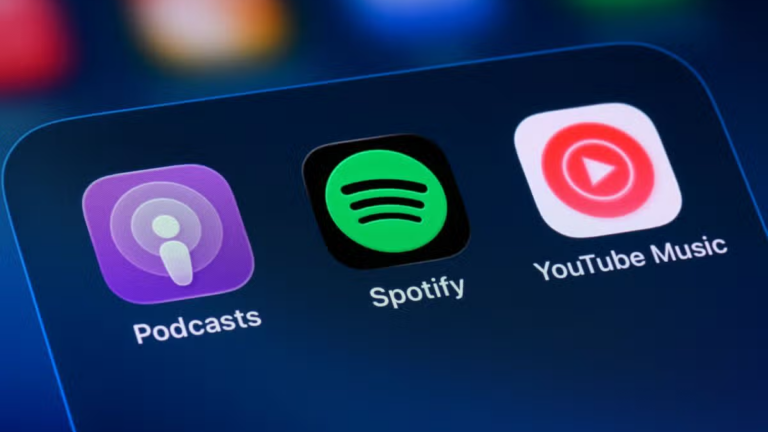
The UK government’s push to restrict children under 16 from accessing social media platforms could reach far beyond traditional networking apps, potentially sweeping up music streaming giants like Spotify in the process.
According to reports, officials are working on new rules set to take effect in spring 2027 that could apply to up to 150 platforms. Rather than simply naming specific social networks, the government is taking a feature-led approach. Tech companies, industry groups, and MPs have reportedly been briefed that the working proposal focuses heavily on recommender systems and user-generated content.
While streaming services are built primarily for listening to audio, modern platforms look increasingly like social networks when you take a closer look. Features like Spotify’s Discover Weekly, Daylist, and personalized podcast feeds rely heavily on recommendation engines, one of the primary triggers in the working proposals. At the same time, public playlists, collaborative listening, short-form video clips, and direct messaging capabilities technically qualify as user-generated content and social interaction.
Because of this overlap, Spotify could technically fall within the scope of the rules if the proposals are enacted, though the streaming service has sought reassurances from officials that it would not face a ban because it is not primarily a social platform. This raises major questions for Spotify’s rivals, including Apple Music, YouTube Music, and Deezer, which may not all rely heavily on user-generated content, yet depend on recommender systems as a core part of their music discovery experience.
Online Safety Minister Ian Murray has maintained that platforms must prove their algorithms and social features do not expose minors to harm, even if a service isn’t traditionally viewed as social media. Speaking during a parliamentary debate on the ban, Online Safety Minister Ian Murray emphasized the government’s goal, stating: “This is not about stopping children from going online altogether; it is about making sure that the services they use are safe and suitable.” Alongside Spotify, non-traditional platforms like YouTube Kids, Lego Play, and online marketplaces such as eBay have also been flagged as potentially falling within the draft definitions.
Industry insiders have pushed back against the working rules as overly vague, arguing that nearly the entire modern internet uses recommendation algorithms to surface content. One industry source said: “The whole internet has a recommender system. The regulation is just too broad. But they want to make it really broad and legally airtight so they can be prepared for any eventuality.”
Culture Secretary Lisa Nandy is expected to present the finalized scope of the regulations to Parliament in December 2026, before they take effect in March 2027. Under the broader legislation, platforms that fall within scope will be legally required to enforce strict age verification, monitored by UK regulator Ofcom, or face fines of up to 10% of their global annual revenue. For now, music platforms and millions of young British listeners are waiting to see whether lawmakers will carve out a clear exemption for audio streaming, or force apps like Spotify to strip back their social and algorithmic features for under-16s.
About the Author