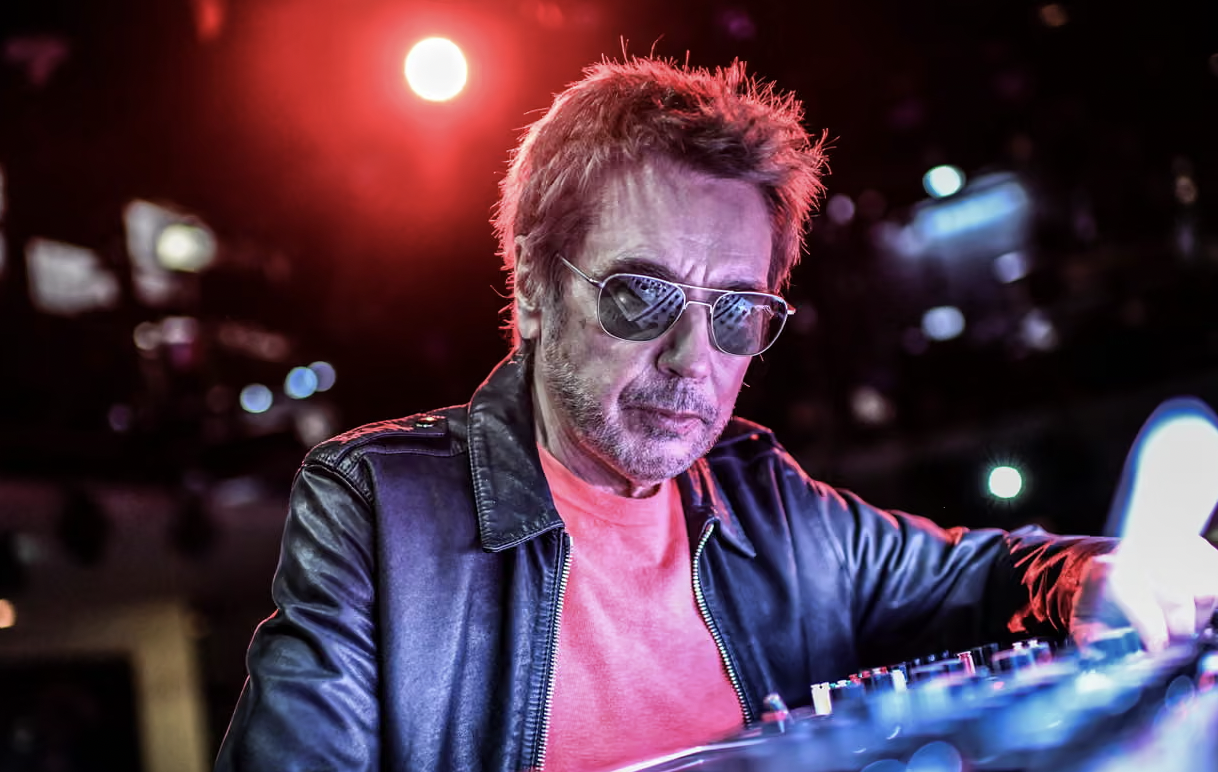
Photograph: Stéphane de Sakutin/AFP/Getty Images
While much of the music world remains locked in legal battles over copyright and likeness, electronic music pioneer Jean-Michel Jarre is calling for a radical shift in perspective. Speaking at the launch of the second AI film festival in Cannes, Jarre criticized the “conservatism” currently defining the music and film industries. He urged creators to stop “freaking out” over the technology and instead embrace it as a catalyst for the next generation of cinema, hip-hop, and rock’n’roll.
Jarre, who has been using machine learning in his own work since 2018, describes the technology as “augmented imagination” rather than a threat to human talent. He draws a direct parallel between the current anxiety surrounding AI and the resistance he faced when introducing electronic music to the French opera house in 1971. At that time, orchestral musicians feared that synthesizers would lead to the end of their profession. Jarre argues that just as the invention of the violin made Vivaldi possible, these new learning models will be the foundation for entirely new genres of art.
Despite his pro-tech stance, the former president of the International Confederation of Societies of Authors and Composers acknowledges that the current landscape is the “wild west” and requires established rules. However, he maintains that the creative process has always involved a subconscious harvesting of memories and culture. He suggests that reducing the potential of AI to simply creating “fake pop songs” is unfair, as it ignores the broader possibilities of the medium.
These comments place Jarre in direct opposition to other major figures like Elton John and Dua Lipa, who have expressed deep concerns regarding models trained on copyrighted material without compensation. While many artists are currently fighting through courts to protect their works from being scraped, Jarre views the situation as a standard technological revolution. He compares the current moment to the emergence of the Fairlight sampling system in the 1970s, which was eventually embraced by innovators like Peter Gabriel and Herbie Hancock to expand the boundaries of recorded music.
About the Author