GEPE | Mothilal Rajesh [RRR Photography] For RYM Magazine | Santa Ana. CA
COVER STORY EXCLUSIVE | By Victorio Gomez, Vanessa Torres
By translating the sweat of the drum kit, the geometry of graphic design, and the ancestral rhythms of South America into indelible pop hooks, Daniel Riveros has spent two decades reshaping Latin American music. In this expansive feature, he reflects on growing up in San Miguel, wrestling with adult social anxiety, communing with folcloristas, and discovering who he is when the carnival leaves the stage.
To understand Daniel Riveros, you have to stand where the pavement of southern Santiago begins to hum. Long before he was Gepe—the multi-instrumentalist whose kaleidoscopic pop has packed venues across Chile, Mexico, Spain, Argentina, Peru, and Colombia—he was an observant kid wandering paradero 7 of Gran Avenida in the working-class commune of San Miguel. It is the exact neighborhood that, two decades prior, birthed Los Prisioneros, Chile’s most iconic rock group. Yet Riveros did not inherit their caustic punk cynicism. Instead, he absorbed the neighborhood’s domestic geometry: the sun washing over low-slung corrugated roofs, neighborly conversations spilling onto the sidewalk, and the muffled rhythms of radios drifting through open kitchen windows.
“I never felt like the rebellious outsider who wanted to tear the neighborhood down,” Riveros reflects in his Santiago studio. “San Miguel was my whole universe. It gave me a deep affection for small, unpretentious things. When you grow up in a place like that, you develop an eye for detail and ordinary beauty. That domesticity never left my songwriting.”
“I never imagined songs as ethereal ghosts floating in the air. For me, a song is a house. You build the foundation, and then you decide whether you paint the walls or tear down a room without letting the roof collapse.”
That eye for structural balance eventually led him to study Graphic Design at the Pontificia Universidad Católica de Chile. It was not a detour from music, but the visual and conceptual blueprint for it. Where other singer-songwriters look at a blank page waiting for mystical inspiration, Riveros views composition through the lens of structural discipline.
“At university, you learn about structural weight, chromatic balance, and the economy of space,” he explains. “A song is essentially a modular house. The melody and the central groove are the load-bearing pillars. If those are solid, you can paint the walls with acoustic guitars, hang synth textures from the ceiling, or bring in an eight-piece brass section. But if the floor plan is crooked, no amount of decorative production will save it from collapsing.”
Before he ever picked up a nylon-string guitar or stepped up to a vocal microphone, Riveros lived in a world of pure physical impact. For twelve years throughout his youth while attending Instituto Miguel León Prado, he was a competitive roller hockey player. Simultaneously, he spent his afternoons locked in his bedroom, teaching himself to play drums entirely by ear.
“Roller hockey is brutal on the legs and demands lightning-fast spatial reflexes,” Riveros recalls. “You fall on hard concrete, you get back up, and you pass the ball before you get tackled. When I started playing music, I brought that exact athletic discipline with me. Being an autodidact means you don’t have a teacher telling you what is theoretically forbidden. You just hit the snare until your hands find the pocket.”
In 2001, alongside bassist Javier Cruz, he formed the minimalist folk-rock duo Taller Dejao. In a Santiago underground scene dominated by distortion pedals and garage rock, Taller Dejao stood out for an audacious format: just an electric bass and Riveros playing a stripped-back drum set while singing lead vocals.
“Singing from behind the drums ruins any possibility of vanity. You are sweating, your lungs are burning, and you have to deliver the line right now.”
That setup permanently altered his vocal delivery. Even today, during his most elaborate arena concerts, Riveros frequently eschews standing idle at center stage, choosing instead to belt out verses while standing behind a vertical percussion set.
“Singing while drumming completely strips away artistic vanity,” he notes. “You can’t pose, you can’t look cool in the mirror, and you can’t linger on self-indulgent vocal vibratos. Your lungs are compressed by the physical exertion. Every melodic phrase has to be concise, rhythmic, and sharp. You sing to survive the beat.”
When Taller Dejao disbanded following their 2004 album El brillo que tiene es lo humano que le queda, Riveros found himself moonlighting as the touring drummer for a rising young pop artist named Javiera Mena, contributing to seminal recordings like Sol de invierno. Playing together in DIY clubs across Santiago, Mena and Riveros became the dual vanguard of what music journalists soon dubbed the New Chilean Pop.
Adopting the moniker Gepe, Riveros released the lo-fi acoustic project Gepinto in 2005 through Quemasucabeza, strumming a weathered nylon-string guitar with five strings and tapping toy instruments. Critics quickly labeled him the “new guru of Chilean folk,” drawing comparisons to Nueva Canción Chilena icons like Víctor Jara. But Riveros resisted being treated like a museum piece.
“In Chile, folk music was trapped in an academic mausoleum for decades following the dictatorship,” he says. “People approached traditional tonadas or cuecas with this solemn reverence, as if they were fragile antiques that would shatter if someone danced to them. But traditional music was born in rural taverns, in rowdy carnivals, in community dust! It was meant to move bodies, not gather dust in an archive.”
His desire to liberate tradition culminated in 2012 with his landmark fourth album, GP. Teaming up with pop producer Cristián Heyne, Riveros did what conservative critics viewed as unthinkable: he took the festive rhythms of the Andean highlands—saya, huayno, tinku, and the brass fanfares of the Fiesta de La Tirana—and paired them with electronic four-on-the-floor beats and programmed synths.
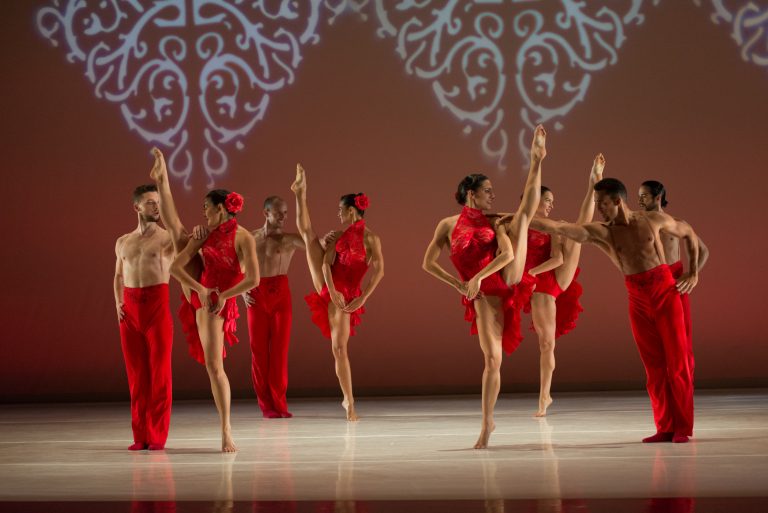
Singles like Bomba chaya and En la naturaleza (4-3-2-1-0) became ubiquitous radio hits. On stage, he replaced conventional electric guitars with rapid charango strumming and brought out professional troupes of caporal dancers in shimmering regalia.
The momentum crested at the 2014 Viña del Mar International Song Festival. Stepping onto the stage of the Quinta Vergara amphitheater in the dead of night, Riveros unleashed an avalanche of northern brass and altiplano percussion that swept the amphitheater, earning him both the Silver and Golden Torches alongside two Gaviotas.
Yet the performance also touched regional political nerves, sparking heated debates online over the origins of Andean dances. For Riveros, the controversy missed the entire point of his artistic philosophy.
“The altiplano does not care about borders drawn by nineteenth-century politicians,” Riveros reflects firmly. “The Andes are shared by Chile, Bolivia, Peru, and Argentina. When you play a charango or blow through a zampoña, you aren’t waving a passport; you are honoring a shared ecosystem. Bringing those sounds to Viña was an open love letter to South American brotherhood.”
If GP and the subsequent Estilo Libre (2015)—which featured an audacious, genre-defying duet with Peruvian singer Wendy Sulca on Hambre—crowned him a festival pop star, Riveros soon felt an urge to retreat inward. The compass needle pointing him back home was Margot Loyola Palacios.
Loyola, alongside Violeta Parra, was Chile’s foremost folklorist, having spent over six decades traveling the countryside collecting vanishing agrarian songs. In 2013, Riveros gave a heartfelt shout-out to Loyola from the stage of the Festival del Huaso de Olmué. Days later, Osvaldo Cádiz, Loyola’s husband and fellow researcher, invited Riveros to their Santiago home.
“Entering their living room was like walking into the spiritual engine room of Chilean memory,” Riveros says softly. “Margot had this fierce, piercing clarity. She didn’t see me as a trendy pop singer playing dress-up. She saw someone who genuinely listened. Osvaldo told me later that Margot remarked: ‘This boy has the modesty of the greats, and he keeps his feet firmly on the ground’.”
“Margot Loyola taught me that folklore isn’t an antique vase you polish behind glass. It is a living, breathing river that swallows everything in its path.”
Following Loyola’s passing in 2015, Riveros collaborated closely with Cádiz to create Folclor Imaginario (2018). Rather than recording a polite tribute album, Riveros gathered an acoustic ensemble—harpist Claudio Constanzo, bassist Gonzalo Gómez, and multi-instrumentalist Miguel Molina—and recorded ten songs from Loyola’s field archive alongside three original compositions.
The record was adventurous. In Amoríos pasajeros, he invited young trap star Gianluca to improvise Auto-Tuned rhymes over traditional campesino décimas. In Joane, he penned a moving, heartbreaking protest song dedicated to Joane Florvil, a Haitian immigrant woman whose tragic death in Santiago laid bare systemic racism in contemporary Chile.
“Margot taught me that folklore must be internalized, stolen, and reborn,” Riveros says. “If you treat the tradition with too much fear, it dies. You have to breathe your own contemporary air into it.”
Despite his extroverted stage presence, Daniel the person is remarkably quiet. For years, he has maintained an affinity with the Hare Krishna movement, adopting vegetarianism and practicing introspective meditation. In an industry obsessed with vanity metrics and perpetual self-promotion, Riveros cultivates a lifestyle of domestic calm alongside his wife, industrial designer María Cecilia Huerta.
“The music industry is an ego machine,” he admits. “It tells you that you are the center of the universe, that your face needs to be plastered everywhere, that you have to broadcast every meal on social media. But when you look inward, you realize the ego is just a cage. Chanting, meditating, cooking at home—those practices remind me that I am merely a conduit for music, not a monument.”
That tension between internal serenity and external chaos became the emotional core of his 2024 album, UNDESASTRE. In the highlight track noche D sol, co-written with Heyne, Riveros examines the suffocating grip of adult social anxiety.

“We’ve all had that moment,” Riveros explains. “You’re in a loud club or a VIP party. The bass is thumping, drinks are flowing, and everyone is pretending to have the night of their lives. And suddenly, this cold realization hits you in the chest: Where am I? Why am I at this party? Am I supposed to be having fun? That dissonance between social expectation and emotional truth is where my best songs live.”
UNDESASTRE was named one of the year’s finest Latin records by Rolling Stone, which ranked it eighth on its 2024 album list, praising its bold eclecticism. From the gut-wrenching despair of BOLERo LIBRA—a collaboration with Mon Laferte that won Song of the Year at the 2025 Pulsar Awards—to the brass grooves of 21 DE ENERo with Colombia’s Monsieur Periné, the record highlighted an artist operating at peak maturity.
“Gepe was never an alter ego to hide behind—it was a pair of running shoes that let Daniel step onto the stage and unleash what daily life held back.”
In 2025, he released UNDESASTRE deluxe: CERODRAMA, an adventurous companion featuring collaborations with Chilean rapper Bronko Yotte on OTRO PLAN and Spanish flamenco innovator Niño de Elche, who dismantled the traditional Chilean cueca into an abrasive, passionate wail on La cueca del canario V.2.
Now in his mid-forties, Riveros has taken stock of his journey. With his 2026 retrospective project ORO, produced by Julián Bernal, he returned to his most celebrated catalog tracks, reinterpreting them alongside a pan-continental cast that includes Mexican balladeer Silvana Estrada, pop songwriter Daniela Spalla, and historical members of the Parra family dynasty. Earlier that year, his single Dopamina, recorded with Cancamusa, earned him his second Pulsar Award for Song of the Year, making him the only Chilean artist in history to win the accolade multiple times.
When asked what his twenty-year-old self—the art student rehearsing in a damp garage with Taller Dejao—would think of the man sitting here today, Riveros smiles softly.
“He would probably be relieved that we didn’t end up in an office cubicle designing corporate logos,” he says with a grin. “But more than that, I think he would recognize the spirit. I haven’t compromised the curiosity. Success, for me, isn’t about how many people scream your name at a festival. It’s waking up on a Tuesday morning, making breakfast with my wife, sitting down with an instrument, and feeling that same childish thrill when four chords unexpectedly fall into place .”
He pauses, listening to the muffled traffic outside his studio window, rolling down toward Gran Avenida.
“Gepe was never a disguise,” Riveros concludes. “He was just the permission slip Daniel gave himself to jump off the cliff. And twenty years later, the landing still feels like flying.”
About the Author