Musicbusinessworldwide.com
A bipartisan group of U.S. senators has revived legislation that would require artificial intelligence-generated audio, video and images to be clearly identified, marking another step toward broader federal oversight of AI-generated content.
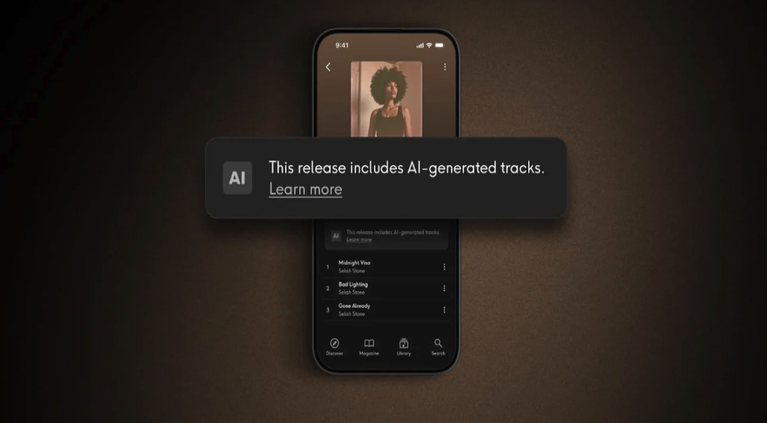
The proposed AI Labeling Act of 2026, introduced by Senators Brian Schatz (D-Hawaii), John Curtis (R-Utah) and Mark Warner (D-Virginia), would require developers of generative AI systems to embed both visible and machine-readable disclosures into AI-created media. The labels would identify that the content was produced using AI, while also recording information such as the generating system and the time of creation.
Under the proposal, major online platforms with more than 10 million monthly U.S. users or annual revenue exceeding $1.5 billion would be responsible for preserving those disclosures and prominently identifying AI-generated material shared on their services. AI-powered chatbots would also be required to notify users that they are interacting with artificial intelligence.
The legislation is intended to improve transparency as AI-generated content becomes increasingly difficult to distinguish from human-created work. The bill would place enforcement authority with the Federal Trade Commission, while the National Institute of Standards and Technology (NIST) would establish technical standards for AI labeling and detection technologies.
The legislation has received support from a broad coalition of creative organizations, including SAG-AFTRA, the Songwriters Guild of America, Music Creators North America, the Society of Composers and Lyricists, the Authors Guild, the Writers Guild of America East and the National Association of Voice Actors, whose members have raised concerns over unauthorized AI voice cloning.
The renewed proposal arrives amid growing pressure from the music industry for comprehensive AI regulation. Earlier this year, lawmakers also reintroduced the NO FAKES Act, which would create federal protections against unauthorized digital replicas of a person’s voice and likeness, with backing from major music companies.
About the Author