Completemusicupdate.com
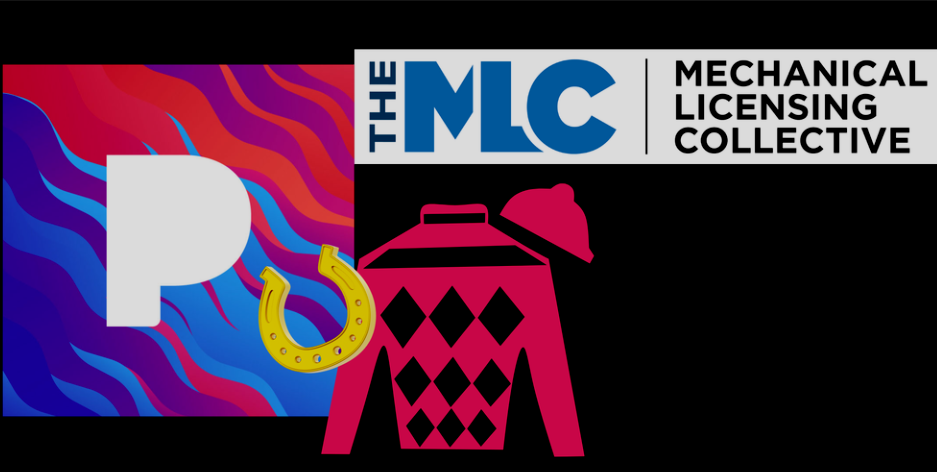
Pandora is escalating its legal battle with U.S. collecting society The Mechanical Licensing Collective (MLC), arguing that a recent federal court decision involving horse racing regulation supports its claim that the lawsuit against it should not proceed.
The dispute centers on mechanical royalties and whether Pandora is required to pay The MLC for certain types of streaming activity. The MLC has accused the platform of underpaying royalties under U.S. copyright law, while Pandora is attempting to have the case dismissed altogether, claiming the collecting society lacks proper authority to bring the action.
In a new filing, Pandora points to a recent ruling in an unrelated case involving the National Horsemen’s Benevolent and Protective Association and the Horseracing Integrity and Safety Act. In that decision, a federal appeals court found that aspects of the law violated the “private non-delegation doctrine,” a legal principle that limits the ability of private organizations to exercise government-like enforcement powers without adequate oversight.
Pandora argues that this precedent strengthens its position that the MLC is similarly overstepping by enforcing copyright obligations in a way that amounts to exercising delegated government authority. The company claims this raises fundamental questions about whether the MLC should be allowed to pursue litigation in the first place.
The MLC has strongly rejected that comparison, arguing that the horse racing case has no bearing on its statutory role under U.S. copyright law. In its response, the organization emphasizes that it operates under direct supervision from the U.S. Copyright Office and the Library of Congress, including oversight by the Librarian of Congress and the Register of Copyrights, both of whom are involved in appointing and removing leadership.
According to the MLC, this level of federal supervision distinguishes it from the private body involved in the horse racing ruling, making Pandora’s reliance on that precedent legally irrelevant. The organization maintains that its enforcement role is explicitly authorized under copyright law and subject to structured governmental oversight.
Beyond the procedural dispute, the underlying case concerns how mechanical royalties apply to streaming models. The MLC argues that Pandora owes royalties not only for fully interactive streaming services but also for certain ad-supported listening features that temporarily enable interactive functionality. Pandora disputes that interpretation, maintaining that its non-interactive service should not trigger those additional payments.
About the Author