By Victorio Gomez
Rather than yielding to the pressure of short-form content, Aguilar continues to build an ambitious, decade-long conceptual framework. Following his acclaimed releases Siguiente and Reciente, his latest 15-track offering, Vigente, arrives as the third installment in a planned tetralogy of “anti-albums”—a series designed to challenge the very structure of how modern records are consumed.
Spanning songs written over a 20-year trajectory alongside brand-new compositions, Vigente is a celebration of chaos, contrast, and uncompromising artistic freedom. Featuring landmark collaborations with Julieta Venegas, Jay de la Cueva, French indie artist Voyou, underground icon Mauricio Díaz “Hueso”, and even his own parents, Aguilar proves that remaining relevant (vigente) isn’t about chasing the culture—it’s about deepening one’s core.
We sat down with Aguilar to explore the philosophy behind the anti-album, navigating emotional grief with Julieta Venegas, stripping away production clichés, and bringing stark intimacy to prestigious U.S. stages.
For Aguilar, the titles of his recent discography—Siguiente, Reciente, Vigente, and the upcoming Pendiente—serve as a deliberate play on the absurd. Unlike traditional records designed around a single sonic style, these four projects are conceptualized as modular collections that resist rigid categorization.
“These are four anti-albums… because what I’m trying to express is that a song can be versatile, open, multi-thematic, multi-genre,” Aguilar explains, detailing his rejection of industry norms. “The ultimate universe to pursue is the individual track, not the album. I want people to feel like these tracks can be disassembled in any way… The overall concept is chaos and contrast.”
This structural openness is reflected in the album’s expansive timeline. Tracks like “Tragafuegos” date back to 2005, while others, such as “No Me Olviden”, were penned just months before entering the studio.
“There is no single sense of temporality,” Aguilar notes. “These aren’t songs that respond to a specific era in terms of when they were written, but rather how they are grouped. My planning responds to broader timelines, to longer conceptions over time.”
At the center of Vigente lies “Lo Que Por Ti Yo Siento”, a poignant lead single featuring icon Julieta Venegas. Fusing a traditional norteño intro with lush indie-pop textures, the song balances Mexican roots—featuring vihuela and accordion played by Aguilar himself—with modern atmospheric production.
Yet, the song’s origin stems from a deeply personal moment of emotional unpreparedness during a funeral for Cristóbal Jodorowsky, brother of his close friend Adán.
“I was at a funeral, they asked me to sing, and I didn’t know what to sing,” Aguilar recalls candidly. “Afterwards I kept thinking: ‘How did I not have a song to say goodbye to someone, a universal love song?’ That’s what ‘Lo Que Por Ti Yo Siento’ is. It’s a song of farewell, but it always leaves the door open to simply be a song about love.”
“It means everything, because it’s the strongest sense of purpose I can find in this career: feeling that the materials answer to a profound idea… not to market logic.”
El David Aguilar
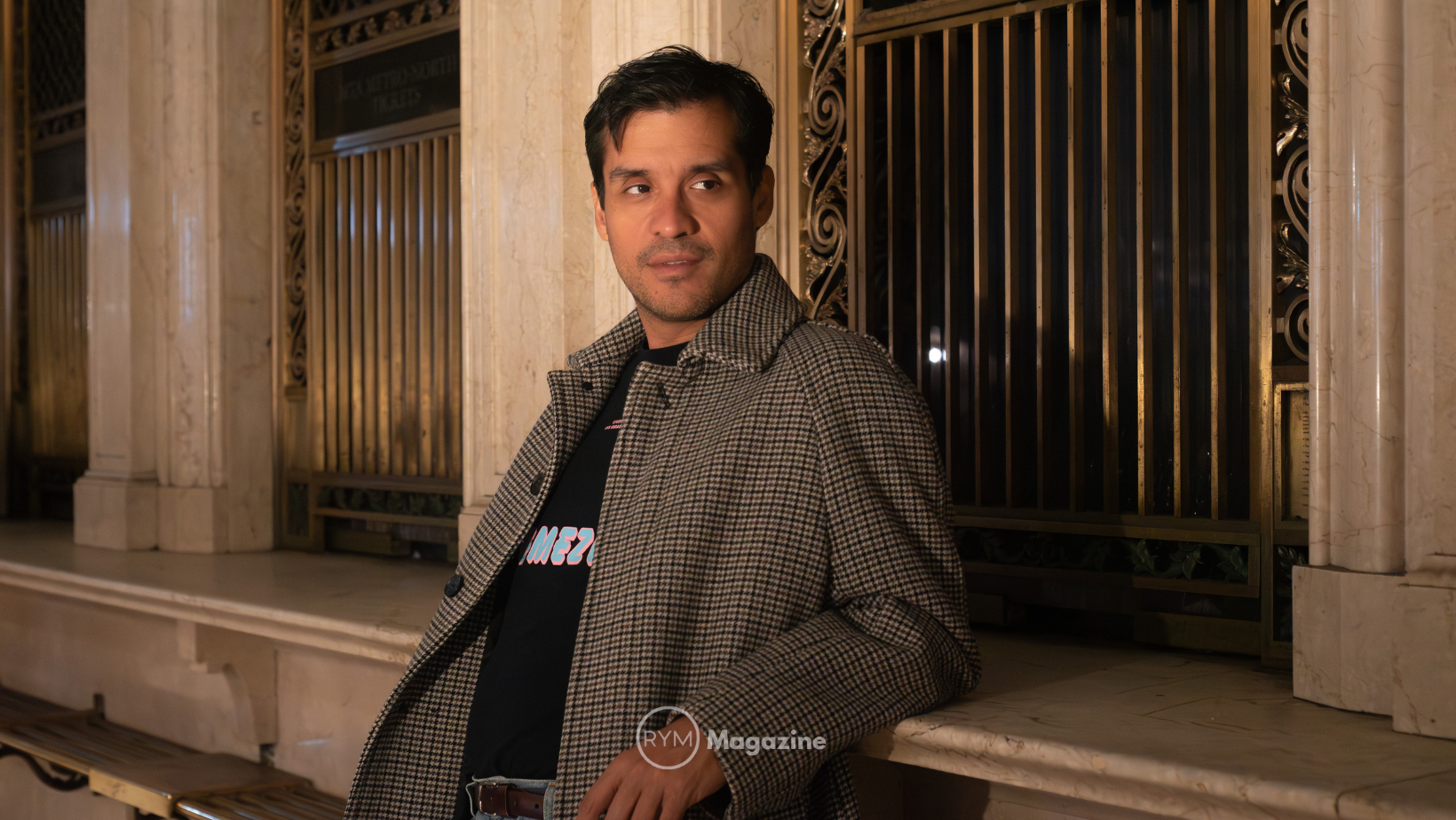
In a music ecosystem increasingly fixated on fleeting micro-trends and homogenized algorithmic formulas, Mexican singer-songwriter David Aguilar operates as a quiet philosopher of song. Rather than yielding to the pressure of short-form content, Aguilar continues to build an ambitious, decade-long conceptual framework. Following his acclaimed releases Siguiente and Reciente, his latest 15-track offering, Vigente, arrives as the third installment in a planned tetralogy of “anti-albums”—a series designed to challenge the very structure of how modern records are consumed.
Spanning songs written over a 20-year trajectory alongside brand-new compositions, Vigente is a celebration of chaos, contrast, and uncompromising artistic freedom. Featuring landmark collaborations with Julieta Venegas, Jay de la Cueva, French indie artist Voyou, underground icon Mauricio Díaz “Hueso”, and even his own parents, Aguilar proves that remaining relevant (vigente) isn’t about chasing the culture—it’s about deepening one’s core.
We sat down with Aguilar to explore the philosophy behind the anti-album, navigating emotional grief with Julieta Venegas, stripping away production clichés, and bringing stark intimacy to prestigious U.S. stages.
For Aguilar, the titles of his recent discography—Siguiente, Reciente, Vigente, and the upcoming Pendiente—serve as a deliberate play on the absurd. Unlike traditional records designed around a single sonic style, these four projects are conceptualized as modular collections that resist rigid categorization.
“These are four anti-albums… because what I’m trying to express is that a song can be versatile, open, multi-thematic, multi-genre,” Aguilar explains, detailing his rejection of industry norms. “The ultimate universe to pursue is the individual track, not the album. I want people to feel like these tracks can be disassembled in any way… The overall concept is chaos and contrast.”
This structural openness is reflected in the album’s expansive timeline. Tracks like “Tragafuegos” date back to 2005, while others, such as “No Me Olviden”, were penned just months before entering the studio.
“There is no single sense of temporality,” Aguilar notes. “These aren’t songs that respond to a specific era in terms of when they were written, but rather how they are grouped. My planning responds to broader timelines, to longer conceptions over time.”
At the center of Vigente lies “Lo Que Por Ti Yo Siento”, a poignant lead single featuring icon Julieta Venegas. Fusing a traditional norteño intro with lush indie-pop textures, the song balances Mexican roots—featuring vihuela and accordion played by Aguilar himself—with modern atmospheric production.
Yet, the song’s origin stems from a deeply personal moment of emotional unpreparedness during a funeral for Cristóbal Jodorowsky, brother of his close friend Adán.
“I was at a funeral, they asked me to sing, and I didn’t know what to sing,” Aguilar recalls candidly. “Afterwards I kept thinking: ‘How did I not have a song to say goodbye to someone, a universal love song?’ That’s what ‘Lo Que Por Ti Yo Siento’ is. It’s a song of farewell, but it always leaves the door open to simply be a song about love.”
SIDEBAR: THE CREATIVE PROCESS WITH JULIETA VENEGAS
“It was a difficult song to tame. Given that it’s a farewell song, it’s funny how even when you want to let something go, there’s always a bit of an uphill battle. Once Julieta recorded her parts, everything became easier, but defining which verses were sung by each of us took a lot of creativity.”
“I’m not interested in conforming to trends or non-trends. What I care about is feeling that I am being completely honest with what I think and feel… I wanted to use organic words, as if it were a conversational, timeless language.”
The collaborative roster on Vigente reads like a cross-continental tapestry, bringing together vastly different musical worlds. From underground folk figures like Mauricio Díaz “Hueso” (co-writer on “Chance y Lance”) to cross-genre encounters with Voyou arranged via Universal Publishing in Paris, Aguilar lets intuition guide every pairing.
However, the most deeply symbolic moment on the record occurs on “Corrido de los cantantes”, a track featuring the guest vocals of his parents.
“My parents are the ones who introduced me to music; I sing because of them,” Aguilar shares warmly. “My father is a musician and instrumentalist, and my mother sings all the time. Recording them was deeply meaningful. The corrido isn’t about specific singers, but rather about people who sang and sang until dawn. It’s something very organic and full of personal symbolism.”
As Aguilar prepares to launch his first major headlining tour across the United States this autumn—with stops at prestigious venues such as SFJAZZ in San Francisco, Joe’s Pub in New York, and The Echo in Los Angeles—he is reimagining his 15-track album for intimate, listening-focused spaces.
Rather than replicating the studio arrangements, Aguilar is stripping the songs down to their absolute essence.
“I’m taking this tour as an opportunity to define the concept of austerity and intimacy that defines me,” he reveals. “In the studio I can play around as much as I want, but live I like there to be a real transformation. I want to present my songs with just my voice and an accompanying instrument.”
His goal for these performances is to create a sacred dialogue between sound and silence. “I really love the sound of silence. I want a visual concept that matches that intimacy, almost in dim light, in silhouette… lots of silence alongside rhythm, a journey, sweetness, and song.”
About the Author