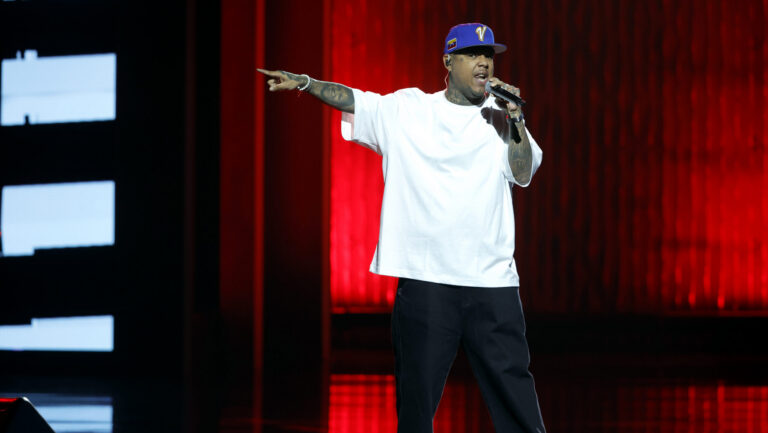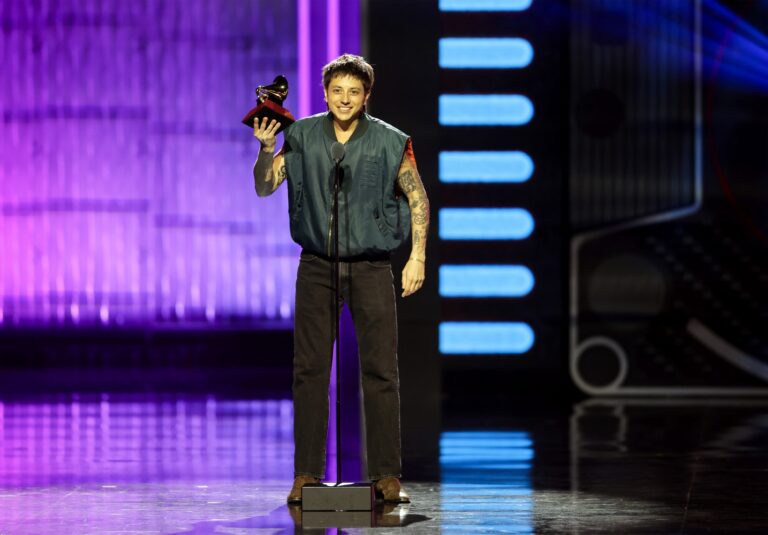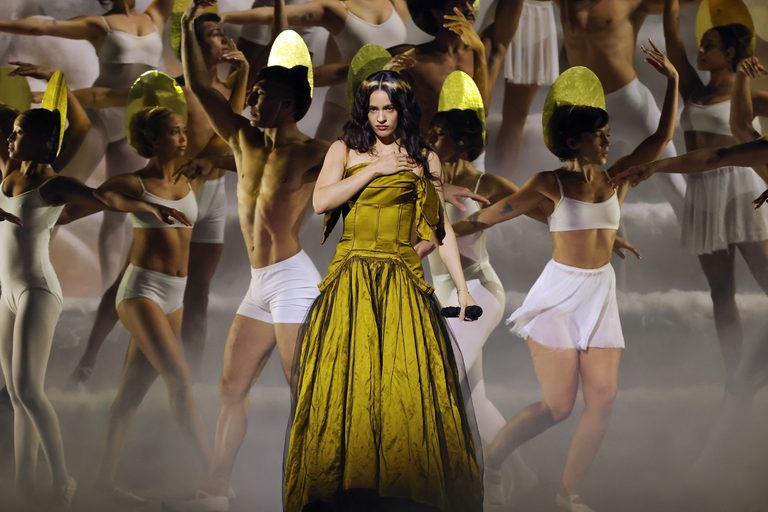
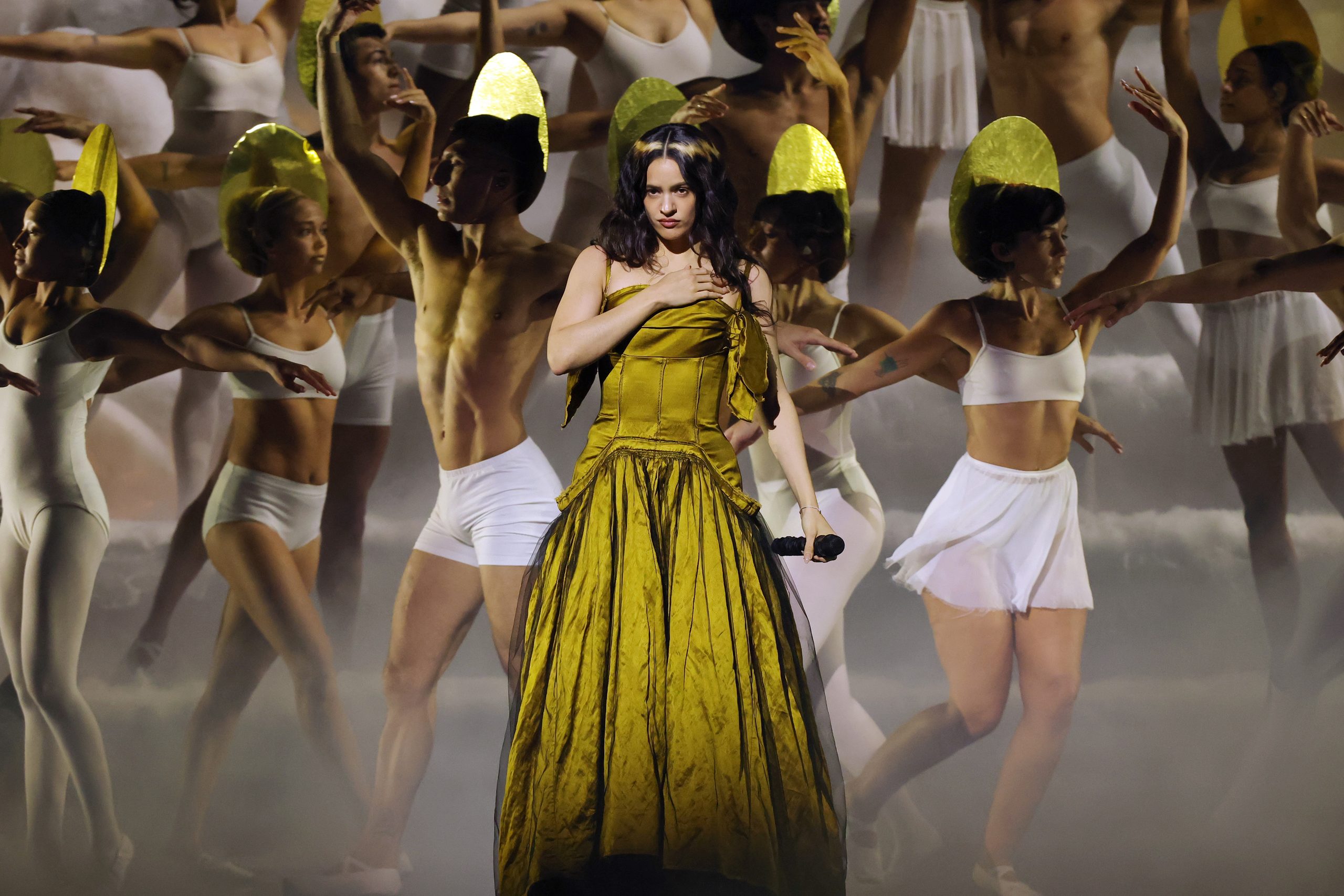
LAS VEGAS, NEVADA - NOVEMBER 12: Rosalía performs onstage during the 27th Annual Latin GRAMMY Awards at MGM Grand Garden Arena on November 12, 2026 in Las Vegas, Nevada. (Photo by Kevin Winter/Getty Images for the The Latin Recording Academy)
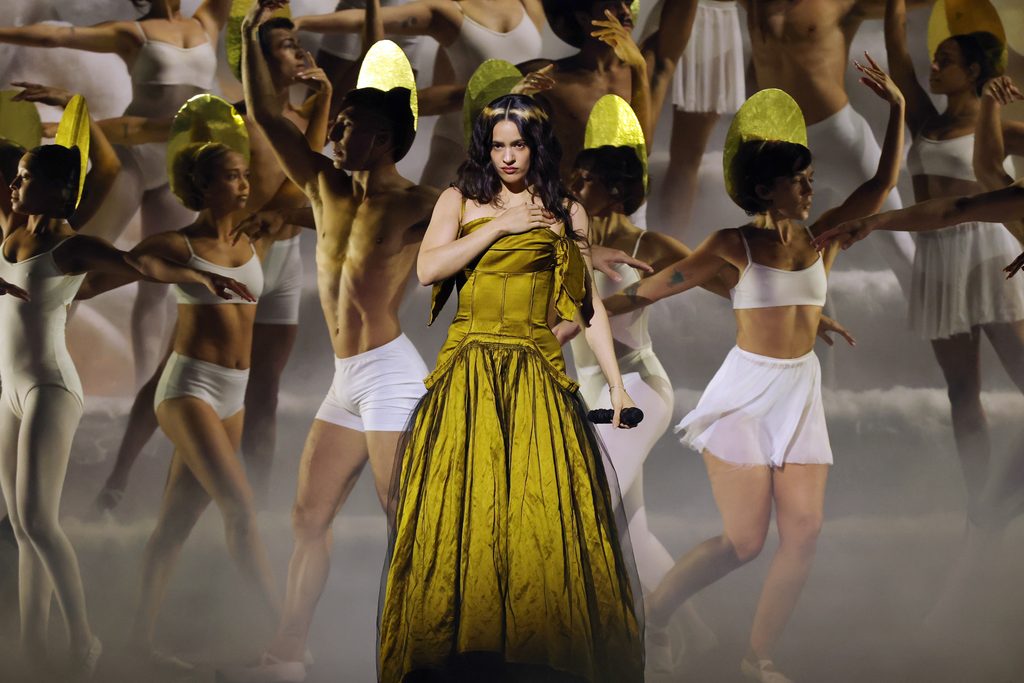
By the time Rosalía stepped up to accept Album of the Year at the 27th Annual Latin GRAMMY Awards on Thursday night, the Spanish avant-pop auteur had already turned the MGM Grand Garden Arena into her own personal vindication tour—and etched her name deeper into Latin Recording Academy history.
Broadcast live across Univision, ViX, and Max and hosted for the 10th time by Roselyn Sánchez, the three-hour ceremony balanced pop dominance with unprecedented cross-cultural milestones, generational upsets, and a spotlight on the producers and engineers shaping the sound of Latin music. Entering the night with powerhouse songwriter-producer Édgar Barrera leading the field with 10 nominations—followed closely by Karol G, Rosalía, Jorge Drexler, and CA7RIEL & Paco Amoroso with seven apiece—the 2026 telecast underscored a unifying message: Latin music’s global staying power relies on musical authenticity, fearless collaboration, and opening doors for the next generation of creators.
After Colombian rock icon Juanes claimed the evening’s first televised trophy by winning Best Pop/Rock Album for JuanEsteban, the night’s biggest statement belonged to Rosalía. Launching the broadcast with a dramatic, orchestral medley from LUX (Complete Works), she went on to sweep five trophies overall—including Best Alternative Music Album, Best Pop Song, Best Short Form Music Video, and Best Engineered Album—while extending her record as the first woman to win Album of the Year three times as a lead artist.
Accepting the night’s final trophy from Juanes, Rosalía appeared genuinely stunned. “Estoy flipando que tú me estés dando esto,” she said, thanking him for supporting her from the earliest days of her career before framing LUX—co-produced with Noah Goldstein, David Rodríguez, and Dylan Wiggins—as “un salto para el vacío, este álbum es mi verdad” (“a leap into the void, this album is my truth”). Dedicating the win to her family, friends, and especially her mother (“Espero que tengas espacio para otro GRAMMY”), she noted that her best work still lies ahead before closing on the title’s Latin root: “Lux es luz en latín, así que mucha luz para todos.”
Earlier in the telecast, while accepting Song of the Year for “La Perla” alongside Yahritza y Su Esencia, Rosalía aimed directly at the skeptics who doubted her sonic left turns. “A todos los que dijeron que no valía, y a los que pensaban que mi música era muy rara, aquí estoy ganando este premio,” she declared. She thanked Mexico and late ranchera icon Paquita la del Barrio for inspiring the track, praised her collaborators and fans, and offered a parting blessing: “Y para todas los que se han encontrado una perla, ojalá la vida les dé un diamante.”
If Rosalía owned the emotional center of the night, the trophy count belonged to a diverse vanguard reshaping Latin music’s commercial and artistic borders:
- Milo J’s Generational Breakthrough: In the telecast’s biggest upset, 19-year-old Argentine phenom Milo J bested heavyweights Rosalía, Karol G, and Mon Laferte to win Record of the Year for “Niño,” his stark ballad about grief and loss. The win capped a four-trophy night that also included Best Folk Music Album (La Vida Era Más Corta), Best Urban Performance (“Gil” with Trueno), and Best Recording Package, underscored by a stirring live performance alongside legendary producer Gustavo Santaolalla.
- Regional Mexican’s Banner Night: Rising corridos tumbados star Xavi became the inaugural winner of Best Contemporary Mexican Music Album for Dosis, completing a two-award sweep after sharing Best Regional Mexican Song for “No Capea” with Grupo Frontera (who also won Best Norteño Album for Lo Que Me Falta Por Llorar). Meanwhile, Camila Fernández won Best Ranchera/Mariachi Music Album for La Fernández, becoming the first woman in the Fernández dynasty to claim the category after her father Alejandro Fernández and late grandfather Vicente Fernández. Backstage in the official Media Center, a visibly moved Fernández noted that her father had always told her she could earn the recognition entirely on her own terms without anything being handed to her. Elsewhere, Bobby Pulido won Best Tejano Album (Bobby Pulido & Friends: Una Tuya y Una Mía), celebrating his Texas roots before retiring from music to serve in the U.S. Congress.
- Producers, Songwriters, and Global Crossovers: Breaking the all-time record for the most career Latin GRAMMY wins, Édgar Barrera captured Producer of the Year for the third consecutive year—revealing backstage that he is now expanding into film music—while Carlos Vives was named Songwriter of the Year and producer Rafa Arcaute collected three trophies. Eclectic Buenos Aires duo CA7RIEL & Paco Amoroso also took home three awards, including Best Electronic Music Performance for “Beto’s Horns – Fred Remix” with Fred Again.. and Best Pop/Rock Song for “Hasta Jesús Tuvo Un Mal Día” alongside Sting, making both international collaborators first-time Latin GRAMMY winners.
- Singer-Songwriter & Tropical Standouts: Jorge Drexler won Best Singer-Songwriter Album for Taracá, Silvana Estrada earned Best Singer-Songwriter Song for “Dime” in dedication to a late friend, and Best Tropical Song ended in a tie between “Nombre y Apellido” and “Realidad-Es.”
Throughout the evening, acceptance speeches doubled as manifestos on heritage, identity, and representation.
Delivering a passionate mariachi-infused performance and winning both Best Urban Music Album (Tropicoqueta) and Best Reggaeton Performance, Colombian superstar Karol G emphasized the collective pride radiating from the genre’s global ascent. “Siento que cuando estoy cantando la gente se siente orgullosa de ser latina,” she told the arena, bookending her remarks with a defiant “¡Latina forever!”
In a landmark moment for Portuguese-language music, Anitta claimed her first-ever Latin GRAMMY after 12 career nominations—winning Best Portuguese Language Contemporary Pop Album for Equilibrivm during the first Brazilian category ever presented in the broadcast’s main second half. After bringing Brazilian folk roots to the stage with a medley from the album, Anitta spoke candidly about its Afro-Brazilian heritage: “Por muchos años la cultura negra fue borrada en Brasil, y este álbum ayuda a que eso se revierta.” Backstage in the Media Center, she added her hope that Brazilian and Spanish-speaking artists continue bridging the language barrier, sharing that Equilibrivm began after friends encouraged her to turn her calmer, more peaceful tracks into an album designed simply to help listeners feel good at home.
Meanwhile, Colombian singer-songwriter Fonseca won Best Contemporary Tropical Album for Antes Que El Tiempo Se Vaya, offering a grounded plea amid a hyper-digital industry: “Que tanta tecnología no nos nuble lo más importante para nosotros, la familia.” And under updated Academy eligibility rules, Barranquilla native Aria Vega captured Best New Artist, recalling telling a college professor her life goal was “sueños grandes, buen gusto” (“big dreams, good taste”) before holding her gramophone aloft and declaring, “Los sueños no conocen de miedo o geografía.”
The night’s cultural weight and most electrifying production number belonged to Daddy Yankee, who made history as the first Latin urbano artist honored as Latin Recording Academy Person of the Year.
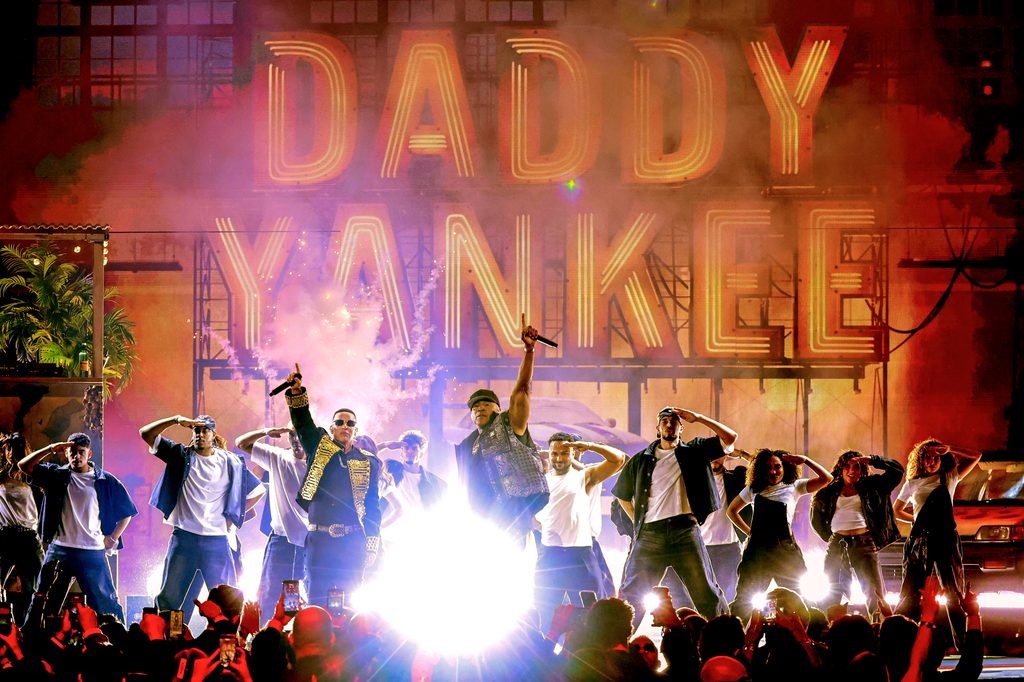
Presented with the trophy by surprise guest Janet Jackson—his 2018 collaborator on “Made for Now,” who emphasized in English and Spanish that it takes vision and courage to change the sound of music—Daddy Yankee reflected on reggaeton’s journey from being criminalized in the streets to commanding music’s biggest stage. Before leaving the podium, he delivered a poignant message to his homeland: “Puerto Rico, remember. Puerto Rico is not small. The map is small.” He also returned to the winners’ circle alongside Bizarrap to claim Best Urban Song for “Daddy Yankee: Bzrp Music Sessions, Vol. 0/66,” where Bizarrap underscored the responsibility of creating platforms for emerging artists.
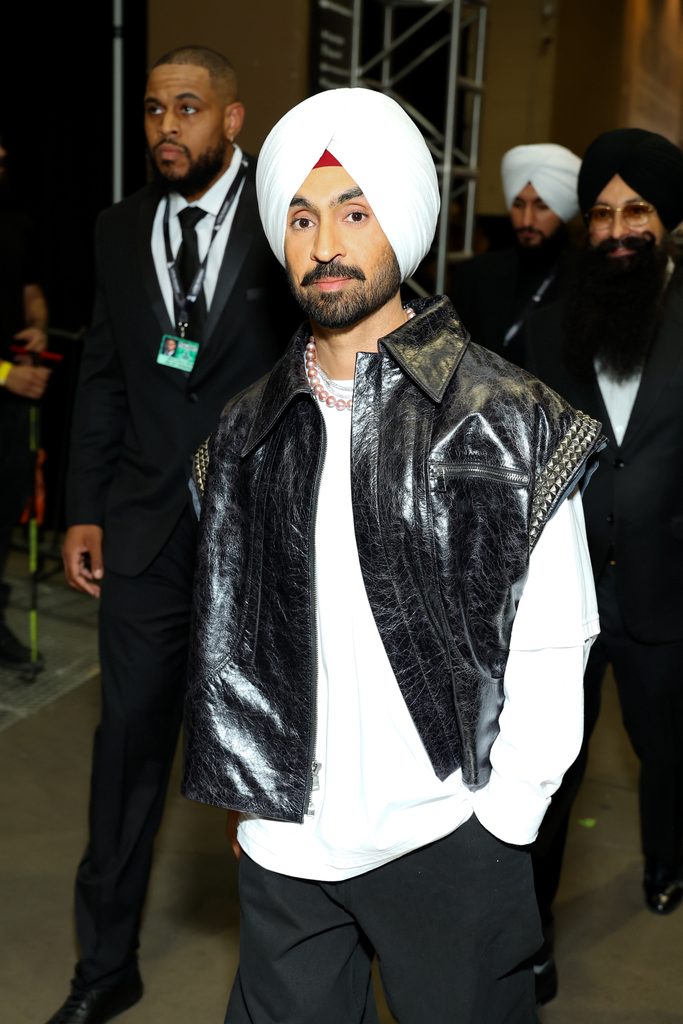
Onstage, Daddy Yankee tore through a stadium-sized career medley spanning “Gasolina,” “Despacito,” “Con Calma,” “Dura,” and his Bizarrap session alongside LL Cool J, Bizarrap, Feid, Bad Gyal, French Montana, and Jay Wheeler. Mid-set, the tribute yielded one of the show’s defining watershed moments when global powerhouse Diljit Dosanjh joined Daddy Yankee to perform their cross-cultural collaboration “Pokito.” Fresh off selling out stadiums worldwide, the Punjabi superstar made history as the first South Asian artist ever invited to perform at the Latin GRAMMYs—a powerhouse collision of two global titans that, alongside heartfelt tributes to salsa pioneer Willie Colón (featuring Miguel Colón, Nathy Peluso, and Luis Figueroa) and a centennial salute to José Alfredo Jiménez (with The Warning, Reik, Sofía Reyes, Yami Safdie, and Camila Fernández), proved just how far beyond borders Latin music now reaches.
About the Author