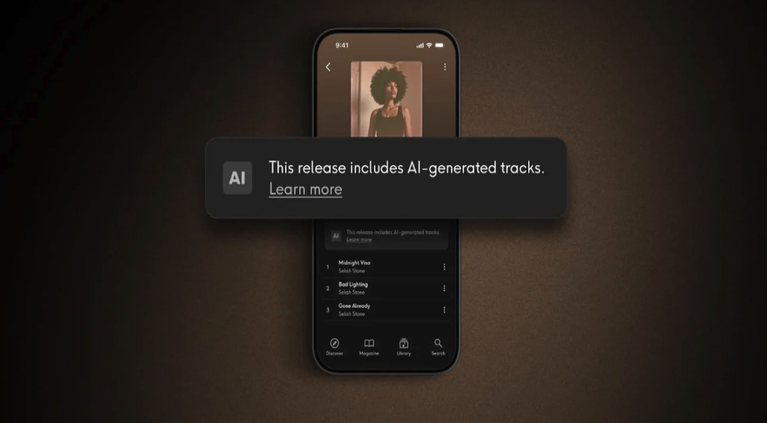
Qobuz’s new in-app tag pushed AI labeling past a symbolic threshold, but Spotify, Apple Music, Deezer and others are drawing the line in very different places.
With Qobuz’s launch of an in-app AI tag on Sept. 24, streaming services representing roughly 60% of the world’s paid music subscribers now have some form of AI labeling policy. The tally comes from AI-music newsletter Zinstrel, based on MIDiA Research’s year-end 2025 market-share figures.
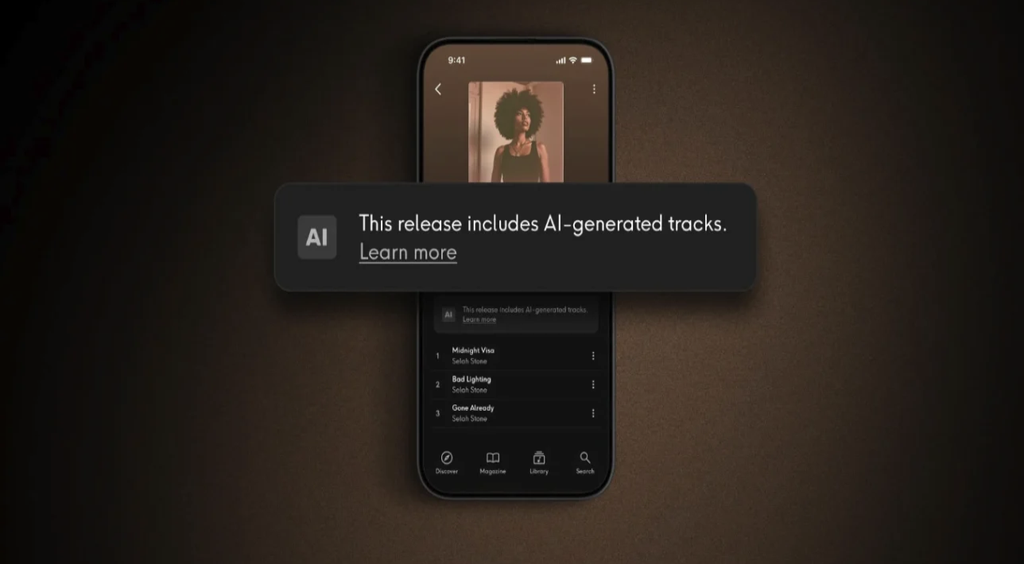
On paper, that looks like an industry settling on transparency. In practice, the major policies disagree on almost everything: what gets labeled, who decides and what happens to the music afterward. The same track can carry a warning on one service and none on the next.
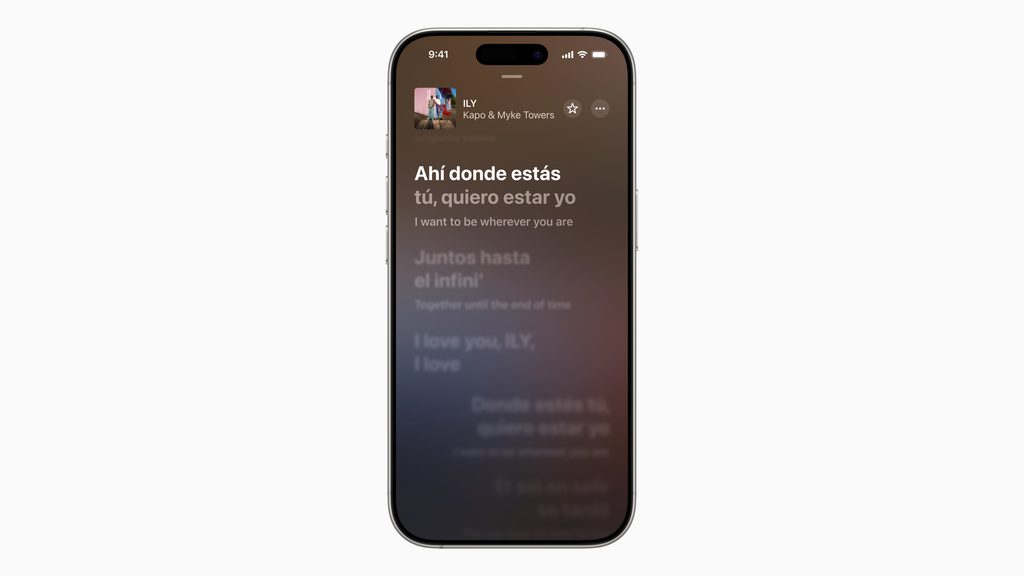
The sharpest divide is between services that detect AI themselves and those that wait to be told. Apple Music’s Transparency Tags and Spotify’s AI credits depend on labels and distributors declaring AI use, and Spotify has said the absence of a credit doesn’t mean AI wasn’t involved. Deezer and Qobuz scan uploads with their own tools.
The two French services are also publishing the starkest numbers. Deezer said in July it was receiving around 90,000 fully AI-generated tracks a day. Qobuz says 60% of streams on tracks it has flagged as AI are fraudulent, even though AI music accounts for only 0.38% of all listening on the service. It has removed albums totaling four million tracks from standard search results.

A label also comes at a price for the artist. Listeners consistently tell surveyors they want AI music marked, yet a peer-reviewed study cited by Zinstrel found that songs tagged as AI drew less engagement even when humans had made them. That leaves artists who use AI for a single element, such as a backing vocal or a mix, weighing whether disclosure is worth the hit.
A common standard may come from the industry itself. Eight trade bodies, including the RIAA and IFPI, are backing a voluntary scheme that would sort tracks into “AI-generated” or “AI-assisted” on every service, and a shared DDEX metadata field for AI disclosure is already moving through the supply chain. Until one system sticks, the tag a listener sees says as much about the app as about the song.
Sources: Zinstrel · Music Business Worldwide · Digital Music News · DigiconAsia
About the Author