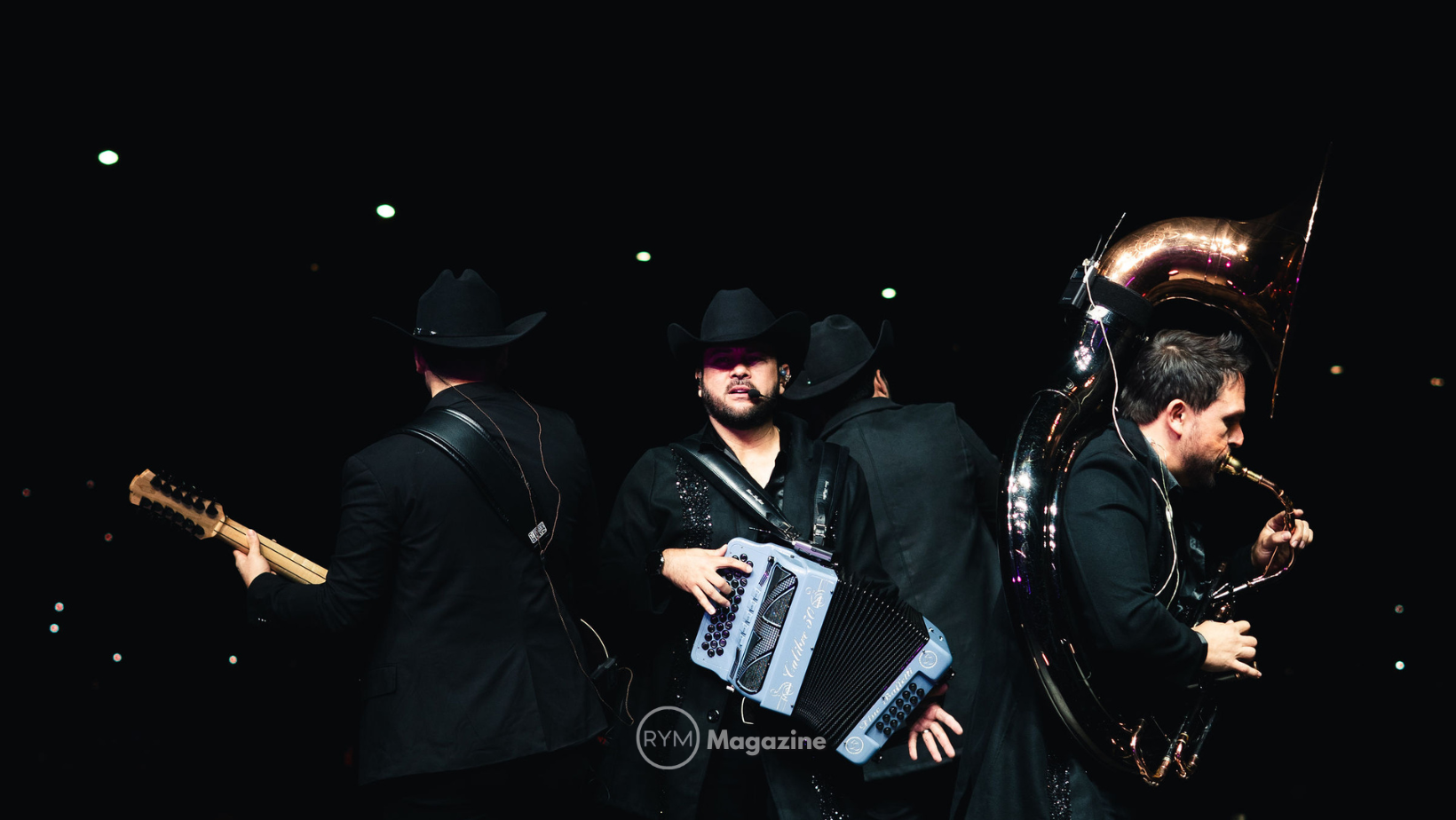
EXCLUSIVE | By Vanessa Torres, Gustavo Martir "We don't make music to win awards. We make music to win hearts."Calibre 50 In the fast-moving landscape of Latin music, where regional Mexican soundscapes have exploded into a global phenomenon, very few ensembles command the historical weight, chart dominance, and artistic reverence of Calibre 50. With an extraordinary track record boasting 28 Billboard Latin Airplay Number Ones, multiple Premios Juventud nominations, and millions of monthly streams, the Sinaloan powerhouse isn't merely keeping up with modern trends—they are setting the benchmark for what it means to evolve without losing one's soul. Yet, behind the staggering statistics lies a deeply human story of transition, mastery, and unyielding discipline. Following major lineup evolutions, the group—comprising accordionist and musical director Juan "El Profe", tubist Alejandro, drummer Erick, and lead vocalist Beto—has entered a golden era of creative renewal. Armed with a forthcoming 8-track album, an unprecedented mariachi-norteño fusion on their new single "Mi Problema", and an upcoming tour spanning packed arenas across Latin America, Calibre 50 remains anchored by a simple philosophy: craft music that touches the human spirit. We gathered the entire group for an exclusive, wide-ranging discussion on the mechanics of their sound, passing the torch to a new generation, the painstaking process of filtering 22 tracks down to 8, and why hitting 30 Number Ones is just the beginning. For a group that seamlessly navigates everything from heartbreaking ballads to high-octane corridos, maintaining an unmistakable sonic identity requires a delicate balance between individual expression and collective restraint. Within Calibre 50, every instrument occupies a sacred, intentional space. "When a song is born here in Calibre 50, we all try to put our own stamp on it," Alejandro explains, setting the stage for how the band builds its arrangements. "In our case, Profe Juan is the musical director—he directs the masterpiece. But we all have the freedom to bring our own feeling. When I record the tuba, I follow the line Profe Juan wants, but I always put my heart into it." That emotional resonance applies whether the band is cutting an aggressive uptempo track or a vulnerable story of heartbreak. "Music for us is about transmitting feelings," Alejandro continues. "Before we step into the studio, we listen closely to the lyrics and immerse ourselves in the story. Whether it’s a painful ballad or an energetic corrido, even the tuba and the drums carry that specific emotion. Without overthinking it, we have that blessed gift of giving the song what it needs." As the master arranger and lead accordionist, Juan "El Profe" carries the responsibility of orchestrating the group's sonic architecture. For Juan, the guiding principle of any Calibre 50 record is total respect for the vocal narrative. "What needs to stand out most in Calibre 50 is the lead vocal and the message of the song," Juan reveals candidly. "Everything else is there to adorn and support the voice. If the vocal line is executing a complex melody, I keep the accordion simple—or I let it rest entirely." Courtesy Fono "It’s about respecting everyone’s moment," Juan adds. "The song itself tells you what it requires. You just have to analyze the music, and years of practice give you that instinct." Whether performing for an intimate crowd or commanding massive outdoor arenas—such as a recent performance in Bogotá, Colombia before more than 70,000 fans—drummer Erick ensures that Calibre 50's signature punch remains unshakeable. "We usually have a predetermined sound formula that defines Calibre 50," Erick says regarding live production. "Even if we have to use a different backline at major international venues, we do thorough soundchecks to make sure our specific signature carries through." Taking over the lead vocal mantle of an established institution is no small feat, but Beto has stepped into the role with deep reverence, vocal precision, and a fan’s dedication. "Calibre has built a unique essence and style over its career, and we are focused on keeping that 100% active," Beto reflects. "My bandmates say it in every interview: We don't make music to win awards; we make music to win hearts. I am the newest member here, learning from these masters every day." To achieve that intimate, conversational vulnerability on the band's new mariachi-norteño hybrid single, "Mi Problema", Beto underwent a rigorous vocal refinement process under Juan's guidance. "It was a brand new experience for Calibre because we incorporated mariachi trumpets, vihuela, and Peruvian cajón alongside our signature tuba and accordion," Beto shares. "I had to pull back on the raw power of my voice and deliver a more intimate, conversational performance. Profe Juan was right there advising me: 'Lower the volume, relax, talk the story out, feel every word.' It takes immense work behind the scenes to capture that level of vulnerability." In an industry climate dominated by single-driven algorithms, Calibre 50 continues to treat the album format as a sacred art form. However, condensing their vision into a tight, impactful release requires painstaking editorial discipline. "To pick our new single, we recorded 22 different songs," Beto reveals in an exclusive disclosure. "We took proposals from various songwriters, dressed them up with Profe Juan's arrangements, recorded full instrumentation and vocals, and gave them the complete Calibre 50 identity. Only after hearing them fully produced did we filter them down to an 8-track album." Courtesy Fono This meticulous selection process extends to how the band sequences their records to avoid monotony. "For over ten years, we were used to releasing 12 to 14 tracks per album," Juan notes. "Now, the trend is releasing 6 to 8 songs. It’s actually harder because we want every project to be highly versatile. You might have six incredible songs ready and suddenly realize: 'We’re missing a cumbia!' A team of nearly ten people—including our management and sound engineers—sits down at the table to structure the album so the audience stays engaged from start to finish." One of Calibre 50's greatest strengths lies in their uncanny ability to transform external compositions and covers into timeless staples of their own repertoire. Case in point: their iconic rendition of Marco Antonio Solís’s "Si Te Pudiera Mentir". "When we first decided to record that cover, we weren't sure how the public would receive it," Juan recalls. "To our surprise, it became such a massive hit that many younger listeners today proudly believe it's an original Calibre 50 song. We are enormous fans of Marco Antonio Solís, so to have new generations embrace our version with such passion is an absolute honor." For More Exclusives from Calibre 50, and the full story, order a Print Copy Here.