
Spotify.com
Spotify is rolling out a new layer of parental controls aimed at giving families more flexibility over how they consume content, particularly video.
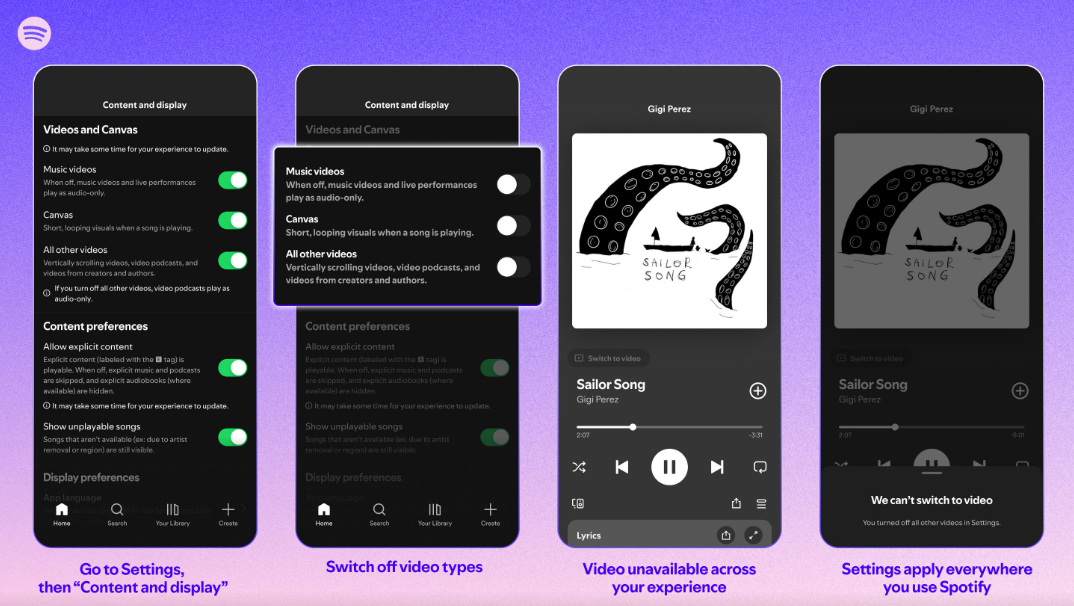
The update builds on existing safeguards in Spotify’s Family plan, where parents can already disable video playback for users under 13. Now, those controls extend across all accounts on a Family subscription, regardless of age.
In a notable shift, the company is also making video toggle options available to users on Free, Premium and Basic tiers, signaling a broader push toward customizable, audio-first experiences.
The move reflects a growing demand for greater user control. Internal data suggests a significant majority of listeners value the ability to shape their own environment, whether that means limiting explicit content, curating recommendations, or removing visual elements altogether.
For families in particular, the option to strip back video functionality offers a more focused listening experience, one that aligns more closely with Spotify’s original identity as a music-first platform.
The new feature arrives as part of a wider safety and privacy framework that includes age-based access systems and content moderation policies. These tools are designed to ensure that features like music videos or social sharing functions are only available to appropriate age groups, while maintaining strict data protection standards.
Spotify has also continued to expand its suite of user controls, from explicit content filters to tools that allow listeners to exclude certain tracks, artists, or activities from their profiles. Managed accounts within Family plans, tailored for younger users, remain a central part of that strategy, offering a more restricted, music-focused environment with limited interactivity.
Beyond product features, the company emphasizes collaboration with external safety organizations to guide its approach, particularly around protecting younger audiences. Still, Spotify acknowledges that technology alone isn’t a complete solution, positioning these updates as part of a broader effort to support families in navigating digital media on their own terms.
As the platform continues to evolve, the latest rollout underscores a clear priority: giving users, and especially parents, more control over how, and how much, they engage.
About the Author