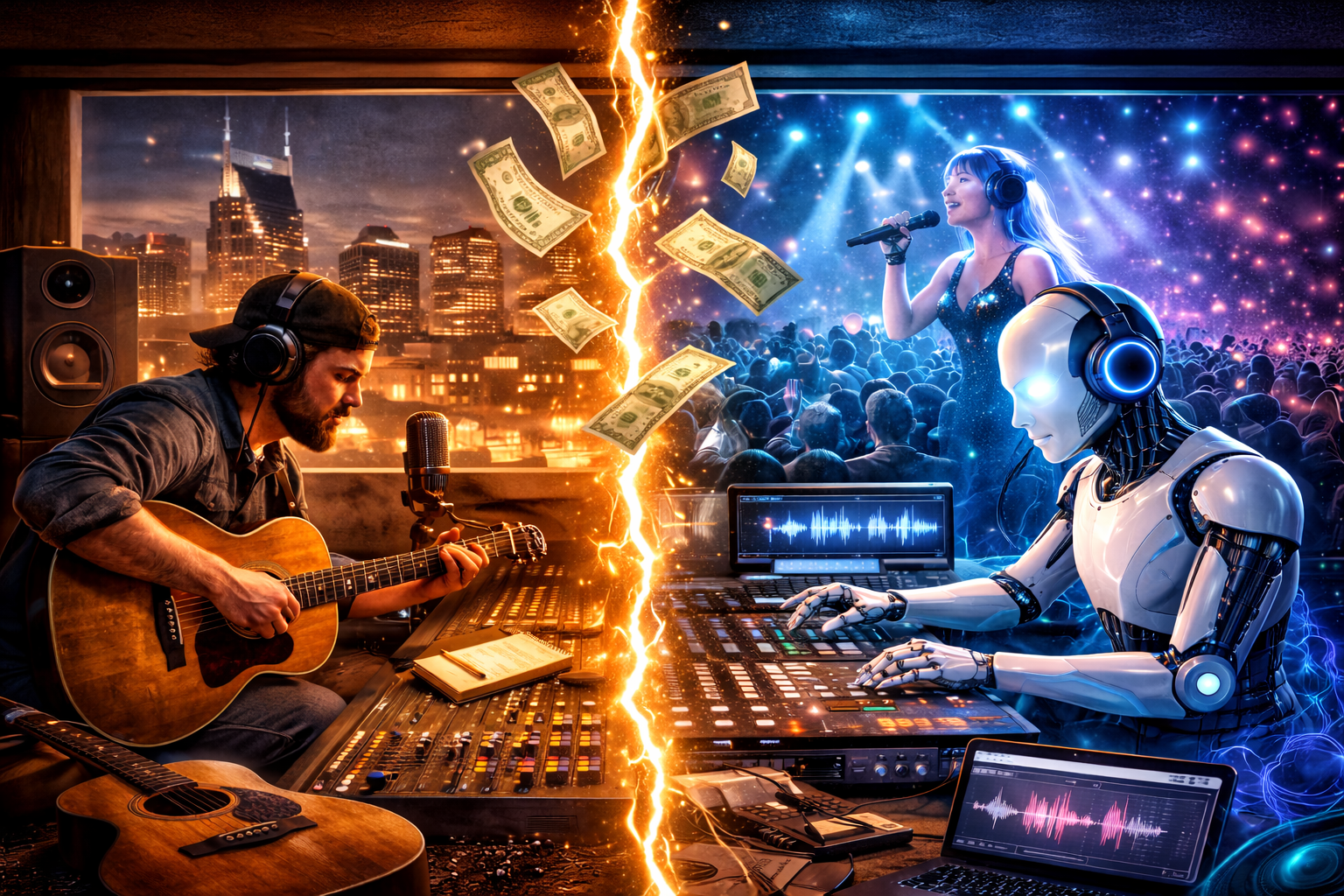
In Nashville, a city built on the belief that music is a deeply human exchange, generative AI is forcing an uncomfortable reckoning. What once felt like a distant tech conversation is now showing up in writing rooms, classrooms, and streaming charts, raising urgent questions about creativity, compensation, and authenticity. For many musicians, AI isn’t just another tool—it’s a fundamental challenge to how music is made and valued.
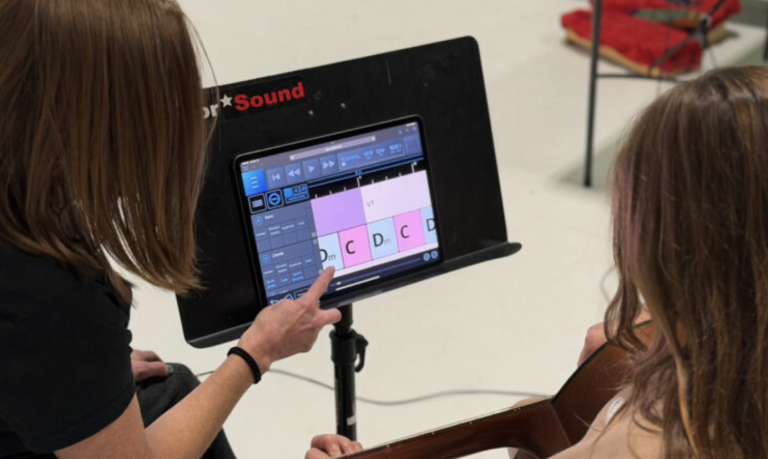
That reality became clear for producer and songwriter A.B. Eastwood when a collaborator suggested running an unfinished song through Suno, an AI music platform, during a studio session. “It was the first time I had come face to face with somebody jumping to AI in a session,” Eastwood said. While he understands AI as a post-production aid, introducing it mid-creation felt premature. “It felt like cheating,” he added, explaining that creative breakthroughs often come from working through uncertainty rather than skipping past it. Still, Eastwood acknowledges the technology’s spread feels inevitable: “It’s Pandora’s box. It’s open, and it’s not going to close.”
The Financial Stakes for Human Artists
Beyond creative unease, musicians are increasingly worried about money. Generative AI systems are trained on massive catalogs of existing music, often without compensating the creators whose work informs those models. Lili McGrady, founder of Humanable, says the financial consequences could be severe. She estimates that within two years, at least 24 percent of royalties earned by human creators could vanish—amounting to more than $5 billion annually. “They were afraid of generative AI eating their lunch, their minimal lunch,” McGrady said of the artists she encountered after moving to Nashville.
Launched in September 2024, Humanable offers artists a way to certify their music as human-made, similar to an organic label for food. The aim is transparency—giving listeners the information they need to make informed choices. Americana musician Jennie Hayes Kurtz of Brother and the Hayes believes that distinction matters. She compares AI-written songs to students using calculators in songwriting workshops: “It might seem harmless, but the point is to think through your meaning.” For Hayes, no algorithm can replicate the bond music creates. “AI cannot do that,” she said.
What Comes Next
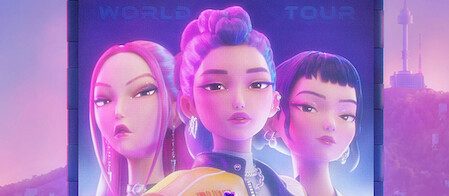
While some states have passed AI-related protections, federal policy remains uncertain, leaving artists and fans to shoulder much of the responsibility. Supporting human-made music—by buying records, attending shows, and engaging directly with artists—has never been more important. As AI avatars like Breaking Rust and Velvet Sundown climb the charts, Nashville’s message is clear: the future of music depends not just on innovation, but on protecting the human heart behind the sound.
About the Author