Asiae.co.k
South Korea’s music industry has formally escalated its response to generative AI, with six leading trade bodies forming a joint coalition and declaring what they describe as a “state of emergency” over copyright and market disruption.
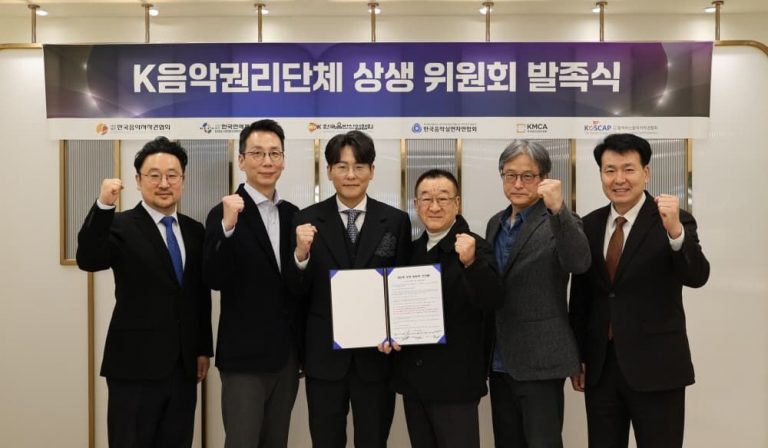
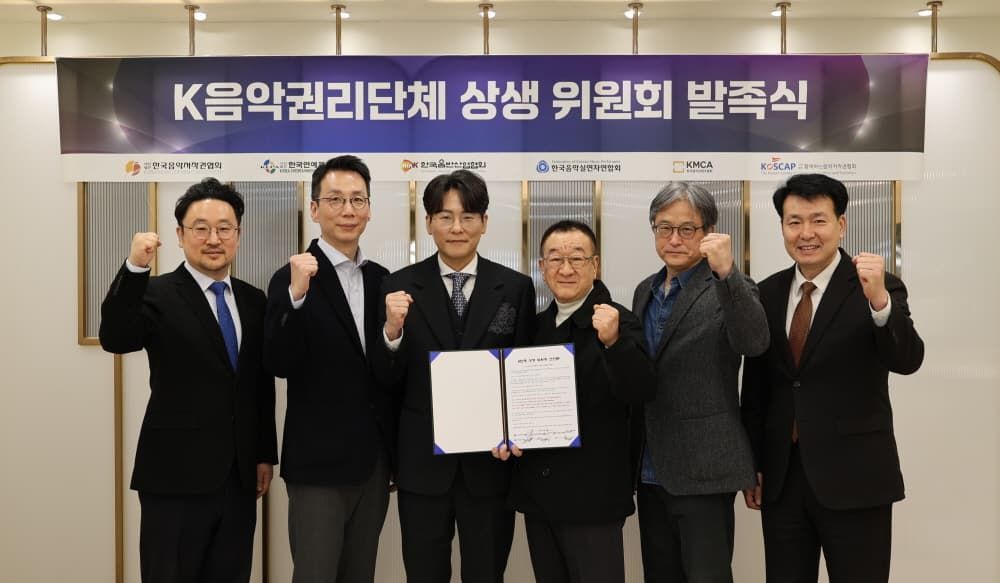
Launched on February 26, the K-Music Rights Organization Mutual Growth Committee unites organizations representing songwriters, performers, labels and entertainment agencies across the country. Among its members are the Korea Music Copyright Association (KOMCA), the Korea Recording Industry Association, the Korea Entertainment Producers Association, the Korea Music Performers Association, the Together Music Copyright Association and the Korea Music Content Association. The council also includes major companies such as HYBE, SM Entertainment, JYP Entertainment and YG Entertainment.
The coalition’s first act was a joint declaration asserting the precedence of human creativity in the AI era. It sets out three core demands: prohibiting AI training on copyrighted works without consent, requiring transparency around AI generation processes and establishing clear standards to distinguish human-created works from AI outputs.
Lee Si-ha, newly elected president of KOMCA and appointed inaugural chair of the committee, described the next two years as decisive for the survival of South Korea’s music sector. He argued that fragmented responses would be insufficient against rapid technological change, calling instead for coordinated action and a new global copyright framework led by Korea.
Beyond policy advocacy, the coalition is proposing structural reform. Central to its plan is a blockchain-based rights infrastructure that would integrate multiple identification systems, including ISWC for compositions, ISRC for recordings, YouTube’s Content ID and Korea’s Universal Content Identifier, into a unified, real-time tracking and royalty distribution model branded as a “K-Copyright Standard.”
The move builds on earlier measures. Last year, KOMCA introduced rules requiring creators to confirm that AI was not used in songwriting when registering works, with penalties for false declarations. While South Korean authorities have stated that fully AI-generated works are not copyrightable, partially human-created works may qualify.
By consolidating rights holders across the value chain, the new coalition signals a coordinated effort to shape, rather than simply react to, the global AI copyright debate.
About the Author