Courtesy of Kevin Mazur/Getty Images for Roc Nation Credits: @rocnation @nfl @applemusic
Ricky Martin didn’t step onto the Super Bowl LX halftime stage to revive a legacy moment. His appearance functioned instead as a marker of how decisively the balance of power in Latin music has shifted.
His surprise appearance during Bad Bunny’s show on February 8 landed with a different kind of weight than the energy Bunny is known for. Martin approached his performance reflectively, rooted in tradition and community. Bunny had a strong focus on community during the overarching performance, making Martin’s approach all the more powerful.
The 13-minute performance was Bad Bunny’s by design, packed with high-profile cameos including Cardi B, Lady Gaga, Pedro Pascal, Jessica Alba, and Alix Earle. But beneath the lineup ran a clear throughline. There was a strong sense of connection across generations, cultures, and borders. Martin’s entrance marked the emotional core of that idea.
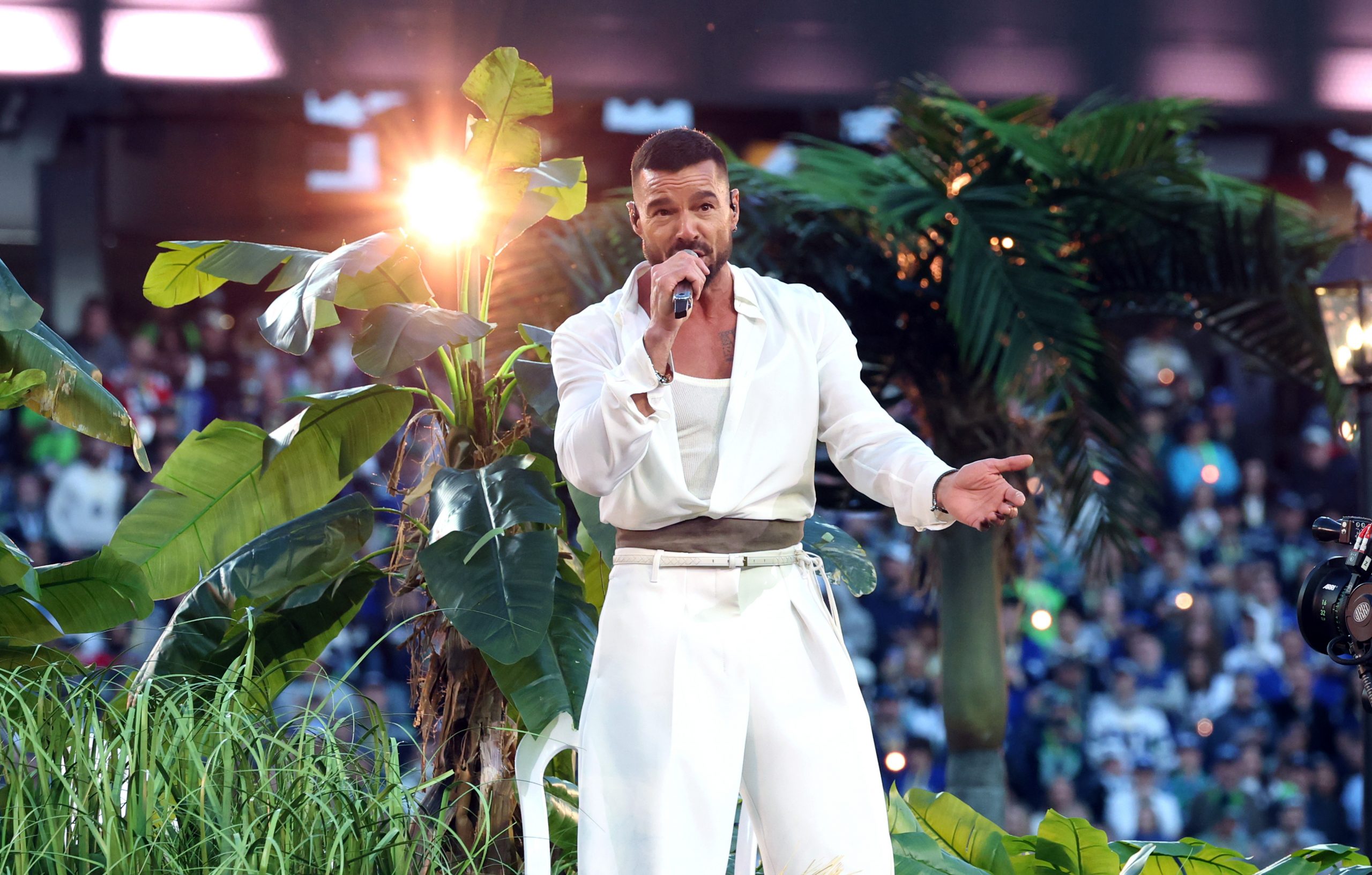
Midway through the set, the Puerto Rican icon appeared seated on a plastic chair, a visual callback to Bad Bunny’s recent imagery. What followed was a stripped-down performance of “Lo Que Le Pasó a Hawaii.” His voice implored watchers, both at home and at the stadium, to take a deeper look and pay attention.
An empty chair beside him lingered onstage as dancers behind reenacted the chaos of an apagón (Spanish for blackout). For many watching, the symbolism was unmistakable. It echoed the long months Puerto Rico spent without power and resources after Hurricane Maria in 2017. Utilizing effective visual communication techniques, the scene needed no explanation.
Martin later admitted he was still processing the experience, writing on Instagram that he needed time to absorb what he described as a tidal wave of emotion.
Just days earlier, Martin had published an open letter in El Nuevo Día praising Bad Bunny for taking Puerto Rico’s language, accent, and story to global stages. Sunday’s performance felt like a continuation of that conversation, with Martin joining in.
The shift into “El Apagón” brought the message into focus. As Bad Bunny reclaimed the stage, the song’s defiant energy reframed the earlier stillness into something collective and proud. By the time the performance closed, with Bad Bunny offering a blessing, Puerto Rico named with intention, the halftime show had stretched beyond entertainment into a statement.
Evident by the Grammy Awards in early February, Latin music isn’t just creeping into the mainstream anymore. The music industry’s version of success, hit music, is being remolded to fit the diverse landscape of cultural influences resonating in today’s songs.
Martin’s appearance carried its own resonance, tracing back to his origins as an artist. He was one of the artists who helped open U.S. doors for Latin pop in the late ’90s. Seeing him share the Super Bowl stage with Bad Bunny, without leaning on past hits or English-language tracks, underscored how much the landscape has changed. Latin music no longer arrives by invitation or familiarity.
Ricky Martin didn’t need nostalgia to make his presence felt. His role in this halftime show wasn’t about looking back. It was about standing in the present, acknowledging where the culture has been, and recognizing where it’s going next.
About the Author