
Instagram.com/@higgsfield.ai
Artificial Intelligence has moved beyond experimental resurrections and has officially invaded the global streaming landscape. While past AI applications focused on singular events—such as Paul McCartney using technology to “bring back” John Lennon for the Grammy-winning Beatles track “Now and Then”—2025 has seen the emergence of entire AI-generated entities designed to seamlessly blend into listener playlists.
The Rise of the “Mid-Tier” AI Band
In June 2025, a band titled The Velvet Sundown released three full-length albums within weeks, amassing over 900,000 followers on Spotify. Despite the familiar ’70s psychedelic rock sound, the band was revealed to be entirely AI-generated, from the music and imagery to the backstories. Critics have pointed to suspicious bot activity and gamed algorithms that allow “severely okay” music to slipstream behind human artists unnoticed.
Similarly, in July 2025, the Indian Carnatic-Rock fusion project Trilok emerged. Created by Collective Media Network, the project received significant celebrity backing despite criticisms of its “standard fare” sound. These developments have sparked a growing dissonance within the creative community, as the industry grapples with the saturation of algorithmically produced content.
Collaborative Dissonance and Industry Deals
While many musicians express concern, high-profile artists are increasingly engaging with the technology:
- Grimes has invited fans to clone her voice using AI to create new music.
- Timbaland recently joined Suno, an AI music generator currently facing copyright lawsuits, as a strategic advisor.
- Holly Herndon and Arca have utilized AI models for vocal donations and museum soundtracks.
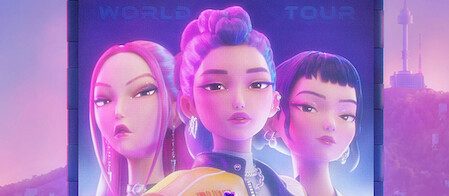
- Kion, an AI K-pop artist, recently secured a $50 million deal and a brand partnership with Fendi.
The Ethical and Legal Crisis
The rapid adoption of AI has created what legal advocate Sandhya Surendran describes as a “copyright nightmare.” Under the guise of “fair use,” Big Tech platforms are training models on publicly available data without compensating original composers. This is particularly problematic in regions like India, where intellectual property enforcement is inconsistent and production companies, rather than composers, typically own the rights to the music.
Administrative Automation vs. Human Authenticity
Amidst the “doom and gloom” of job displacement, some experts suggest a middle ground where AI manages the “mundane side quests” of an artist’s career. Manojna Yeluri of Artistik License suggests that AI can be leveraged for:
- Automating payments and generating invoices.
- Navigating complex contracts and filing taxes.
- Constructing stage plots and treating recording spaces.
The Dawn of Authenticity
The presence of “AI slop” is ultimately expected to elevate human-made art. Musicians like Sijya Gupta and Josh Fernandez suggest that the next challenge for artists is to embrace unpredictable, counterintuitive, and “weird” creative choices that AI cannot replicate. As Fernandez notes, the future of the industry will likely center on the authentic connection between human beings rather than the art itself.
About the Author