Courtesy of Chris Pizzello / Invision / Associated Press
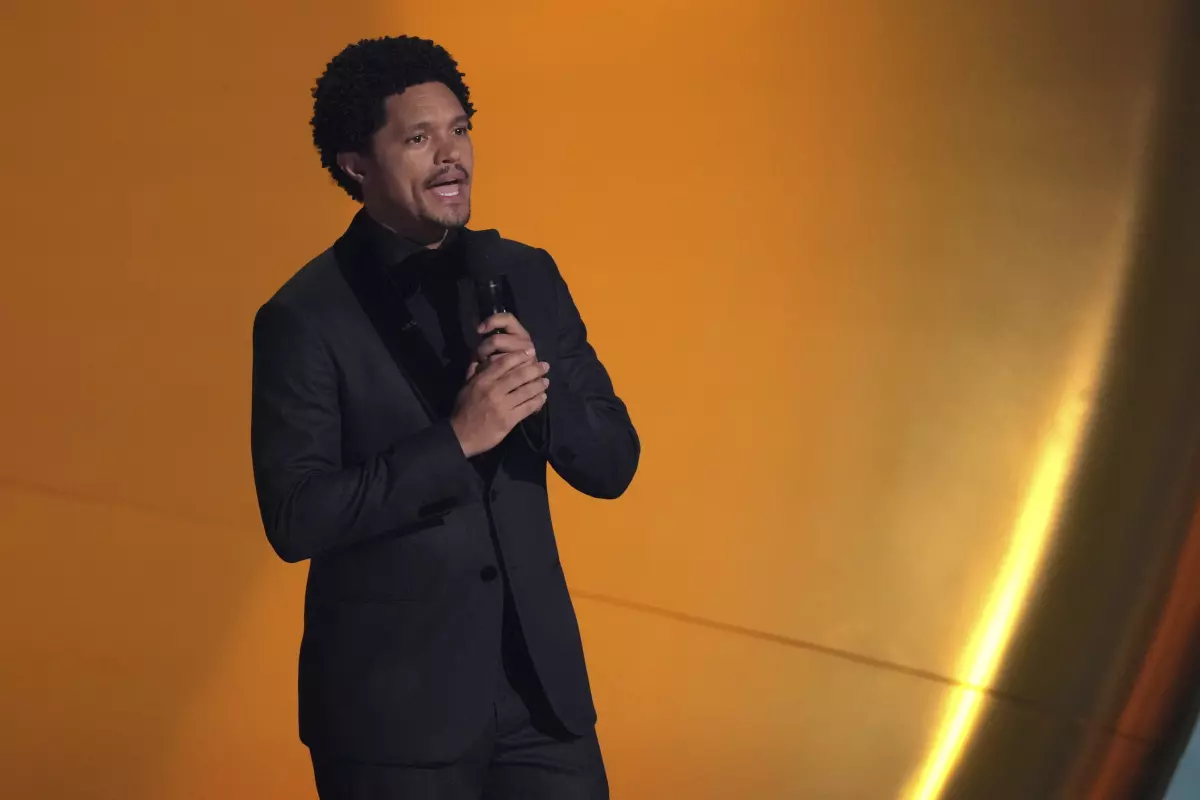
The comedian, writer, and former Daily Show host will return as master of ceremonies for the 2026 Grammy Awards, marking his sixth and final turn behind the mic at music’s biggest night. Over the past few years, Noah has quietly become one of the show’s most reliable constants, steering the ceremony through an era of shifting formats, viral moments, and industry-wide upheaval with a mix of warmth, sharp timing, and just enough bite. In 2026, he won’t just be hosting but will also serve as an executive producer, helping shape the night from both onstage and behind the scenes.
The ceremony is scheduled for Sunday, February 1, 2026, and will be broadcast live from Los Angeles’ Crypto.com Arena. It will air on CBS and will also be available to stream on Paramount+, continuing the show’s push to meet audiences wherever they’re watching, regardless of whether they have cable or a streaming service.
By now, Noah’s presence at the Grammys feels almost baked into the modern version of the show. Since taking over hosting duties in the early 2020s, he’s become a steady, crowd-pleasing guide through a ceremony that often has to balance reverence, spectacle, and the occasional chaos of live television. His return for 2026 signals a kind of closing chapter both for his run with the show and for a particular era of the Grammys themselves, after Noah’s six-year run.
Behind the scenes, the 2026 broadcast will once again be produced by Fulwell Entertainment for the Recording Academy, with Ben Winston, Raj Kapoor, Jesse Collins, and Noah himself serving as executive producers. It’s a team that’s helped modernize the telecast in recent years, leaning into tighter pacing, bigger performances, and a more global view of pop music.
Of course, the Grammys remain unique by distinguishing themselves as the only major music awards voted on by the Recording Academy’s own membership, made up of a diverse group of individuals throughout the music industry. That peer-voted status is still central to how the show presents itself, even as debates about relevance, representation, and taste continue to swirl around awards culture more broadly. Different from fan-voting award shows, we get a full perspective of how the music industry works inside and out.
Beyond the broadcast itself, the Recording Academy continues to position the Grammys as just one part of a larger mission alongside the GRAMMY Museum, MusiCares, and year-round advocacy work for music creators. But on February 1, all of that will funnel into one familiar spectacle: a packed arena, a long list of winners, and Trevor Noah, taking the stage for the final time.
About the Author