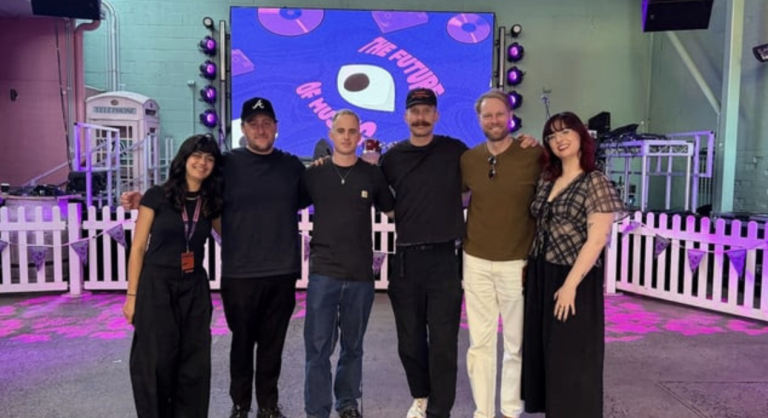

Photo Credit: Loud and Quiet
The release of Liz Pelly’s book, Mood Machine: The Rise of Spotify and the Costs of the Perfect Playlist, has reignited a long-standing industry debate: If Spotify’s payout rates and algorithmic practices are detrimental to independent music, why do indie labels continue to license their music to the platform?
Recent investigations into the streamer’s internal practices suggest a “grisly” reality. Pelly’s report details how Spotify’s algorithms and cynically commissioned “musak” reshape listening habits, often prioritizing vapid, low-cost content over established artists. Despite this, the prospect of a coordinated boycott remains unlikely due to a complex web of financial dependency and market dominance.
The Economic Shield of the “Long Tail”
For many established independent labels, the primary obstacle to leaving Spotify is the revenue generated by their back catalogs. Christof Ellinghaus, founder of the Berlin-based label City Slang, notes that while breaking new artists on the platform has become nearly impossible, older records provide a necessary “long tail” of income.
According to Ellinghaus, 82% of City Slang’s digital income is generated by music older than 18 months. “It was a grave mistake to give these people our music,” Ellinghaus admitted, reflecting on the 2012 decision to join the platform. However, he acknowledges that removing a label’s entire library would be financially destructive for the artists who rely on those consistent, albeit small, streams.
A Data-Driven Divide
The power imbalance is further exacerbated by Spotify’s shift from a music discovery tool to a data-driven advertising company. Industry insiders report that the platform often demands proof of an existing audience before offering support, effectively placing the burden of marketing entirely on the labels.
“The only thing that Spotify is interested in serving is Spotify,” noted one London-based managing director. This sentiment is echoed by the realization that even a total indie boycott might not move the needle; with major labels still providing the majority of the world’s music, many fear that casual listeners would simply not notice the absence of independent catalogs.
Building the Alternative
Rather than focusing on a boycott, many in the industry are turning toward alternative ecosystems. Platforms like Bandcamp and the blockchain-based Nina Protocol are gaining traction by offering direct-to-fan sales and human-led curation.
Success stories from artists like Caroline Rose and Cindy Lee—who have found financial success by bypassing traditional streaming for their latest releases—suggest that the future of independent music may lie in niche communities and curated platforms rather than trying to fix a “uniquely evil” streaming giant.
About the Author