Photo Credit: Spotify Newsroom
Listening to music used to be an intimate, personal act. Pulling up artists, albums, and songs on your phone was driven by mood and instinct. That is, until the Spotify platform created Spotify Wrapped. Spotify Wrapped (and now Apple Replay, YouTube Music Recap, and others) has changed the way we instinctively listen to music. At the end of the year, this feature displays listeners’ musical statistics, including the total minutes they listened to this year, their top songs/artists, and their overall vibe based on these results. This fun, personalized feature has led people to publicly post their stats on social media and share them with their followers. Spotify said Wrapped was shared more than 500 million times this year, 41% more than last year.
With our choice in music being out in the open, our listening habits have become curated. Now, what we play throughout the year on our devices has become a public display of taste. How can we be our authentic selves if it feels like someone is watching our every move?
People are less and less able to listen freely without imagining how it might look in December. Maybe someone loves a cheesy pop song, but their friends would tease them for it. Maybe they’re embarrassed to admit how often they binge “emo-girl” playlists. Maybe they want to seem more eclectic, more indie, more “cultured.” So they avoid the music they actually want to play and instead lean into the music that will look better on their end-of-year Wrapped slides.
One person I interviewed put it bluntly: “One year I tried to get one song to be my number one song of the year.”
Another described Wrapped as “the new Christmas,” meaning a yearly event everyone anticipates and prepares for. This year, Wrapped 2025 saw over 200 million engaged users within the first 24 hours, according to Spotify.
This performativity isn’t just costing us our authenticity as listeners; it’s profiting Spotify by driving more streams and more time spent on the app. Our self-conscious listening habits become a stream of revenue. A graph from Google Trends shows data from 2021, highlighting an increase in “Spotify Wrapped” Google searches as we approach December.
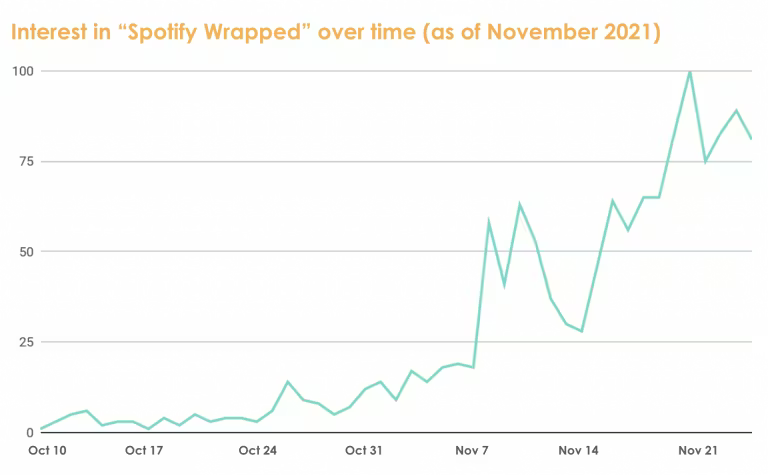
Image from Google Trends
Spotify Wrapped displays how many minutes of music you’ve listened to in a year. Once listeners know their “minutes listened” will be visible and shareable, many intentionally listen more to boost their stats. More streams equals more ad revenue, more subscription value, and more platform loyalty. In 2020, Spotify campaign data showed app downloads increased by 21% in the first week of December. From a business perspective, it’s brilliant. CEO Daniel Ek said that Wrapped was a “huge driver behind our MAU and subscriber growth,” and that it consistently boosted Q4 performance.
But the question lingers: what has it cost us?
Until 2016, when Wrapped first dropped, music felt like a space untouched by performance or social comparison. People now curate a persona through genres and artists. They delete listening history or switch to private mode to hide “unflattering” plays and playlists. There are even third-party apps like Stats.fm or Last.fm that track people’s stats year-round. Stats.fm reports that there are over 8 million users across platforms, showing a year-round interest in listening stats to prepare for the end of the year. The mass posting of Wrapped stats every December floods our feed with taste hierarchies: who’s cool, who’s basic, who’s obsessed, who’s unique. It’s not just about sharing, it’s about comparison and competition.
Wrapped didn’t just give us a fun summary of our musical year: it rewired how we listen to music altogether.
About the Author