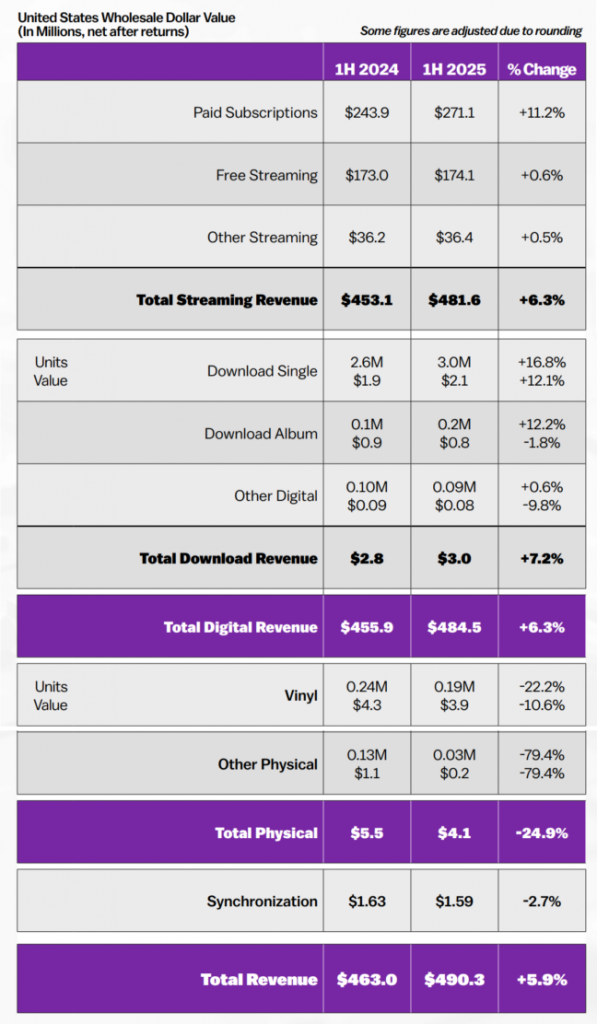
The U.S. recorded music market may be slowing, but Latin music is moving in the opposite direction. According to the Recording Industry Association of America’s (RIAA) mid-year 2025 report, Latin music revenues reached $490.3 million in the first half of the year. That figure represents a 5.9% year-over-year increase, far outpacing the overall U.S. market’s modest 0.9% growth.
Streaming Powers Latin Music’s Rise
Streaming continues to drive this momentum. In fact, 98% of Latin music revenues came from streaming platforms. Paid subscriptions led the way, generating $271.1 million, which marked an 11.2% increase compared to last year. Free, ad-supported streaming added $174.1 million, while “other streaming” categories, including digital radio and SoundExchange distributions, contributed $36.4 million. By contrast, physical formats told a different story. Vinyl sales fell sharply, and overall physical revenues for Latin music dropped nearly 25%.
Importantly, industry leaders see this growth as more than just numbers. Matt Bass, Vice President of Research at the RIAA, explained that “Latin music in the US continues to gain popularity and generate increased value thanks to the incredible artists whose music connects across language and geographical barriers with support from creative label partnerships.” He also emphasized that Latin has become the second-fastest growing genre in America, fueled by both legacy voices and new icons shaping today’s culture.
Consistent Growth & New Reporting Standards
Although physical sales and synch licensing revenues declined, Latin music’s resilience stands out. The genre now accounts for 8.8% of total U.S. wholesale revenues and has posted mid-year gains for twelve consecutive years. Moreover, the RIAA’s decision to shift from retail to wholesale reporting aligns its data with global standards from the IFPI. This change highlights the actual dollars flowing back into the creative ecosystem, offering a clearer picture of the industry’s health.
In summary, Latin music is not only thriving but also reshaping the U.S. music landscape. With streaming as its backbone and a growing global audience, the genre continues to expand its influence. As a result, Latin music is proving that its momentum is both cultural and economic, and it shows no signs of slowing down.
About the Author