
Photo Credit: ZigZag Production Studio (@ZigZagProductionStudio / YouTube)
The music industry is desperately trying to solve its artificial intelligence problem, but its current strategy looks a lot like asking people to pretty-please follow the honor system.
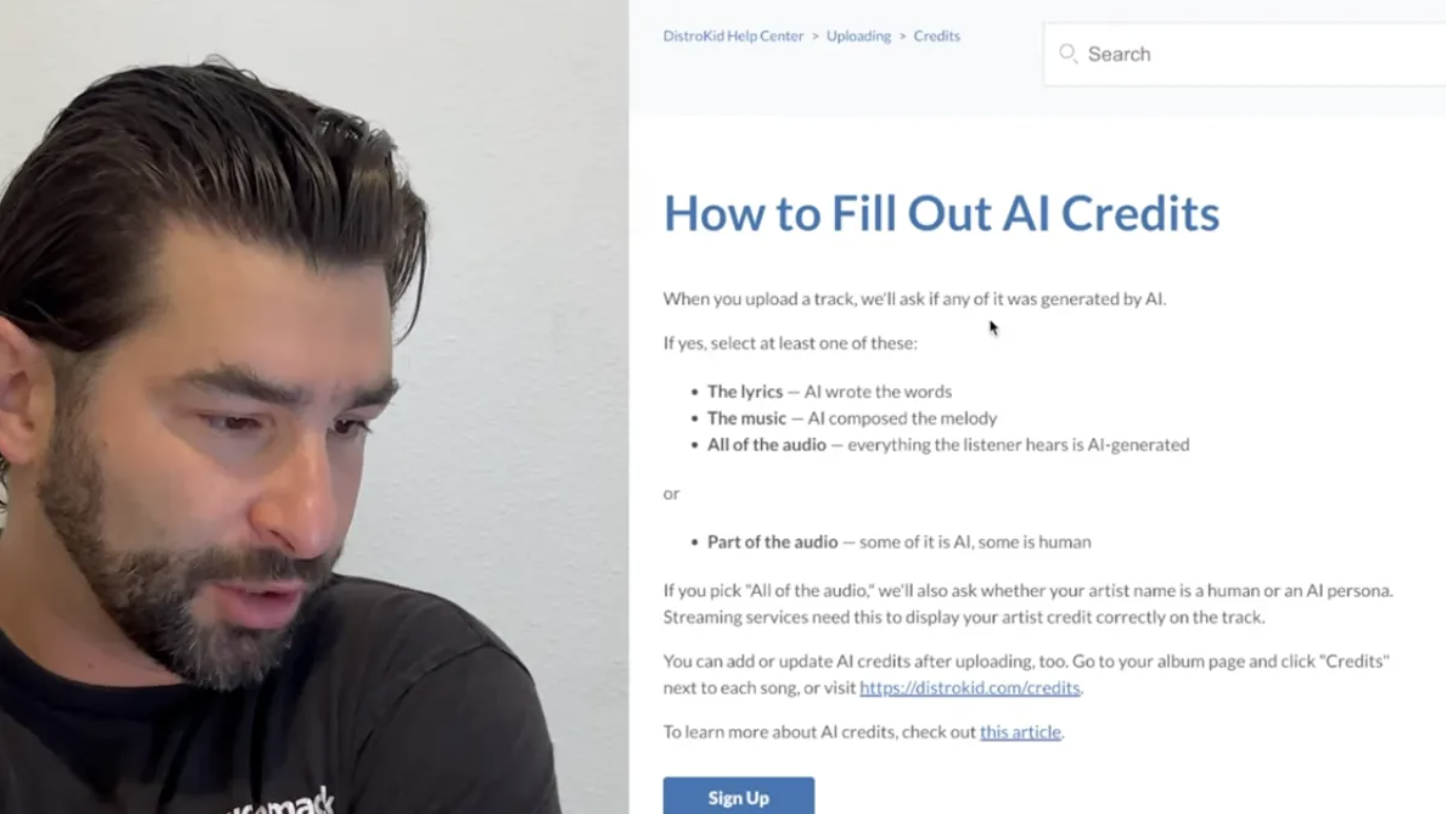
Following a recent joint beta test with Spotify, indie distribution giant DistroKid has officially moved its AI self-disclosure tool out of beta. Moving forward, any artist uploading new material to the platform will face a series of expanded questions asking them to disclose exactly what parts of their tracks, if any, were AI-generated or assisted.
It is a major step toward platform-level transparency on paper. In practice, it highlights a massive, industry-wide vulnerability: digital streaming platforms are relying entirely on the honesty of creators to regulate a wild-west landscape.
The Honor System vs. Automation
DistroKid’s new framework is not retroactive; it only triggers during new uploads. Furthermore, the system is entirely dependent on user self-reporting. If a creator decides to lie about using AI tools to generate a vocal tract or a beat, the system simply takes them at their word.
This approach puts DistroKid and Spotify at odds with the broader, highly competitive race for AI tracking frameworks. Currently, the industry is split between two drastically different philosophies:
- The Voluntary Tagging Route: DistroKid, Spotify, and Apple Music, via its new mandatory label Transparency Tags system, all rely on content providers and creators to manually report AI usage.
- The Automated Enforcement Route: Streaming platform Deezer remains the only outlier, utilizing an automatic, platform-wide AI identification tool that automatically tags tracks without needing user input. Deezer has even begun licensing this detection tech to other companies.
The Loophole for Bad Actors
The flaw in the voluntary model is glaringly obvious. While legitimate artists might happily disclose that they used an AI plugin to tweak a synth line, bad actors looking to flood streaming networks with low-effort, AI-generated content have zero incentive to tell the truth.
While DistroKid warns that failing to report AI usage could eventually lead to copyright strikes and complex legal trouble down the road, that threat is unlikely to deter bad actors who are simply looking to game the streaming algorithms for quick payouts.
As streaming platforms continue to throw spaghetti at the wall to see what sticks, DistroKid’s rollout proves that some action is better than none. But as long as the industry relies on a “self-disclosure” honor system rather than automated detection, the absence of an AI tag on a song means absolutely nothing.
About the Author