
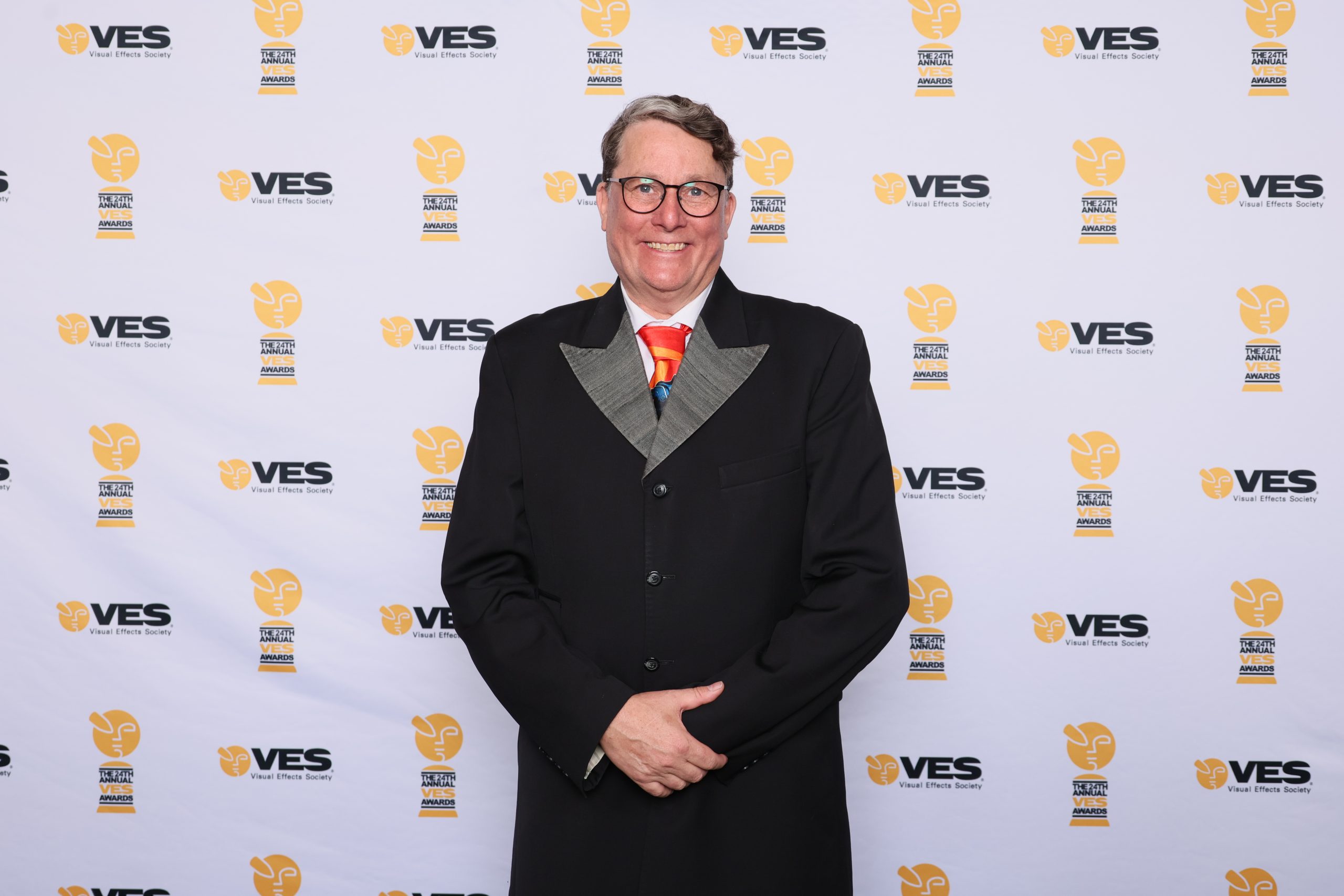
The 24th Annual VES Awards on Wednesday, February 25, 2026 at The Beverly Hilton in Los Angeles. Photo by Danny Moloshok/Moloshok Photography, Inc.
BEVERLY HILLS, CA -(February 26th, 2026)— “Innovation starts with heart and human hands.” When Adam Savage took the stage at the Beverly Hilton to introduce Sir Richard Taylor, he didn’t lead with the five Oscars or the four BAFTAs. Instead, he recounted the story of a teenager in New Zealand sculpting puppet heads out of margarine because he couldn’t afford clay. It was a tale of “ingenuity, practicality, and tenacity” that defined the man long before he became the “fearless captain” of Weta Workshop.
Just minutes before his name was called, the legendary designer revealed that his process is as much about the ear as it is the eye.
In a conversation that pivoted quickly from visual effects to the “music business,” Taylor revealed a rare look into the atmosphere of his workshop. While the world sees the finished miniatures of films like The Water Horse, Taylor sees them as physical manifestations of a soundscape.
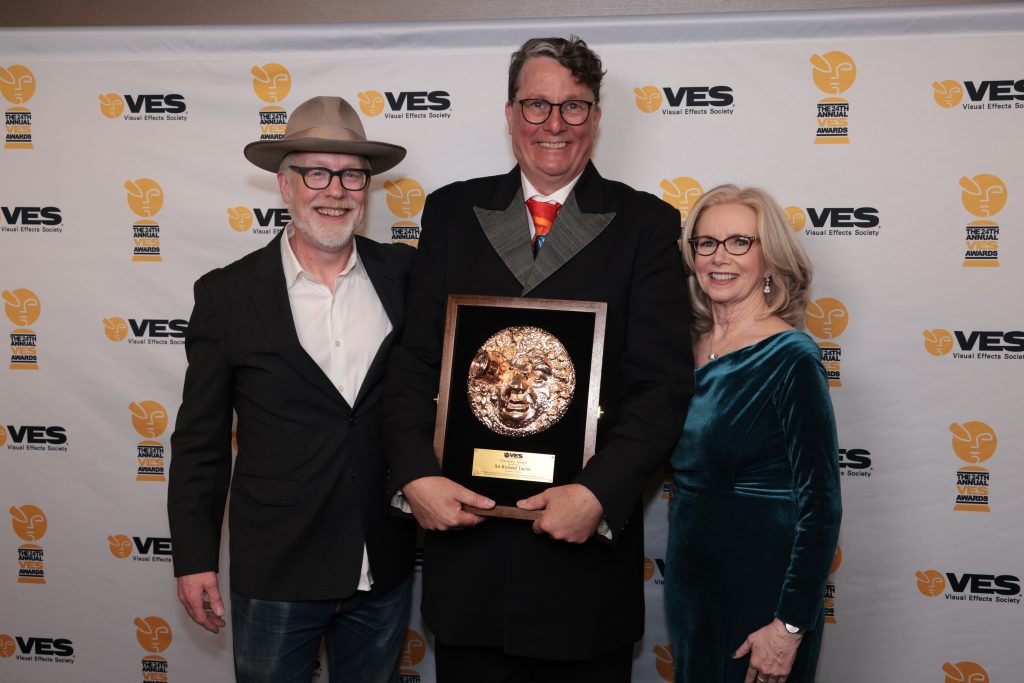
“You’re the first person that’s ever asked me whether we consider frequencies and soundscapes,” Taylor told us. He recalled working with director Jay Russell, who brought specific soundscapes into the workshop while the team was building miniatures.
“We cut together an amazing soundtrack of soundscapes and beautiful noises that we played in the workshop to get into the hi-fi scene,” Taylor explained. “People don’t think about these things, but it’s a great stimulation. Because the director is ultimately going to marry visuals with sound, to build in a vacuum without thinking about that is a very obvious thing.”
This commitment to total immersion extends to his work with James Cameron on the world of Avatar. Taylor described Cameron as a director who demands “causal ecologies,” ensuring that even the most otherworldly alien creatures feel “as real as if they ran out into the jungles of our own Earth.”
According to Taylor, this realism is rooted in a deep consideration of ambient noise and biological sound. “He is constantly thinking about what would they sound like, what would the ambient noises be like,” Taylor noted, emphasizing that these sonic details are what make a fantastical world approachable.
Perhaps most intriguing was Taylor’s take on the future of the craft, specifically regarding what he calls the “visual militant.” As the industry moves further into the digital frontier, Taylor sees the creation of “digital psychographic worlds” as the next great leap.
“We’re building a very vivid, written, realistic image with the CG instruction… creating an incredible piece of architecture and a fantastical world,” Taylor said of the current state of digital-practical hybrids. “Those sorts of projects are really inspiring to me.”
Despite the high-tech discourse, Taylor’s acceptance speech returned to the core human values that Adam Savage had championed in his introduction. Savage noted that Taylor measures success not by money, but by how many of his crew own their own homes and how many “Weta babies” have been born to his team.
“I now feel most satisfied that I am also becoming a maker of makers,” Taylor told the crowd. He concluded the night by offering his “four tenets” for a meaningful career: love of oneself, love of what you do, love of who you do it with, and love of who you do it for.
As the industry continues to evolve, Sir Richard Taylor remains the gold standard—a man who can discuss “causal ecologies” and “digital psychographics” in one breath, while reminding us that it all starts with the heart.
About the Author